
You are using an out of date browser. It may not display this or other websites correctly.
You should upgrade or use an alternative browser.
You should upgrade or use an alternative browser.
Which way? A Gold Timing exercise
- Thread starter themickey
- Start date

Yes, was just looking at it, coal getting slammed too. Hehehe.Big down day today.
Final capitulation before lift off, or bear market incoming...

Funny, the previous ASX session gold stocks jumped up, when the asx mkt opens again in 8hours, gonna be some desperate dumping going on, hahaha.
Former JPMorgan workers ‘scammed the metals market’, prosecutors say
July 9, 2022

Prosecutors on Friday stated three former members of JPMorgan Chase’s treasured metals buying and selling desk “scammed the market” as a part of a years-long legal conspiracy to govern the worldwide silver and gold markets.
The feedback got here at the beginning of a trial that may be a reminder of the misconduct that blighted metals markets between 2008 and 2016, and resulted in stiff penalties for a number of banks by US authorities, together with a $920mn superb for JPMorgan in 2020.
Federal prosecutors have charged Michael Nowak, Jeffrey Ruffo and Gregg Smith with racketeering, wire fraud, spoofing and commodities fraud. Spoofing, which was outlawed within the US in 2010 by the Dodd-Frank Act, is the observe of rapidly inserting and withdrawing purchase and promote orders to create a misunderstanding of demand.
“In order to make more money for themselves, they decided to cheat to get better prices,” stated assistant US legal professional Lucy Jennings.
During opening arguments on Friday, prosecutors described how the defendants allegedly used the anonymity of digital futures buying and selling on the Chicago Mercantile Exchange to trick merchants on the opposite facet of their alleged pretend trades for greater than seven years. The merchants’ spoofs “represented 50 to 70 per cent of the visible gold and silver markets at a particular time”, Jennings stated.
But attorneys for the defendants stated no such sample existed, and that prosecutors had “cherry-picked” examples to attempt to show spoofing had taken place. They stated the distinction between lawful and unlawful trades got here all the way down to defendants’ intent and what they have been considering, one thing the prosecution couldn’t probably show.
The three males have pleaded not responsible to the fees, which have been filed in 2019. If convicted, they withstand 20 years in jail for every cost of which they’re discovered responsible. Nowak oversaw JPMorgan’s world treasured metals buying and selling desk, and Smith labored as a dealer and govt director in New York. Ruffo labored in gross sales in New York.
Another defendant, Christopher Jordan, might be tried individually.
The case centres on the buying and selling of hundreds of futures contracts for treasured metals akin to gold, silver and platinum. In the indictment, the DoJ alleges the group of merchants concocted unlawful buying and selling methods, together with spoofing, to achieve an edge over algorithmic merchants.
The prosecution claimed Nowak and Smith flooded the market with large volumes of trades — each buys and gross sales — that they by no means supposed to execute so as to get the specified worth for Ruffo’s shoppers.
Two former JPMorgan merchants have already pleaded responsible to spoofing within the treasured metals markets, whereas two former Bank of America merchants final yr have been convicted for wire fraud in an analogous case.
Among the fees in opposition to the defendants are violations of the Racketeer Influenced and Corrupt Organizations Act, or Rico, a federal legislation enacted in 1970 to pursue organised crime.
Over the years, the DoJ has broadened the scope of the kinds of crimes prosecuted beneath Rico to incorporate white-collar crime. More not too long ago, it has been used to focus on banks and bankers.
Aitan Goelman, associate at Zuckerman Spaeder and a former director on the US Commodity Futures Trading Commission, stated it was “unprecedented” for the DoJ to allege JPMorgan’s metals desk was a racketeering enterprise.
“I think that that’s a significant expansion of the department’s use of Rico,” Goelman stated.
Samuel Buell, a professor at Duke University School of Law, stated: “It’s not common to use Rico in these kinds of cases. Rico’s more of a kind of umbrella device that has procedural benefits for prosecutors” that “make it easier to join charges and defendants into a single case”.
The use of the statute in a monetary case “sends a message that the DoJ is taking a hard line on white-collar defendants”, stated John Zach, associate at Boies Schiller Flexner and a former federal prosecutor within the Southern District of New York.
Source: www.ft.com
July 9, 2022
Prosecutors on Friday stated three former members of JPMorgan Chase’s treasured metals buying and selling desk “scammed the market” as a part of a years-long legal conspiracy to govern the worldwide silver and gold markets.
The feedback got here at the beginning of a trial that may be a reminder of the misconduct that blighted metals markets between 2008 and 2016, and resulted in stiff penalties for a number of banks by US authorities, together with a $920mn superb for JPMorgan in 2020.
Federal prosecutors have charged Michael Nowak, Jeffrey Ruffo and Gregg Smith with racketeering, wire fraud, spoofing and commodities fraud. Spoofing, which was outlawed within the US in 2010 by the Dodd-Frank Act, is the observe of rapidly inserting and withdrawing purchase and promote orders to create a misunderstanding of demand.
“In order to make more money for themselves, they decided to cheat to get better prices,” stated assistant US legal professional Lucy Jennings.
During opening arguments on Friday, prosecutors described how the defendants allegedly used the anonymity of digital futures buying and selling on the Chicago Mercantile Exchange to trick merchants on the opposite facet of their alleged pretend trades for greater than seven years. The merchants’ spoofs “represented 50 to 70 per cent of the visible gold and silver markets at a particular time”, Jennings stated.
But attorneys for the defendants stated no such sample existed, and that prosecutors had “cherry-picked” examples to attempt to show spoofing had taken place. They stated the distinction between lawful and unlawful trades got here all the way down to defendants’ intent and what they have been considering, one thing the prosecution couldn’t probably show.
The three males have pleaded not responsible to the fees, which have been filed in 2019. If convicted, they withstand 20 years in jail for every cost of which they’re discovered responsible. Nowak oversaw JPMorgan’s world treasured metals buying and selling desk, and Smith labored as a dealer and govt director in New York. Ruffo labored in gross sales in New York.
Another defendant, Christopher Jordan, might be tried individually.
The case centres on the buying and selling of hundreds of futures contracts for treasured metals akin to gold, silver and platinum. In the indictment, the DoJ alleges the group of merchants concocted unlawful buying and selling methods, together with spoofing, to achieve an edge over algorithmic merchants.
The prosecution claimed Nowak and Smith flooded the market with large volumes of trades — each buys and gross sales — that they by no means supposed to execute so as to get the specified worth for Ruffo’s shoppers.
Two former JPMorgan merchants have already pleaded responsible to spoofing within the treasured metals markets, whereas two former Bank of America merchants final yr have been convicted for wire fraud in an analogous case.
Among the fees in opposition to the defendants are violations of the Racketeer Influenced and Corrupt Organizations Act, or Rico, a federal legislation enacted in 1970 to pursue organised crime.
Over the years, the DoJ has broadened the scope of the kinds of crimes prosecuted beneath Rico to incorporate white-collar crime. More not too long ago, it has been used to focus on banks and bankers.
Aitan Goelman, associate at Zuckerman Spaeder and a former director on the US Commodity Futures Trading Commission, stated it was “unprecedented” for the DoJ to allege JPMorgan’s metals desk was a racketeering enterprise.
“I think that that’s a significant expansion of the department’s use of Rico,” Goelman stated.
Samuel Buell, a professor at Duke University School of Law, stated: “It’s not common to use Rico in these kinds of cases. Rico’s more of a kind of umbrella device that has procedural benefits for prosecutors” that “make it easier to join charges and defendants into a single case”.
The use of the statute in a monetary case “sends a message that the DoJ is taking a hard line on white-collar defendants”, stated John Zach, associate at Boies Schiller Flexner and a former federal prosecutor within the Southern District of New York.
Source: www.ft.com
Probably just the tip of an iceberg when it comes to shonky gold & silver shenanagans.Former JPMorgan workers ‘scammed the metals market’, prosecutors say
Spoofing gold price ‘common’ at Bear Stearns, ex-trader saysFormer JPMorgan workers ‘scammed the metals market’, prosecutors say
July 9, 2022
Prosecutors on Friday stated three former members of JPMorgan Chase’s treasured metals buying and selling desk “scammed the market” as a part of a years-long legal conspiracy to govern the worldwide silver and gold markets......
Bloomberg News | July 18, 2022
https://www.mining.com/web/spoofing-gold-price-common-at-bear-stearns-ex-trader-says/
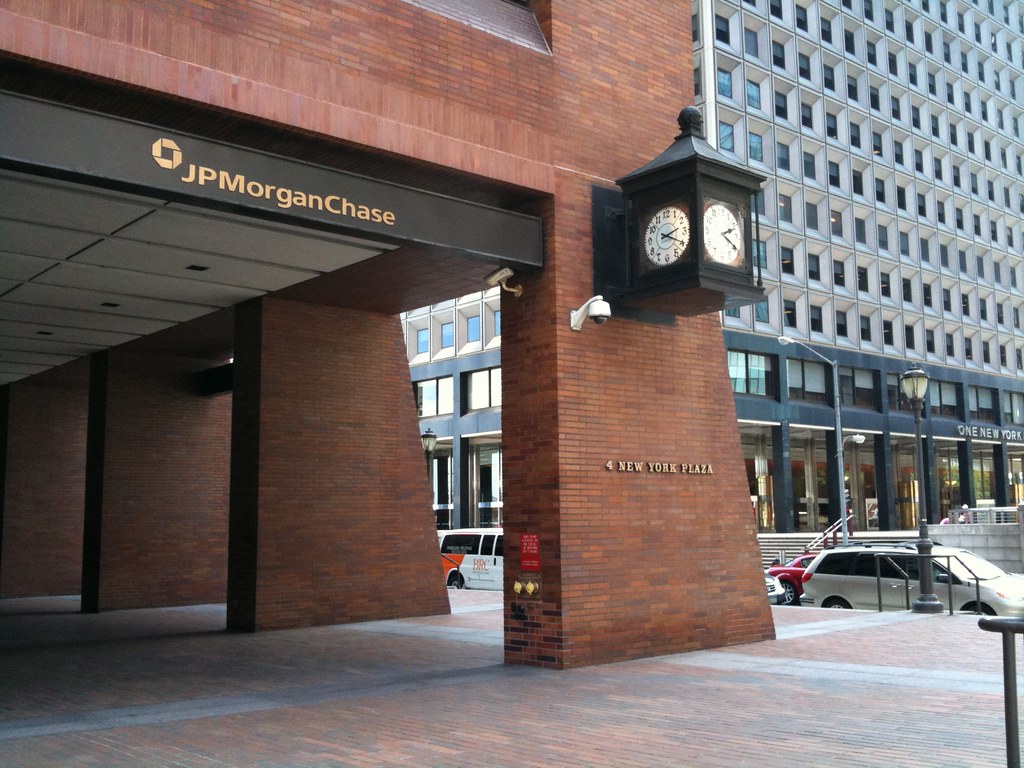
Image courtesy of Flickr Commons.
At Bear Stearns Cos., before the bank was acquired by JPMorgan Chase & Co. in 2008, manipulating the gold futures market with bogus spoof orders was “common practice,” especially for its top trader, Gregg Smith, a former colleague told jurors in Chicago.
“It was pretty widespread” on the precious-metals trading desk, said Corey Flaum, a gold and silver trader who was later fired for spoofing and reached a criminal plea agreement to cooperate with prosecutors. “It was done out in the open,” Flaum said Monday. “Nobody ever said boo about doing it. No one ever said it was legal or illegal. It was common practice.”
Smith, who became JPMorgan’s top gold trader after the merger, is on trial with two others on the desk: Jeffrey Ruffo, a salesman who handled orders by the bank’s biggest hedge fund clients, and Michael Nowak, the longtime head of the JPMorgan precious-metals business. They are accused of operating a criminal enterprise by manipulating prices from 2008 to 2016.
Flaum described how Smith used “spoof” trades — huge orders that are quickly canceled before they can be executed — several times a week to push precious metals up or down so he could make trades for the bank and its clients more profitable. Flaum, who joined Bear Stearns in 2006 and sat next to Smith in their New York office, said he learned to spoof on the bank’s precious-metals desk and wasn’t aware that the practice was wrong or illegal until 2011.
“It was something I observed,” Flaum said. “Nobody from the managing director on the desk to their superior to people in compliance ever came out and said anything about it.” The former trader said the precious-metals desk routinely spoofed because the technique usually worked, which was profitable for the bank and kept clients happy by ensuring better pricing on their orders.
‘Excessive clicking’
Flaum said he could tell when Smith was spoofing the market because he’d hear Smith’s “excessive clicking” as he rapidly cancelled orders within seconds of placing them. That contrasted with normal trading that was “more slow and methodical,” Flaum told the jury.
Flaum said he left Bear Stearns in May 2008 to take a similar precious-metals trading job at Bank of Nova Scotia, where he worked until he was fired for spoofing in July 2016. Flaum pleaded guilty to attempted price manipulation in 2019 and agreed to cooperate with prosecutors. He has yet to be sentenced.
He’s the second former gold trader to testify on behalf of the government in a trial that began with its first witness on July 8. Last week, John Edmonds spent four days on the stand describing how Nowak, Smith and Ruffo were involved in spoofing precious-metals markets at the JPMorgan desk for almost a decade.
Edmonds has pleaded guilty to criminal charges and is cooperating with authorities. During cross examination, defense lawyers sought to undermine his credibility by citing several lies he told to authorities.
Attorneys for Smith and Nowak have argued that all their orders were legitimate and could have been executed by anyone in the market before they were canceled. Ruffo’s lawyers emphasized that he never placed any orders because he was a salesman.
The case is US v. Smith et al, 19-cr-00669, US District Court, Northern District of Illinois (Chicago)
(By Eddie Spence)

Spoofing gold price ‘common’ at Bear Stearns, ex-trader says
Bloomberg News | July 18, 2022
https://www.mining.com/web/spoofing-gold-price-common-at-bear-stearns-ex-trader-says/
Image courtesy of Flickr Commons.
At Bear Stearns Cos., before the bank was acquired by JPMorgan Chase & Co. in 2008, manipulating the gold futures market with bogus spoof orders was “common practice,” especially for its top trader, Gregg Smith, a former colleague told jurors in Chicago.
“It was pretty widespread” on the precious-metals trading desk, said Corey Flaum, a gold and silver trader who was later fired for spoofing and reached a criminal plea agreement to cooperate with prosecutors. “It was done out in the open,” Flaum said Monday. “Nobody ever said boo about doing it. No one ever said it was legal or illegal. It was common practice.”
Smith, who became JPMorgan’s top gold trader after the merger, is on trial with two others on the desk: Jeffrey Ruffo, a salesman who handled orders by the bank’s biggest hedge fund clients, and Michael Nowak, the longtime head of the JPMorgan precious-metals business. They are accused of operating a criminal enterprise by manipulating prices from 2008 to 2016.
Flaum described how Smith used “spoof” trades — huge orders that are quickly canceled before they can be executed — several times a week to push precious metals up or down so he could make trades for the bank and its clients more profitable. Flaum, who joined Bear Stearns in 2006 and sat next to Smith in their New York office, said he learned to spoof on the bank’s precious-metals desk and wasn’t aware that the practice was wrong or illegal until 2011.
“It was something I observed,” Flaum said. “Nobody from the managing director on the desk to their superior to people in compliance ever came out and said anything about it.” The former trader said the precious-metals desk routinely spoofed because the technique usually worked, which was profitable for the bank and kept clients happy by ensuring better pricing on their orders.
‘Excessive clicking’
Flaum said he could tell when Smith was spoofing the market because he’d hear Smith’s “excessive clicking” as he rapidly cancelled orders within seconds of placing them. That contrasted with normal trading that was “more slow and methodical,” Flaum told the jury.
Flaum said he left Bear Stearns in May 2008 to take a similar precious-metals trading job at Bank of Nova Scotia, where he worked until he was fired for spoofing in July 2016. Flaum pleaded guilty to attempted price manipulation in 2019 and agreed to cooperate with prosecutors. He has yet to be sentenced.
He’s the second former gold trader to testify on behalf of the government in a trial that began with its first witness on July 8. Last week, John Edmonds spent four days on the stand describing how Nowak, Smith and Ruffo were involved in spoofing precious-metals markets at the JPMorgan desk for almost a decade.
Edmonds has pleaded guilty to criminal charges and is cooperating with authorities. During cross examination, defense lawyers sought to undermine his credibility by citing several lies he told to authorities.
Attorneys for Smith and Nowak have argued that all their orders were legitimate and could have been executed by anyone in the market before they were canceled. Ruffo’s lawyers emphasized that he never placed any orders because he was a salesman.
The case is US v. Smith et al, 19-cr-00669, US District Court, Northern District of Illinois (Chicago)
(By Eddie Spence)
Just shows to go...The only way those guys could get rich was to cheat. Cheaters never win.