
You are using an out of date browser. It may not display this or other websites correctly.
You should upgrade or use an alternative browser.
You should upgrade or use an alternative browser.
Where should a beginner begin?
- Thread starter tortoise
- Start date

Does anyone have any recommendations for a book—or a thread, for that matter—that would help her get started properly?
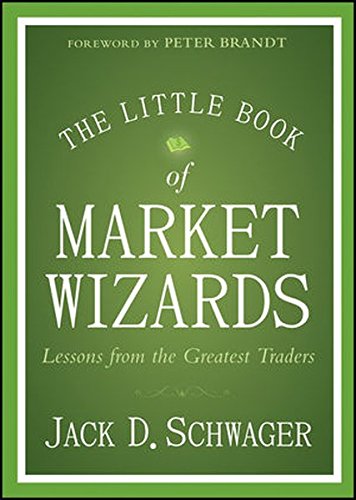
Great little book, highlighting the key points derived from Jack Schwager's Market Wizards books. A CliffsNotes version of the four books totalling about 2,000 pages and comprising about five dozen interviews. Not a substitute for the series, but a great booster shot to help get your head straight if you should ever find it out of alignment. Also a great little intro for a beginning trader to read before deciding where and how to dig in.
Also:

Start small. (Or "little," as the case may be.) It's good to start with an overview before getting into the weeds.
Last edited:
You don't decide to start trading and Voila!, it works. Given that something like 90% of day traders blow out, don't encourage her.
Speedo succinctly summed it up: "Unless one is willing and capable of expending considerable time and effort and can endure frustration and failure along the way, it's best not to start at all."
The post by Tom McGinnis was also dead on. "Where is she and where does she want to go?"
There were other good referrals but how will your friend benefit if she lacks a fundamental understanding of the markets? What good will come of it from spending time at tastytrade if you haven't read a good option book and have a sound understanding of them? It's like recommending that if someone reads Graham's "The Intelligent Investor" then they be able to craft a sound portfolio like Warren Buffet (slight exaggeration . You don't start with the best books/courses and expect it to make sense.
My suggestion is that she start at the beginning. Read some "XXX For Dummies" books. Find out what is of interest (ETFs? Equities? Options? Futures?) and then read some books on that topic. Once she has a decent foundation then she'll be able to converse with other investors/traders and have a better understanding of their suggestions and possible relevance to her.
Speedo succinctly summed it up: "Unless one is willing and capable of expending considerable time and effort and can endure frustration and failure along the way, it's best not to start at all."
The post by Tom McGinnis was also dead on. "Where is she and where does she want to go?"
There were other good referrals but how will your friend benefit if she lacks a fundamental understanding of the markets? What good will come of it from spending time at tastytrade if you haven't read a good option book and have a sound understanding of them? It's like recommending that if someone reads Graham's "The Intelligent Investor" then they be able to craft a sound portfolio like Warren Buffet (slight exaggeration
. You don't start with the best books/courses and expect it to make sense.My suggestion is that she start at the beginning. Read some "XXX For Dummies" books. Find out what is of interest (ETFs? Equities? Options? Futures?) and then read some books on that topic. Once she has a decent foundation then she'll be able to converse with other investors/traders and have a better understanding of their suggestions and possible relevance to her.
Easy to say but quite harder to implement. By pressures if you mean activity i.e. volume then one needs to understand price can also rise on declining volume and it can do so ALL day long.Someone who knows absolutely nothing about trading, and, presumably, the markets, needs to understand demand and supply (which is a law, not a philosophy), and that prices rise when buying pressure exceeds selling pressure and fall when selling pressure exceeds buying pressure. Who's doing the trading and when and where and how and why is all important, but unless one understands that prices rise and fall due to imbalances between buying and selling pressures, the rest of it is of no importance. And it doesn't take years to understand this. Months, maybe. Perhaps even weeks. Some people get it in an afternoon. Granted the colors and candles and indicators and lines and shapes confuse the issue, but if one can sit down with a beginner with a simple line chart (to avoid being distracted by bars and candles and colors), the true basics can be grasped quite easily. Once the "why" of price movement is understood (price rises because demand is greater than supply and vice versa), there is a "conceptual framework" within which to fit all the pegs.
Easy to say but quite harder to implement. By pressures if you mean activity i.e. volume then one needs to understand price can also rise on declining volume and it can do so ALL day long.
No, by "pressures" I mean those who are interested in buying vs those who are interested in selling. If sellers are offering few if any obstacles to buyers, price can rise on practically no volume at all. Today's activity in the NQ is a good example of this. What is most important to an increase in price is whether or not demand is greater than supply.
As for being harder to implement, that depends on how much one knows and how much of what he knows is untrue. If one starts off on the wrong foot, he may never get it. And many never do. Those who know absolutely nothing about charts and indeed may never have seen one have little to no trouble with this.
In general the concept of supply and demand is important and but even more important is how to DETERMINE which is stronger and that requires interpretation of something and it is not as easy as looking at a line chart. Of course, it is easy in hindsite looking at MOST ANY CHART.
The only interpretation required is to determine whether price is higher or lower at point A than it was at Point B, even if those points are only ticks apart. If one can't do this in real time, then, yes, he's going to have trouble.
You may want to look at the Trading Price link I posted earlier (post #10). The thread is only 25 posts long.
Speedo is correct. The "where is she and where does she want to go" actually is quite easy to deduce. She is at zero. She wants to become a profitable trader.You don't decide to start trading and Voila!, it works. Given that something like 90% of day traders blow out, don't encourage her.
Speedo succinctly summed it up: "Unless one is willing and capable of expending considerable time and effort and can endure frustration and failure along the way, it's best not to start at all."
The post by Tom McGinnis was also dead on. "Where is she and where does she want to go?"

Mine was actually slightly worst than 50-50.Not a good analogy. A coin with its "2 sides", is always a 50-50 proposition. Trading the markets properly is more like a 98-2 proposition.
