What is driving Putin?

Opinion
‘He doesn’t negotiate’: Russia’s foreign enemy No.1 on what makes Putin tick

Elizabeth Knight Business columnist October 13, 2022
https://www.smh.com.au/world/europe...on-what-makes-putin-tick-20221012-p5bp94.html

Few have the intimate understanding of Vladimir Putin’s playbook and psychopathy like financier and Russia’s one-time largest foreign investor Bill Browder, who has an estimated worth of $US100 million ($160 million).

There are many descriptors for Browder, including Russia’s anti-corruption crusader, and its most dogged oligarch hunter. But it’s his title as Putin’s No.1 foreign enemy that bestows on him another label - consummate survivor.

2f7f053f12c49cfadaba47c6c11080813e01a012

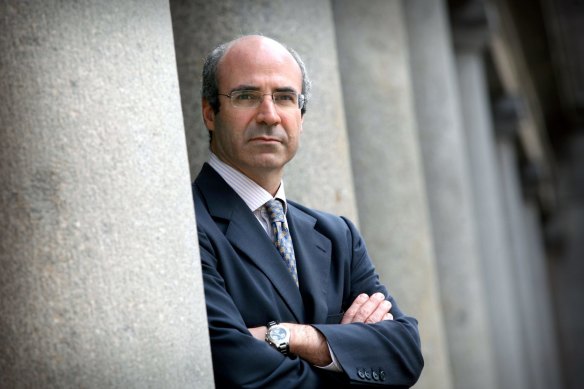
Bill Browder says Putin, “never shows any weakness, he never compromises”. Credit:Bloomberg

American-born Browder, co-founder of investment fund Hermitage Capital, was the biggest foreign investor in Russia after the Soviet Union collapsed, before he was expelled and named a “threat to national security” in 2005 after highlighting corruption.

He ascribes his successful avoidance of joining the long list of other fallen Russian critics to a studious regimen of precautions - and the stupidity of his enemies.

As a former insider - turned outsider - Browder is a member of the rarified breed of people who understand what makes Putin tick.

From his early days as a major and highly successful investor/fortune hunter in the chaotic post-Soviet Russia of the 1990s, Browder scored a front-row seat to Putin and his regime. Now Browder is using this insider intelligence to provide insight into how the war with Ukraine will play out.

Browder’s decision to campaign against the corruption cancer embedded in the upper echelons of Russia’s political and business elite provided him with the additional understanding that comes with being an enemy of the state.

His prognosis is unpleasant to digest for energy markets, the world economy that the war has disrupted, and for those involved in the relentless fighting.

“My vantage point on Russia is different from what you would hear from 90 per cent of what I call the ‘experts’, the political scientists,” he says.

Browder predicts it could be a long, drawn-out conflict, which he says “finishes one of two ways - either Ukraine wins or Russia wins. That’s it. There is no middle ground. I know Putin - he doesn’t negotiate.”

48027048de0c3c0fe7e4deb80be3d0abb2181dbe

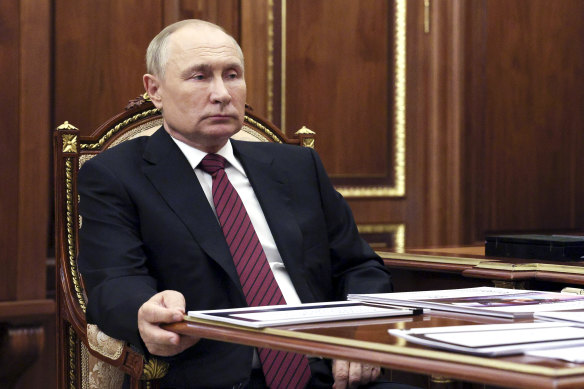
Russian President Vladimir Putin.Credit:AP

“The political scientists are all in the business of agreements, negotiations, summits but this is all based on their dealings with countries that play by some set of rules.

“They [the experts] say that he is upset about NATO expansion or that he is trying to build a legacy for himself by stretching the Russian empire,” says Browder, who describes these views as nonsense.

As he sees it, the “experts” are addicted to the notion this conflict can be negotiated to a close.

“If we give him some promise about NATO, we give him some piece of territory then all problems will be solved,” is how the experts see the resolution, according to Browder.

“What I have learned about Vladimir Putin in my own personal struggle with him is that his motivations are so different than what others could imagine. He doesn’t play by any set of rules.”

Browder believes that for Putin, the war is an existential bet.

“The reason he is at war in Ukraine - and it is not well accepted as a reason - is he is scared of his own people because he has stolen too much money from them over a long period of time.

“He is doing this because he wants a war of distraction, this is all for internal consumption; it is a war designed to ensure that his people are not mad at him, that they are mad at a foreign enemy.”

03a62b700e67c5af0d12b75c4da206f451a1c573

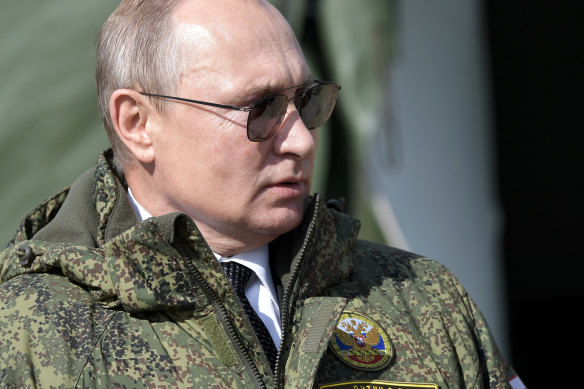
Vladimir Putin’s end game is war, says Bill Browder, formerly Russia’s largest foreign investor.Credit:AP

Browder describes Putin as a psychopath: “Someone who doesn’t have any boundaries, any conscience or any empathy. All he cares about is his own well-being, his own survival.

“He is not like some raving lunatic who is behaving irrationally. He is rational. Everything he does is for his own set of really twisted goals. His goal is to stay alive, and in order to stay alive he’s got to stay in power, and in order to stay in power he has to ensure the Russian people don’t rise against him.”

Thus Putin’s end game is war, according to Browder who has firsthand knowledge of being in his own battle with Putin.

“I bring a personal perspective of what it’s like to have a personal conflict with Putin for the past 13 years and I know how he behaves. He never negotiates, he never shows any weakness, he never compromises. All he knows how to do is escalate.”

Based on these insights, Browder suspects Russia will continue to throw everything it has at the war. But contrary to much commentary he doesn’t believe that either side has an overwhelming military advantage sufficient to win.

“I think the Ukrainians are doing a good job of preventing themselves from losing the war and they are pushing Russia back in certain places, but they don’t have the overwhelming military advantage to win the war. And on the other side, Putin doesn’t have the overwhelming military advantage either.”

But Putin has plenty of motivation.

“You can’t be a dictator and lose a war, so my feeling is that the Russian people will take care of him pretty quickly,” Browder said.

 
you have no idea what you are talking about. Russia’s economy was dead already. Any idiot with a pulse would have initiated sanctions. Bottom line, Putin did this under Biden’s watch because he doesnt respect him, he views Biden as being weak. He never would of done this under Trump.

You're close. This all started with Russian intervention in Syria under Obama but yes democrats.
 
https://www.afr.com/world/europe/biden-visits-us-troops-in-poland-20220326-p5a857
NYT

In an interview more than two decades ago, Vladimir Putin described his younger self, with a hint of self-congratulation, as “a hooligan.” When the interviewer asked if he was exaggerating about his tendency to get into brawls as a schoolboy, Putin took offence.

“You are trying to insult me,” he said. “I was a real thug.”
Russian President Vladimir Putin. AP

Masha Gessen, a Russian American journalist and Moscow native, recounts this exchange in a 2012 biography, “The Man Without a Face: The Unlikely Rise of Vladimir Putin,” which was praised as “part psychological profile, part conspiracy study” inThe New York Times Book Review. To Gessen, Putin’s unabashed description of himself as “a thug” was key to his self-image: someone who could not be bullied, who would lash out unpredictably if he felt slighted and who relished violence.

Understanding Putin and the forces that shaped him has become an urgent global concern, as leaders around the world try to determine his motivations in launching an unprovoked and disastrous invasion of Ukraine, how to best engage with him and how the conflict might evolve.

So far, the military assault appears to be a catastrophic misstep, one that has resulted in crippling economic sanctions and heavy military losses for Russia, as well as mass civilian casualties and destruction in the very Ukrainian cities Putin claims he wants to “liberate.”

To all this, Putin has said, repeatedly, in public comments that the war is going “according to plan.”

As the conflict escalates, the question of what is driving Putin has become an increasingly perplexing one, with no obvious answers but with enormous consequences: The war will end, some experts say, when the Russian president allows it to end.

Gessen set out to understand the Russian leader’s mindset more than a decade ago, first in an article forVanity Fair, then in “The Man Without a Face.” Tracing Putin’s rise from a petulant and unruly schoolboy to a KGB operative who ascended to the Russian presidency, Gessen examined the post-Soviet political, cultural and economic forces that enabled Putin’s rise and the way he vilified the West to solidify his grip on power.

After Russia’s 2014 annexation of Crimea, Gessen wrote a postscript summarising Putin’s increasingly aggressive stance toward Western democracies and his evolution from “a bureaucrat who had accidentally been entrusted with a huge country into a megalomaniacal dictator who believed he was on a civilisational mission.”

In a recent phone interview, Gessen, a staff writer forThe New Yorker, discussed several books that offer insights into Putin’s psychology, as well as titles that illuminate the cultural and geopolitical context that helped shape Putin’s Russia.

Below are Gessen’s recommendations, which have been lightly edited for clarity.

‘Winter Is Coming: Why Vladimir Putin and the Enemies of the Free World Must Be Stopped.’ By Garry Kasparov. PublicAffairs, 2015.

Kasparov, the Russian chess grandmaster, is a longtime critic of Putin.

“Kasparov thinks about life as chess. And he looks at this as a series of plays. He doesn’t look at Putin’s psychology so much as he looks at the logic of his actions and says, ‘OK, well, this is how we game it out.’ And it is not uplifting. I mean, the book is not recent, and he was quite sure then that Putin was at war with the West at that point.

“It’s funny, because one didn’t really have to press in to see that, one just had to pay attention and not be beholden to the conventional wisdom that says, ‘but that’s not possible; that’s crazy; he doesn’t really mean it.’ We’re going to look at this period between 2012 and 2022 as a period when there’s a lot of that happening, when the war was slowly ramping up in plain view and most of the world was in denial about it.”

‘First Person: An Astonishingly Frank Self-Portrait by Russia’s President.’ By Vladimir Putin. PublicAffairs, 2000.

A compilation of interviews with Putin published in the United States in 2000.

“I found it incredibly illuminating because, if you read it as a document of what this man wants to tell the world about himself, you learn a lot. It’s not a very long book, and it doesn’t have a lot of variety, but he recounts three different fights that he had. One was when he was a kid and he felt mistreated by a teacher, if I remember correctly. One was when he was a student and one was when he was a young officer. And in all three cases, he lashes out. He basically loses his temper, and then he goes quiet for a bit, and then he strikes again.

“This is what it communicates: that this is somebody who has no desire to control his temper. He thinks of himself as somebody who will lash out, somebody who’s vengeful. Somebody who likes to strike out of the blue, but also — and this is the thing that I’m most worried about now — he will go quiet for a bit, and then he will strike again. That’s actually an M.O. that is important to his self-conception.”

‘Nature’s Evil: A Cultural History of Natural Resources.’ By Alexander Etkind. Polity, 2021.

This book examines how civilisation and politics have been shaped by resources like coal, oil and grain.

“I recommend anything by Alexander Etkind, who is a cultural historian of Russia. His latest book is called ‘Nature’s Evil,’ and it’s a cultural history of natural resources. It’s not entirely limited to Russia, but I think it actually goes a very long way to explaining how Russia works.”

‘The Anatomy of Post-Communist Regimes.’ By Balint Magyar and Balint Madlovics. CEU Press, 2020.

Magyar, a social scientist and former politician, looks at the ways in which postcommunist regimes have given rise to autocrats who have cracked down on media and political dissent.

“Anything by Balint Magyar. He is a Hungarian social scientist, and he has this tome, it’s this huge book called ‘The Anatomy of Post-Communist Regimes.’ It’s a little on the technical side, but it’s so incredibly illuminating. I think my favourite book of his is called ‘The Post-Communist Mafia State,’ which pretends to be about Hungary, but is the best book for understanding postcommunist Russia and how the regime works.”

This article originally appeared in The New York Times.

And we clearly see now Ukraine will defend themselves to the last man. So the only out now is the removal - death of Putin.
 
'Golden billion,' Putin's favorite conspiracy, explains his worldview and strategy
NPR - https://tinyurl.com/u2dxae4k

MOSCOW — As the war in Ukraine approaches the nine-month mark, Western governments have repeatedly accused Russia of imperialist expansionism, nuclear blackmail, weaponizing food, energy and winter — and a host of other hostilities that put the welfare of millions at risk.

Yet there's an increasingly common counternarrative in Moscow that argues it is the West instead that intends to subject the masses to misery.

Welcome to the "golden billion."


An idea that first emerged in the twilight years of the Soviet Union, the golden billion is a conspiracy theory that posits a cabal of 1 billion global elites seeks to hoard the world's wealth and resources, leaving the rest of the planet to suffer and starve.

For years a fringe theory in Russia, the idea has been increasingly espoused by President Vladimir Putin and other top Kremlin officials as an attack line against the West amid a breakdown in relations over the conflict in Ukraine.


"The model of total domination of the so-called golden billion is unfair. Why should this golden billion of the globe dominate over everyone and impose its own rules of behavior?" Putin asked in a speech last July.

Putin went on to describe the alleged plot as "racist and neocolonial in its essence" — a way for the West to divide the world into superior and "second-rate" nations.

The Kremlin dusts off an old plot
Theories — and conspiracies — about economic inequality and the cut-throat competition for global wealth and resources are nothing new.

But analysts say the Kremlin has increasingly exploited the golden billion theory to deflect the notion of Russia as isolated and alone amid what Moscow calls its "special military operation" in Ukraine.

Instead of Russia facing international condemnation over its actions in Ukraine, the theory attempts to place Moscow at the center of a global majority chafing at Western liberal values and political and economic dominance. Never mind that Russia considers itself a global superpower and is routinely accused of using its own energy resources as a foreign policy sledgehammer.


"This narrative is very handy," says Ilya Yablokov, author of Fortress Russia: Conspiracy Theories in the Post-Soviet World, in an interview with NPR.

Yablokov says the story allows Russia to present itself as leading the "counter-elite."

"It says we give voice to the powerless around the world because we are fighting on their behalf," he says.

A theory fit for hard times
The golden billion appears to have first come to the wider public's attention in a 1990 article by the publicist Anatoly Tsikunov — writing under the pen name A. Kuzmich — called "The Plans of the Global Leadership for the Enslavement of Russia."

Kuzmich argued Western elites looked hungrily to the Soviet Union's vast natural resources in particular — its gas, oil and forests — amid projections of dwindling global supplies and the USSR's decline.

The concept of the world's resources benefiting a select group of a billion people gained further adherents through conservative Russian writer Sergei Kara-Murza, who used it to explain why post-Soviet Russia under then-President Boris Yeltsin kept losing the global economic game.

Echoing well-worn antisemitic screeds, he wrote in a 1999 essay:

"As concerns Russia, there are many signs that this part of the global elite that determines economic and military policies and controls the mass media, will never under any circumstances include the people of Russia among those who have a chance to get on the lifeboat of the golden billion."

Yeltsin's then prime minister, a 48-year-old former KGB officer named Vladimir Putin, assumed the presidency upon Yeltsin's resignation later that same year.

Putin name-checked golden billion early
President Putin has long made clear his grievances over the collapse of the Soviet Union and what he sees as the West's exploitation of Russian weakness in the years that followed.

Similarly, many Russians have adopted an often-repeated Kremlin narrative that, under Putin, Russia had put past humiliations behind it was at last "rising from its knees."

But the Russian leader also displayed an interest in the golden billion theory early on.

In a speech at an Asia-Pacific economic summit in 2000, just months into his first term, Putin argued that global development was "roughly divided into North and South, between the so-called golden billion and the rest of humanity."

Over two decades later, Putin has deepened his embrace of the theory to stoke anger over hot-button issues like access to vaccines and cultural policies.

He's now broadened that pitch to accuse the West of forcing "cancel culture," LGBT rights and gender fluidity on a world raised on "traditional values."

"If Western elites believe that they can inculcate in the minds of their people, in their societies, some strange but trendy tendencies, such as dozens of gay pride parades, then so be it," said Putin in a foreign policy address last month. "Let them do whatever they want, but they certainly have no right to demand that others follow the same."

The message: There are more of us than there are of you.


Even Russia's recent threats to abandon a U.N.-brokered deal to allow exports of Ukrainian and Russian grain and other farm goods through the Black Sea falls within this populist framework.

Russia agreed to extend the export deal last week, but Putin and other Russian officials have repeatedly argued it allows Western nations to hoard Ukrainian grain while preventing Russian agricultural exports from making it to the world's poorest populations. The U.N. counters that initial shipments were part of commercial contracts that helped lower global food prices and also worked to facilitate shipments to the neediest.

Andrei Kolesnikov, a senior Russia fellow at the Carnegie Endowment for International Peace, says he doubts whether Putin's conspiratorial messaging carries weight too far beyond the Kremlin faithful.

But he acknowledges the golden billion — at its core — is an appeal for new adherents, wherever they may be.

"First of all, it is directed at the internal audience. But it also works with the global South and Asia, where Putin tries to recruit supporters," Kolesnikov tells NPR.

"This is how large masses of people are indoctrinated."
 
Back
Top