What exactly is in a candlestick graph that makes traders use it

As candlestick analysis is no longer the fad, what they use is much of the same as in the west. Old school western TA, MA's, indicators such as RSI, MACD, Stochastic, Momentum,Parabolic etc. Also Bollinger Bands and Ichimokukinkouhyou.

Most using candlestick charts are not using Japanese Candlestick analysis...they just like the way the charts look (visually) in comparison to something like bar charts or line charts.
 
Don’t over complicate something that is really simple.

The time for the open and close of a bar is whatever you set it to be depending on the charting software are data feed you are using. That being said there are certain conventions that are used. You could plot a 41 minute bar, but what would be the mathematical underpinning for such an esoteric choice, maybe you have a fetish for prime numbers?

Forex trades 24/5 not 24/7 and during those hours various major markets open and close so there are large changes in liquidity. The 24 hour market can be a bit of a fallacy depending upon your expectations. I typically start looking that the FX market after Tokyo has opened (tonight will be an exception since the Japanese elections were held yesterday and I want to catch the opening), Frankfurt opens and the market gyrations increase, London opens and we are off to the races, New York opens at 8:00 a.m. EST and now there is maximum market liquidity with the major players doing their thing. Often by 11:00 a.m. EST I am looking to exit for the day during that last hour of high liquidity. London closes at 12:00 p.m. EST.

For the start and end of a daily candle there are two popular choices. The first is 5:00 p.m. GMT, the London FX Market close (Greenwich Mean Time, which will alter, relative to my location, next Saturday with the day light savings time change) and 5:00 p.m. EST, the New York FX Market close (Eastern Standard Time, which will alter on 7 November with the day light savings time change).

In terms of trading I need to be aware of when is the market liquid, and when is it not. The Sydney Australia open (5:00 p.m. EST) is typically very light trading, so I avoid it. But if there has been a geopolitical event over the weekend I might enter or exit a position at 5:00 p.m. on Sunday evening EST. Again the Japanese elections this past weekend will have me take a peek at the JPY crosses on the Sydney open, but I will be very wary of a gap and large move since the chance of a subsequent fade of price is high.

I also must be alert to major news events scheduled for that day. For example on the first Friday of the month the U.S. Bureau of Labor and Statistics issues Non-Farm Payroll data. A news event that can cause a large and sudden change in price.

WAIT I JUST ASKED ABOUT THE CANDLES, WTF IS ALL THIS OTHER NONSENSE?

Sorry, I do tend to ramble a bit. But like a well crafted legal decision often the obiter dictum has some wisdom.

So an FX daily bar gives you a 24 period in a single bar. I set mine to open and close at 5:00 p.m. in New York. Pick what you want, but I find the large drop in activity once New York closes to be a rational point to call the day at an end.

On a 15 minute chart the bar starts at say 11:00 a.m. and closes at 11:15 a.m., and every quarter hour there after. I suppose I could get the bar to open at 11:07 and close at 11:22, but have never bothered.

HOW DO I MAKE MONEY FROM THAT?
From that alone, you can’t. But it is a component in the toolbox of a skilled trader. The same way spanners (wrenches), pliers, screwdrivers are all tools for a skilled mechanic. The same tools in the hands of an idiot results in an even more expensive car repair.

The pattern of bars gives some indication of what the next bar in the future might be. That really is what you are after. Not a representation of what price did in the past, but what is the price going to be (You need a lot of other elements to actually get a profit in your pocket, but we can start with this one).

The problem is there is nothing in trading that is absolute. There is never a set of circumstances you know 100% without doubt what will happen next. The pattern of price movement as represented in candles or bars, gives you an indication of probability. The very best set-ups I trade are 80%, frequently they are 70%; at 60% or lower I’ll pass. Others do not and are happy to take 60% probabilities. Yet others do none of this and trade in a completely different way and they claim to be profitable.

I’ll give an example. On a 15 minute chart of the USDJPY the last 4 bars have had very large bodies, all moving up, the current bar that is about to close has the open and close prices nearly identical and the high and low wicks have also had only minor movement (some refer to this as a “doji” candle). This indicates a probability that there is about to be a pullback in the price. But I cannot look at just that piece of data alone. I need it in context of support and resistance levels, deviations as shown in Bollinger Bands, price placement in the longer term trend, or is it a range, and was there a news event that drove the initial upward spike. When I look at all those factors together, and some others, I create a probability estimate of what will happen next and trade accordingly.

The exact same candle formation, but placed differently relative to support and resistance levels, and with or without a news event, means the probabilities are different. One might start a downward fade in price, the other is just a pause and will likely resume the upward move.

If you reads texts by Al Brooks he ascribes great significance to the closing price, and trades the 5 minute bar. I do not trade in exactly the same manner, but I learned the principles of what he was suggesting and applied them to my own methodology. (his books are mind numbing, not page turners, and need to be read in small doses to avoid frustration)

I look at the importance of high, low, open and close as all being relative. They all give me information. A high spike with a large fall back to below the open givens me an indication of a possible peak in price. That top spike will be a significant level to watch in the future. A tiny bar with the open and close close together gives me a hint (just a hint) of market indecision. Take every piece of information and use it.

I could go on about how each individual candle forms a trend or a range within its time frame. Consider a monthly bar when you trade on a 1 hour time frame, what does it tell you?

As @Xela stated earlier she prefers bars; I prefer candles. She is an experienced professional trader, I have great respect for her, and read her posts carefully, yet I chose to do something slightly different.

Sometimes I will turn the charting of past prices off; I only see a chart with the bid and ask compared to levels of support and resistance with nothing else. I'm sure some others do this but have not come across it in a forum.

Other traders approach this completely differently. The problem of the internet is we just do not know who is long term profitable and who is just posting a delusion on the internet. Another thread recently had a blatant lie about an historic event so that poster has now defined himself as a fantasist and needs to be avoided.

Final comment since you appear to be a new trader. If you get all this perfect there is still a very good chance you will lose all your money until you master how to size trades and the risk of ruin. If I trade an 80% probability with my full account, then after 5 trades or so (subject to variance), I will lose everything. It gets much more complicated than this simple example.

= = =
DISCLAIMER
Please adjust the first sentence.
This post only relates to the following: SPOT FOREX

https://www.elitetrader.com/et/threads/who-is-your-favorite-fx-broker.301046/page-10#post-4530735

= = =

Why do your methods have an earn given that smart people and incredibly fast computers go to bed thinking of ways to beat you and Xela out of your money?

Well... maybe not both of you in particular, but I am asking a serrious question.

I would have incorrectly guessed the markets you trade would be too efficient; especially after spread, fees, sometimes an informational disadvantage.

This is a question I will also ask Xela.
 
Last edited:
These types of question are often framed in terms of competing against HFT's, algo's, firms with rooms full of PhD's etc. We retail traders are not competing against anyone. We have learned how to harvest pieces of moves by developing methodology(ies) which gives us a favorable risk/reward edge across a series of trades given the disciplines to adhere to said methodology.
 
Why do your methods have an earn given that smart people and incredibly fast computers go to bed thinking of ways to beat you and Xela out of your money?

Well... maybe not both of you in particular, but I am asking a serrious question.

I would have incorrectly guessed the markets you trade would be too efficient; especially after spread, fees, sometimes an informational disadvantage.

This is a question I will also ask Xela.

A good question deserving of a serious answer. Please do not feel insulted if my answer seems to simplistic at times. I am trying to offer thoughts for a novice trader to consider, I am not being condescending towards you.

EQUITIES

I am a long term trader or investor depending how you define those terms.

For me a short hold on an equity is 3 months, typically a couple years. But as I mentioned before I do not walk away and ignore them. I carefully consider my positions everyday. At present I do believe that equities are high and subject to a strong pullback (well D’uh, who doesn’t) so I am sitting on a significant amount of cash and waiting.

Of course that day might not be for another year or two, so I remain in the market with the typical buy the dips attitude. But I do sell off that extra on the rebound to maintain a consistent ratio of cash to equities. And by buying in I am talking about adding something in the region of 1% to 5% of the total cash available, not a 70% swing for the fences.

The amount of my stack in the market is relatively low on a percentage basis. That has reduced my total equities upside this year. As a percentage of what was available my total profit is around 26%, it could have been closer to 80%+ had I taken the extra risk and piled on.

So a really boring conservative strategy, nothing special at all. Anyone could do it.


SPOT FOREX

This is where I have my fun. And it really is more about what you are asking.
Especially since the level of retail roadkill is so huge.

After my first attempts at fx I quickly saw I was deficient in this arena. So I created a plan to learn; books and all that stuff so many on this forum view with disdain. As though education were some scarlet letter indicating a moral deficiency. I have posted about this elsewhere in the forum.

I am patient. I will wait until I have a profitable strategy before trading large sums. I will wait for the position I want to take shape for both entry and exit.

I am disciplined in my approach. Particularly in the amount that I trade. I have a calculated amount to place on a trade. Frequently it is scaled in with a large initial position then a few minor additions if there are pullbacks.

Every trade is planned out before I enter it. While I have computers to calculate the the details of the trade, I still write it out by hand. I use a small piece of bright yellow card about 2” x 5” and write down something like “B 5 USDCAD at SD3 + 3 BST”. The decoding of my shorthand does not matter, it is that I write the trade in advance(in ink LOL). I have predetermined and written that that maximum size for that trade is 8 lots. I no longer think about the trade size, it has been worked out. Clever people may notice the absence of either a SL or a TP, but that’s another story. I got the idea from the pit traders in Chicago (they were noting completed trades, a whole different thing) but I like the idea of a small simple paper card with my simple trade reference data. No need to look at a computer and mess about with screens. Glance at the card, glance at the price, no need to re-calculate, reconsider, or refute.

I am willing to take a loss. Once I see that the stastical boundaries of my trade have been broken, I AM OUT. That price movement is a complete proof that there is something that I missed, some new event occurred, etc. and I get out. It is like being in a car skidding out of control at high speed about to hit a concrete pole, but I have the ability to use my Star Trek transporter beam and get out of the car before impact. Once I see the trade is out of control I get out then and there.

Long term spot forex pricing is a function of some overwhelming players. The dollar volume that gets pushed through is staggering. Consider the GDP for the United States, for 2017 it is 19 trillion dollars.

see page 25
https://www.whitehouse.gov/sites/whitehouse.gov/files/omb/budget/fy2018/budget.pdf


The spot forex market handles that in about a week. A cash equivalent of the U.S. GDP in a week. Yes, that is a turn over amount being rotated through and not an actual single trade in the trillions. Yes, this and that, it is just to get a sense of scale not draw conclusions. Drawing any correlations in that would be wrong.

That size means that the significant players are governments and a few select banks. Everyone else is just surfing that wave or drowning. An individual putting $10 million in the market is nothing of consequence. At best a price spike.

Incidentally I make price spikes my friend not something to be feared. Retail traders complain about the price spikes, thinking it is stop hunting by their broker (there are stop hunts, it is not your broker, but again another story). I’ll look for the obvious levels where people would place stops and place another buy order at that level. If the stop hunting occurs I benefit (goes back to those notes on the card).

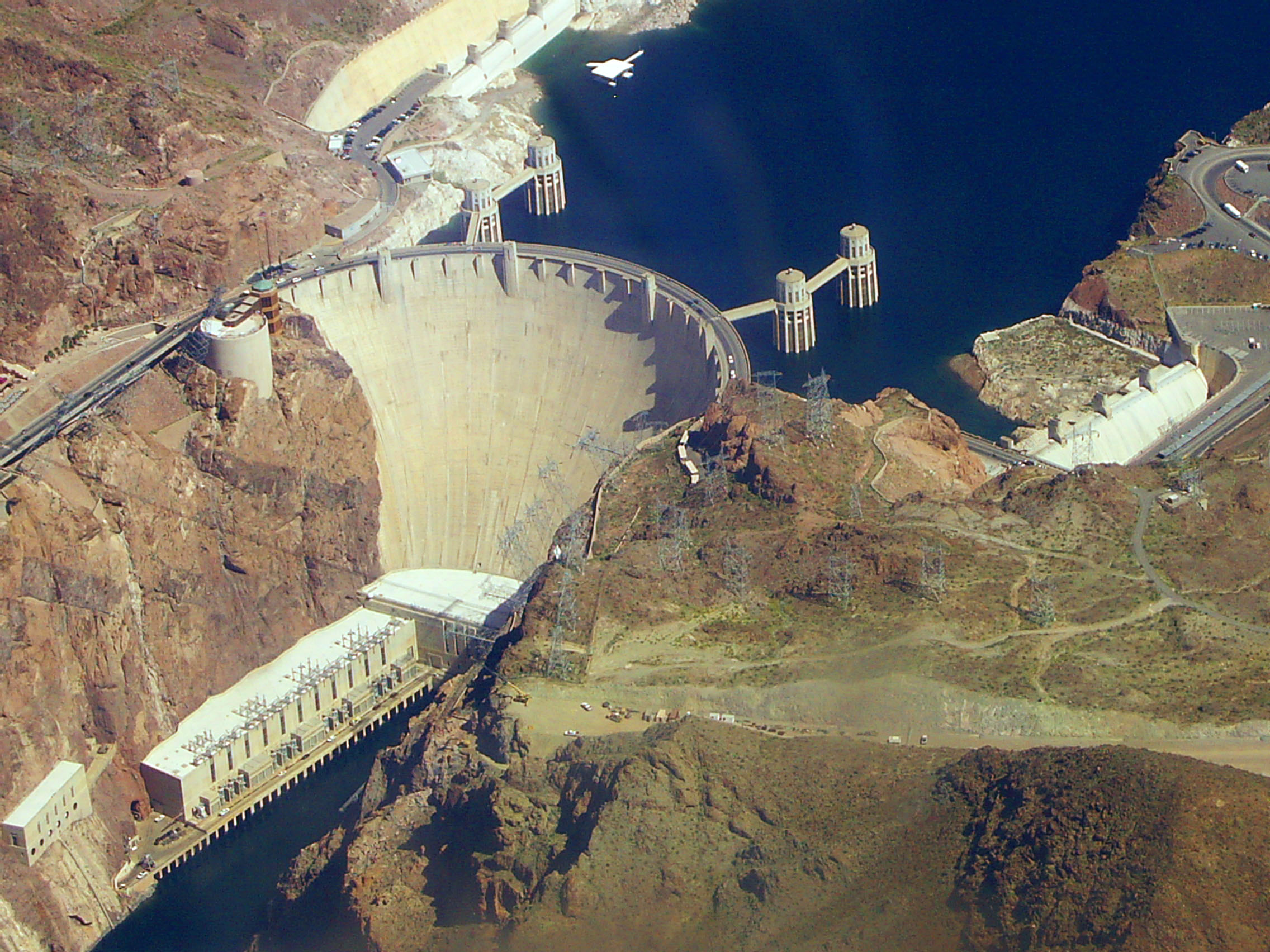
Consider water flowing over a dam. Lets take the Hoover dam as an example.
Hoover_dam_from_air.jpg


The stored energy in that amount of water is incredible. Compare it to a central bank. The FOMC, BOE BOJ, ECB that control the flow of monetary energy. They control what is going out of the reservoir through interest rates, quantitative easing, etc. No single player is going to fight that.

BUT WAIT WHAT ABOUT GEORGE SOROS AND THE BANK OF ENGLAND.

A short explanation can be found here as a reference for those not familiar. It is worth reading. It is commonly stated that Soros made a billion dollars in a single day. The headline often used is that he “Broke the Bank of England”. But as with most sound bites and 140 character tweets, there is a lot more to the story.

http://www.investopedia.com/ask/answers/08/george-soros-bank-of-england.asp

more detailed here
https://priceonomics.com/the-trade-of-the-century-when-george-soros-broke/


Soros did not fight the BOE. What he did was understand that the macro-economic policies of the U.K. government could not be sustained in the long term. With that understanding, and seeing the confluence of events with the Europe creating a common currency, and with a supreme confidence in his analysis (truly extraordinary) he was able to front-run (yes, I am misusing the common trading parlance of that word) the inevitable decision the BOE had to make. He was able to predict their movement, not fight them.

It was a unique event, a Black Swan, albeit with a positive outcome for Mr. Soros. I do not possess that ability (or capital) to consider such trades, so I don’t waste time debating such politics and economics. I can however see the obvious flows of money, and slide along with them. Those money flows take months to accomplish.

Consider the January 2015 EURCHF disaster. It was predictable. The Swiss National Bank could not keep spending money to support the peg with the Euro. The peg had to go. But no one knew when. And rather than announce a policy statement and period of transition, SNB chairman Thomas Jordan just pulled the peg without warning. The result was market chaos and bankruptcies. Beware trading any pegged currency.

Central bankers from Japan, U.K., U.S. and Europe understand that if they did such a thing the results would be dire for their countries. The “easing” in “quantitative easing” is that idea of a balanced methodical approach over time, not a sudden tidal wave that destroys. No doubt many people will disagree with a particular central bank policy and think they should do this or that instead. That is not the point. The point is that they enact their policies over time. There are discreet announcements over time to make the larger policy concept a reality.

Consider interest rate increases. They are done typically as 1/4 point at a time, over many months to allow the markets to adjust. The results of a sudden 8% increase in U.S. rates would be unfathomable.

It’s like deep sea divers. They need to rise slowly over time lest they get the bends. The longer and deeper they have been down, the slower the process to rise.

As other posters have pointed out I am not that bright, so rather than argue I just agree, they are right, and I am deficient in my mental abilities. Being on the downside of a 58 IQ I can only look at the overall market sentiment of the major players.

You see what I did there, I invoked that other form of analysis that cannot be named on retail trading forums.

Part of my forex learning was to see that in the short term various other players in the market will jerk the price this way and that. They shake out the retail player the way a dogs shakes water off itself {not one of mine} while running for a ball.
wetdog17n-1-web.jpg


Despite the shake, and the flying water (a.k.a retail traders) the dog (major money) still heads for the ball. Despite the market shake-ups, the price still heads with major sentiment.

So in answer to the question,
...
that smart people and incredibly fast computers go to bed thinking of ways to beat you and Xela out of your money?
...


I am not trying to be fast, I am not trying to be smart in terms of daily trading. Although it was a good line for Jeremy Irons (be first, be smarter or cheat). It is not about the markets being efficient, it is that the volume of dollars that need to shift in spot fx takes time. That time allows me to sit on the coat tails of the major players. Like a pilot fish following a shark.

If there is a major news announcement (and they are all scheduled and easily available) I’ll sit on the sideline (sometimes I’ll place pending buy /sell stop order above and below, but that is not common, it can easily backfire into a double loss, I want a huge announcement and subsequent move to do that trade). First thing I do when I sit at my trading desk, what are the upcoming major announcements.

I am detailed and not looking for shortcuts. As you may have noticed from my posting style, they tend to be longer than most. The devil is well and truly in the details and I want to know where he is hiding.

Spot fx is like a daily chess game with the best in the world. There is something deeply satisfying in taking their money and using it to buy 100 pounds of dog food (which is about a 1 month supply around here).

I do have PTSD, so I shun people, and live in a somewhat remote area. It allows me to focus on what I want, trading, rather than social obligation and appearance. I find trading very calming.

I do need to adjust things and not look at this forum during the day. Distractions cost. I was about to comment on @Xela and her focus, but that is not my place, she certainly can speak for herself. I find a great many people on this board to be distasteful, and some to be outright liars and frauds who have not done what they claim.

Trading is not based on personalities, and my losses are always contained so I can play another match. The various analogies that get used by some alluding to war, conquest, sexual prowess and other similes for their trading are ridiculous. It is a calm calculated game, the emotional outburst does nothing to move the price and only serves to cloud the thinking and be a distraction.

A final thought. There was a recent thread wherein disparaging comments were made about people who served in the military. The day after tomorrow (28 October) is the ninth anniversary of the death of a great friend. One of the few I ever had. There are few people in this world, outside your parents, that are willing to die for you. Col. John Ripley USMC received exactly such an order from his command; “Hold and Die”. He was willing to do that for you, and in a miracle lived through it. He has a rather long list of well known exploits and is an icon in the USMC.


He, and countless others across the ages, held their ground, so that fools can post their ignorance without fear of consequence. Perhaps a quiet thank-you would be in order rather than, well rather than anything else.

"people sleep peacefully in their beds at night only because rough men stand ready to do violence on their behalf"

I am starting to cry like a little girl so best to stop. Please do not think that I had anything to do with such events. I am no one special and have no connection to any such events. But I am grateful and indebted.

 
A good question deserving of a serious answer. Please do not feel insulted if my answer seems to simplistic at times. I am trying to offer thoughts for a novice trader to consider, I am not being condescending towards you.

EQUITIES

I am a long term trader or investor depending how you define those terms.

For me a short hold on an equity is 3 months, typically a couple years. But as I mentioned before I do not walk away and ignore them. I carefully consider my positions everyday. At present I do believe that equities are high and subject to a strong pullback (well D’uh, who doesn’t) so I am sitting on a significant amount of cash and waiting.

Of course that day might not be for another year or two, so I remain in the market with the typical buy the dips attitude. But I do sell off that extra on the rebound to maintain a consistent ratio of cash to equities. And by buying in I am talking about adding something in the region of 1% to 5% of the total cash available, not a 70% swing for the fences.

The amount of my stack in the market is relatively low on a percentage basis. That has reduced my total equities upside this year. As a percentage of what was available my total profit is around 26%, it could have been closer to 80%+ had I taken the extra risk and piled on.

So a really boring conservative strategy, nothing special at all. Anyone could do it.


SPOT FOREX

This is where I have my fun. And it really is more about what you are asking.
Especially since the level of retail roadkill is so huge.

After my first attempts at fx I quickly saw I was deficient in this arena. So I created a plan to learn; books and all that stuff so many on this forum view with disdain. As though education were some scarlet letter indicating a moral deficiency. I have posted about this elsewhere in the forum.

I am patient. I will wait until I have a profitable strategy before trading large sums. I will wait for the position I want to take shape for both entry and exit.

I am disciplined in my approach. Particularly in the amount that I trade. I have a calculated amount to place on a trade. Frequently it is scaled in with a large initial position then a few minor additions if there are pullbacks.

Every trade is planned out before I enter it. While I have computers to calculate the the details of the trade, I still write it out by hand. I use a small piece of bright yellow card about 2” x 5” and write down something like “B 5 USDCAD at SD3 + 3 BST”. The decoding of my shorthand does not matter, it is that I write the trade in advance(in ink LOL). I have predetermined and written that that maximum size for that trade is 8 lots. I no longer think about the trade size, it has been worked out. Clever people may notice the absence of either a SL or a TP, but that’s another story. I got the idea from the pit traders in Chicago (they were noting completed trades, a whole different thing) but I like the idea of a small simple paper card with my simple trade reference data. No need to look at a computer and mess about with screens. Glance at the card, glance at the price, no need to re-calculate, reconsider, or refute.

I am willing to take a loss. Once I see that the stastical boundaries of my trade have been broken, I AM OUT. That price movement is a complete proof that there is something that I missed, some new event occurred, etc. and I get out. It is like being in a car skidding out of control at high speed about to hit a concrete pole, but I have the ability to use my Star Trek transporter beam and get out of the car before impact. Once I see the trade is out of control I get out then and there.

Long term spot forex pricing is a function of some overwhelming players. The dollar volume that gets pushed through is staggering. Consider the GDP for the United States, for 2017 it is 19 trillion dollars.

see page 25
https://www.whitehouse.gov/sites/whitehouse.gov/files/omb/budget/fy2018/budget.pdf


The spot forex market handles that in about a week. A cash equivalent of the U.S. GDP in a week. Yes, that is a turn over amount being rotated through and not an actual single trade in the trillions. Yes, this and that, it is just to get a sense of scale not draw conclusions. Drawing any correlations in that would be wrong.

That size means that the significant players are governments and a few select banks. Everyone else is just surfing that wave or drowning. An individual putting $10 million in the market is nothing of consequence. At best a price spike.

Incidentally I make price spikes my friend not something to be feared. Retail traders complain about the price spikes, thinking it is stop hunting by their broker (there are stop hunts, it is not your broker, but again another story). I’ll look for the obvious levels where people would place stops and place another buy order at that level. If the stop hunting occurs I benefit (goes back to those notes on the card).

Consider water flowing over a dam. Lets take the Hoover dam as an example.
Hoover_dam_from_air.jpg


The stored energy in that amount of water is incredible. Compare it to a central bank. The FOMC, BOE BOJ, ECB that control the flow of monetary energy. They control what is going out of the reservoir through interest rates, quantitative easing, etc. No single player is going to fight that.

BUT WAIT WHAT ABOUT GEORGE SOROS AND THE BANK OF ENGLAND.

A short explanation can be found here as a reference for those not familiar. It is worth reading. It is commonly stated that Soros made a billion dollars in a single day. The headline often used is that he “Broke the Bank of England”. But as with most sound bites and 140 character tweets, there is a lot more to the story.

http://www.investopedia.com/ask/answers/08/george-soros-bank-of-england.asp

more detailed here
https://priceonomics.com/the-trade-of-the-century-when-george-soros-broke/


Soros did not fight the BOE. What he did was understand that the macro-economic policies of the U.K. government could not be sustained in the long term. With that understanding, and seeing the confluence of events with the Europe creating a common currency, and with a supreme confidence in his analysis (truly extraordinary) he was able to front-run (yes, I am misusing the common trading parlance of that word) the inevitable decision the BOE had to make. He was able to predict their movement, not fight them.

It was a unique event, a Black Swan, albeit with a positive outcome for Mr. Soros. I do not possess that ability (or capital) to consider such trades, so I don’t waste time debating such politics and economics. I can however see the obvious flows of money, and slide along with them. Those money flows take months to accomplish.

Consider the January 2015 EURCHF disaster. It was predictable. The Swiss National Bank could not keep spending money to support the peg with the Euro. The peg had to go. But no one knew when. And rather than announce a policy statement and period of transition, SNB chairman Thomas Jordan just pulled the peg without warning. The result was market chaos and bankruptcies. Beware trading any pegged currency.

Central bankers from Japan, U.K., U.S. and Europe understand that if they did such a thing the results would be dire for their countries. The “easing” in “quantitative easing” is that idea of a balanced methodical approach over time, not a sudden tidal wave that destroys. No doubt many people will disagree with a particular central bank policy and think they should do this or that instead. That is not the point. The point is that they enact their policies over time. There are discreet announcements over time to make the larger policy concept a reality.

Consider interest rate increases. They are done typically as 1/4 point at a time, over many months to allow the markets to adjust. The results of a sudden 8% increase in U.S. rates would be unfathomable.

It’s like deep sea divers. They need to rise slowly over time lest they get the bends. The longer and deeper they have been down, the slower the process to rise.

As other posters have pointed out I am not that bright, so rather than argue I just agree, they are right, and I am deficient in my mental abilities. Being on the downside of a 58 IQ I can only look at the overall market sentiment of the major players.

You see what I did there, I invoked that other form of analysis that cannot be named on retail trading forums.

Part of my forex learning was to see that in the short term various other players in the market will jerk the price this way and that. They shake out the retail player the way a dogs shakes water off itself {not one of mine} while running for a ball.
wetdog17n-1-web.jpg


Despite the shake, and the flying water (a.k.a retail traders) the dog (major money) still heads for the ball. Despite the market shake-ups, the price still heads with major sentiment.

So in answer to the question,


I am not trying to be fast, I am not trying to be smart in terms of daily trading. Although it was a good line for Jeremy Irons (be first, be smarter or cheat). It is not about the markets being efficient, it is that the volume of dollars that need to shift in spot fx takes time. That time allows me to sit on the coat tails of the major players. Like a pilot fish following a shark.

If there is a major news announcement (and they are all scheduled and easily available) I’ll sit on the sideline (sometimes I’ll place pending buy /sell stop order above and below, but that is not common, it can easily backfire into a double loss, I want a huge announcement and subsequent move to do that trade). First thing I do when I sit at my trading desk, what are the upcoming major announcements.

I am detailed and not looking for shortcuts. As you may have noticed from my posting style, they tend to be longer than most. The devil is well and truly in the details and I want to know where he is hiding.

Spot fx is like a daily chess game with the best in the world. There is something deeply satisfying in taking their money and using it to buy 100 pounds of dog food (which is about a 1 month supply around here).

I do have PTSD, so I shun people, and live in a somewhat remote area. It allows me to focus on what I want, trading, rather than social obligation and appearance. I find trading very calming.

I do need to adjust things and not look at this forum during the day. Distractions cost. I was about to comment on @Xela and her focus, but that is not my place, she certainly can speak for herself. I find a great many people on this board to be distasteful, and some to be outright liars and frauds who have not done what they claim.

Trading is not based on personalities, and my losses are always contained so I can play another match. The various analogies that get used by some alluding to war, conquest, sexual prowess and other similes for their trading are ridiculous. It is a calm calculated game, the emotional outburst does nothing to move the price and only serves to cloud the thinking and be a distraction.

A final thought. There was a recent thread wherein disparaging comments were made about people who served in the military. The day after tomorrow (28 October) is the ninth anniversary of the death of a great friend. One of the few I ever had. There are few people in this world, outside your parents, that are willing to die for you. Col. John Ripley USMC received exactly such an order from his command; “Hold and Die”. He was willing to do that for you, and in a miracle lived through it. He has a rather long list of well known exploits and is an icon in the USMC.


He, and countless others across the ages, held their ground, so that fools can post their ignorance without fear of consequence. Perhaps a quiet thank-you would be in order rather than, well rather than anything else.

"people sleep peacefully in their beds at night only because rough men stand ready to do violence on their behalf"

I am starting to cry like a little girl so best to stop. Please do not think that I had anything to do with such events. I am no one special and have no connection to any such events. But I am grateful and indebted.

Thank you for your incredibly detailed reply and illustrative pictures.
 
Last edited:
Candle sticks give a better visual interpretation on charts - Steve Nison introduced thi s"candles" to the west BUT in Japan Rice farmers etc had been suing that concept for donkeys years.
May be good to Look in some Nice books on candle sticks by steve nison ( or even you tube etc) in cyberspace

ALso Candle sticks al not equal as it were - one can go look at Ichimoku Kenko ryu etc
 
Could you take a look at the question I posted before this? I am confused about the opening and closing prices on a interval lesser than that of the open and close of the market. Ex: Forex operates without closing, so whats the point of the open and close prices?
Even Forex has a point in time when a day ends and a new one begins. I am not sure but I think it is 5 pm new york time. So if you look at a spot forex daily candlestick chart you will see a candle close at 5 pm and a new one begin at 5:01 pm.
 
Back
Top