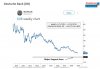
What are the repercussions of unlimited printing?

Money printing is another name for deficit spending, QE, and debt monetization.

The end game is debt saturation, asset bubbles, and a complete dependence on credit for all economic activity. The sovereign becomes indebted. If you keep doing it long enough, then there is a buildup of non-performing and underperforming loans. This can be called debt overhang. Banks love it when debt markets grow.

Debt levels get heavy and the system becomes overleveraged. Mal-investment occurs and is protected, and allowed to continually refinance. All the printing works to suppress interest rates so that the refinancing can keep going. Debts don't get paid off, ever. We've been doing it for so long that the debt deflationary pressure is limiting inflation, so we end up monetizing a lot of debt and getting only a small amount of real GDP.

In theory, this should put pressure on the domestic currency and create local inflation, and it has (Fed likes 2%). But, in the case of the US, we have managed exchange rates and the reserve currency. This is called a managed float regime, or 'dirty' float. It works to prevent currency depreciation.

Because of the dirty float (Fed, BOJ, BOE, ECB, RBA, BOC, etc.) the central banks can print all they want and just fix the exchange rates. There is very little risk of runaway inflation. But, there is serious risk of deflation in any significant slow down in demand. This is due to the amount of leverage in the system (overhang, malinvestment, low margin businesses).

That's what SARS-COV2 is doing. It's causing a collapse in demand when debt levels are at all time highs. Revenues are evaporating which is creating a need for exposed firms to source cash and cut expenses, else they may go out of business. Problem is, for some of the affected industries, they might actually be better off just exciting the industry they were in prior to COVID.

The Fed wants everything to go back to the way it was before COVID, but we're not there yet.[/QUOT


Great explanation. What your saying is correct. But the time this end which could be 12-18 months i believe overall consumption will be much lower. Nobody's talking about the demand side which won't come back like it was. This will end up much like Japan with massive debt and low overall growth. We saw some of that the last few yrs. Even with all the tax cuts Trump did overall Gdp growth was still not much higher than during Obama. The return on stimulus gets less and less due to the massive overhang of ever increasing debt. I just read an artilce about how Chinesse people are still scared to go out even though they can. The Virus will scar people going forward. Over the next yr people will get used to going out less and doing less of everything. Company's will spend less on plant and equipment . Out standard of living will fall in the company decade. For instance people will keep cars longer, buy fewer clothes,Eat out less, go on few vacations etc. The coming yrs will be a demand problem.


Great explanation. What your saying is correct. But the time this end which could be 12-18 months i believe overall consumption will be much lower. Nobody's talking about the demand side which won't come back like it was. This will end up much like Japan with massive debt and low overall growth. We saw some of that the last few yrs. Even with all the tax cuts Trump did overall Gdp growth was still not much higher than during Obama. The return on stimulus gets less and less due to the massive overhang of ever increasing debt. I just read an artilce about how Chinesse people are still scared to go out even though they can. The Virus will scar people going forward. Over the next yr people will get used to going out less and doing less of everything. Company's will spend less on plant and equipment . Out standard of living will fall in the company decade. For instance people will keep cars longer, buy fewer clothes,Eat out less, go on few vacations etc. The coming yrs will be a demand problem.
 
Last edited:
We got some apocalypticists (correct?) here in Germany, that come from the financial industry.

One says, that there might be 15% zombie companies in Germany, that exist because of the zero interest rate here.

Once a big crisis escalates (like today?), and banks get problems with their credit holders, this whole construction will collapse.

Let's see.

Same people say there are 30% zombie companies in Japan, but the economy there is still running... ; )

Btw, the US is now heading the same way.

Die Deutsche Bank selbst ist wohl der grösste aller Zombies
 

Attachments

  • gund stock cats.jpg
    gund stock cats.jpg
    41.8 KB · Views: 45
Every other country who has printed has been destroyed economically with mass inflation . Can we truly print unlimited with no penalty. So far the answer is yes . Everything we ever knew about economics has been rendered invalid so far.
We can as long as China keep taking our paper for their goods.

Twice the bang for the buck. It funds us and keeps our inflation in check - well the phony Fed CPI one anyway.

Once their economy matures and they no longer need to be as export driven and other countries develop and become big consumers of Chinese goods we will be up chit's creek.

Probably be about the time WWW III shows up.
 
Sorry for the above I was interrupted half way through.

It is not the nominal number of dollars in circulation but the ratio of dollars to the amount of dollar denominated goods and services in demand and available that matters. The government has several tools at its disposal for decreasing the number of dollars in circulation if it becomes necessary to reduce inflation: selling treasuries and increasing interest rates is one of main tools, and raising taxes is another, and very powerful, tool.. . Credit is the main factor in determining the supply of money. The government can affect the amount of credit by raising interest rates, a relatively weak tool with a non-linear effect. But the government can also affect credit via regulation of the credit markets. This can be a very powerful tool.

It is foolish to think the government is out of options unless productivity were to decrease precipitously. Then the government would have a real problem on its hands.
 
Last edited:
Every other country who has printed has been destroyed economically with mass inflation . Can we truly print unlimited with no penalty. So far the answer is yes . Everything we ever knew about economics has been rendered invalid so far.

"Everything we ever knew about economics has been rendered invalid so far."

It's not everything by any means. But with regard to money yes, things have changed.

A problem that has always been with us is this: there is a natural tendency to equate personal finances with government finances, when in reality they are very different. And since the transition to fiat money , they are VERY different.

"Can we truly print unlimited with no penalty. So far the answer is yes . "​

We haven't, still, updated our thinking to account for conversion from a commodity based money to fiat money. There are prominent, influential, "old school" economists who have not fully adjusted to the change. The only school of economics that fully understands money now are the Modern Money Theory economists. Those are the people we need to be listening to. But, until quite recently, were shouted down.

The MMT economists can tell us why it seems that printing can go on without limit or bad consequence. But they can also correctly explain the constraints and consequences.

Here is an excellent article on MMT I would encourage everyone to read. https://en.wikipedia.org/wiki/Modern_Monetary_Theory

Let me add that incorrect statements, or misleading statements and opinions, re MMT economics are rife on the internet.

MMT concepts go back at least as far as the late 1940's in papers of Abba Lerner, who I think it would be fair to say is the father of MMT economics.
 
Last edited:
Money printing is another name for deficit spending, QE, and debt monetization.

The end game is debt saturation, asset bubbles, and a complete dependence on credit for all economic activity. The sovereign becomes indebted. If you keep doing it long enough, then there is a buildup of non-performing and underperforming loans. This can be called debt overhang. Banks love it when debt markets grow.

Debt levels get heavy and the system becomes overleveraged. Mal-investment occurs and is protected, and allowed to continually refinance. All the printing works to suppress interest rates so that the refinancing can keep going. Debts don't get paid off, ever. We've been doing it for so long that the debt deflationary pressure is limiting inflation, so we end up monetizing a lot of debt and getting only a small amount of real GDP.

In theory, this should put pressure on the domestic currency and create local inflation, and it has (Fed likes 2%). But, in the case of the US, we have managed exchange rates and the reserve currency. This is called a managed float regime, or 'dirty' float. It works to prevent currency depreciation.

Because of the dirty float (Fed, BOJ, BOE, ECB, RBA, BOC, etc.) the central banks can print all they want and just fix the exchange rates. There is very little risk of runaway inflation. But, there is serious risk of deflation in any significant slow down in demand. This is due to the amount of leverage in the system (overhang, malinvestment, low margin businesses).

That's what SARS-COV2 is doing. It's causing a collapse in demand when debt levels are at all time highs. Revenues are evaporating which is creating a need for exposed firms to source cash and cut expenses, else they may go out of business. Problem is, for some of the affected industries, they might actually be better off just exciting the industry they were in prior to COVID.

The Fed wants everything to go back to the way it was before COVID, but we're not there yet.
Very interesting and thought provoking post. Thank you.
 
Back
Top