
Volume Analysis

Hi,

There are at least three approaches of volume analysis:

a) Time-based volume --- cumulative volume within a fixed period of time
b) Volume profile --- volume by price
c) Volume by wave --- David Weis method

Has anyone applied c) to trading successfully ?

Any comments or suggestions would be appreciated.
 
Hi,

There are at least three approaches of volume analysis:

a) Time-based volume --- cumulative volume within a fixed period of time
b) Volume profile --- volume by price
c) Volume by wave --- David Weis method

Has anyone applied c) to trading successfully ?

Any comments or suggestions would be appreciated.
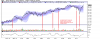
Actually the "Weis method" originated with Richard Wyckoff, but the Wyckoff material is free. I've attached the chapter on volume from Wyckoff's course:
 

Attachments

Hi,

There are at least three approaches of volume analysis:

a) Time-based volume --- cumulative volume within a fixed period of time
b) Volume profile --- volume by price
c) Volume by wave --- David Weis method

Has anyone applied c) to trading successfully ?

Any comments or suggestions would be appreciated.
When I was studying Wyckoff, at the time Weis method made sense to me until I started testing it, it is like most things in trading, the eye sees what it wants to see. Longer you stay in trading, most tend to finally figure it out that certain principles don't stop working, trading doesn't have to be hard, and toughest thing to overcome is oneself staying the course with ones own rules.

Support/Resistance doesn't change, chart patterns which are a form of S/R doesn't change. And you can learn about Weis approach but just keep an open mind on his beliefs. I found opposite approach to volume for day trading ES and finding short term lows in daily stocks.
 

Attachments

  • Disney_env_test-PG2.png
    Disney_env_test-PG2.png
    95.7 KB · Views: 475
When I was studying Wyckoff, at the time Weis method made sense to me until I started testing it, it is like most things in trading, the eye sees what it wants to see. Longer you stay in trading, most tend to finally figure it out that certain principles don't stop working, trading doesn't have to be hard, and toughest thing to overcome is oneself staying the course with ones own rules.

Support/Resistance doesn't change, chart patterns which are a form of S/R doesn't change. And you can learn about Weis approach but just keep an open mind on his beliefs. I found opposite approach to volume for day trading ES and finding short term lows in daily stocks.

As regards your chart example, there is no such thing as "up volume" or "down volume"; there is only volume. If one is using color-coding, the color depends on the relationship between a given bar and the previous bar. But volume, like price, is continuous, so a given bar represents only the number of trades for that interval. Whether the volume is on the demand side or the supply side will be reflected in the behavior of price.

Therefore, a "long" bar is due to a greater than average number of trades. If price goes up, demand had the upper hand. Color is irrelevant.
 
Actually the "Weis method" originated with Richard Wyckoff, but the Wyckoff material is free. I've attached the chapter on volume from Wyckoff's course:

When I was studying Wyckoff, at the time Weis method made sense to me until I started testing it, it is like most things in trading, the eye sees what it wants to see. Longer you stay in trading, most tend to finally figure it out that certain principles don't stop working, trading doesn't have to be hard, and toughest thing to overcome is oneself staying the course with ones own rules.

Support/Resistance doesn't change, chart patterns which are a form of S/R doesn't change. And you can learn about Weis approach but just keep an open mind on his beliefs. I found opposite approach to volume for day trading ES and finding short term lows in daily stocks.

Thanks.

I came across Weis' video few days ago,


It seems to complement Linda Raschke's video:


For the time being, Weis volume waves are just beautiful triangles to me. I'll spend some time during the weekend examining Wyckoff and Weis method.
 

Attachments

  • ES-20141106-1-min.png
    ES-20141106-1-min.png
    78.1 KB · Views: 160
For the time being, Weis volume waves are just beautiful triangles to me. I'll spend some time during the weekend examining Wyckoff and Weis method.

Four hours is a lot of video. Just keep in mind that "support" is the level at which sellers are no longer willing to lower the ask; "resistance" is the level at which buyers are no longer willing to pay it.
 
Hi,

There are at least three approaches of volume analysis:

a) Time-based volume --- cumulative volume within a fixed period of time
b) Volume profile --- volume by price
c) Volume by wave --- David Weis method

Has anyone applied c) to trading successfully ?

Any comments or suggestions would be appreciated.
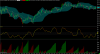
Hi

I just have the time based trading volume on the bottom of my price charts, I've found what you read on the internet about volume mostly to be half right, for example a successful breakout has to be accompanied by high or increased volume, so it pays to do your own study....
 
Hi,

There are at least three approaches of volume analysis:

a) Time-based volume --- cumulative volume within a fixed period of time
b) Volume profile --- volume by price
c) Volume by wave --- David Weis method

Has anyone applied c) to trading successfully ?
%%%%%%%%%%%%%%%%%%%%
I like variations on [a],;
200 period moving average on volume. Glad i also did a study on volume weighted moving average.
I would prefer average or better than average volume on moves, but many times the market does not care about that.

Actually careful buys + sells real close to average volume can be good; wisdom is profitable to direct
%%%%%%%%%%%%%%%%%%%%%%%%%%%%%%%%%%% Good question

Any comments or suggestions would be appreciated.
 
Hi

I just have the time based trading volume on the bottom of my price charts, I've found what you read on the internet about volume mostly to be half right, for example a successful breakout has to be accompanied by high or increased volume, so it pays to do your own study....


Edit. think I worded this wrong, a successful breakout doesn't require high or increased vol, and can be successful on low and very low...
 
Back
Top