
You are using an out of date browser. It may not display this or other websites correctly.
You should upgrade or use an alternative browser.
You should upgrade or use an alternative browser.
volarbs
- Thread starter destriero
- Start date
- Status
- Not open for further replies.

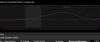
SN vol arb. 5K peak PNL; $300 haircut. $40 tail risk.
Are these earnings/news play? What is the duration?
Looks like you found the holy grail. I have no idea how you did that, but here's what I am thinking:
1. In order to have zero BP reduction, the position must be completely covered. You can't have any uncovered short legs. Also a requirement for the position to be considered an arbitrage. With that kind of size, it had to be completely covered.
2. SN implies one underlying.
3. It's possible to sell vertical spreads to collect a credit, but that would result in a buying power reduction unless you were able to receive the full width of the spread as credit.
4. It's not possible to put on a long calendar or diagonal for a credit unless you legged into it after the market moved. In which case, you could have just closed the position for a profit instead of converting it to a risk-less position. Maybe the position was too illiquid to close efficiently. Short calendar / diagonal not possible without significant BP reduction.
Regarding the 2nd trade, you state that you could have entered the trade as a COB-order which I find hard to believe that such an extreme level of market inefficiency exists. Further, since you state that you legged into the trade, that implies that the inefficiency had to exist for a length of time suitable to manual (non-automated) trading. Looks like the trade started as a very deep ITM put butterfly.
In any case, nice trades!
Last edited:
There was a wager thread on the professor's thread (put seller) and he lost/left. I posted an ES skew lock that required $38K on $35K req. Adding to the position with the COB order allows virtually unlimited size to hit the tape. Visualizing the trade stress and meeting one condition eliminates Dvega/Dvol risk. If the curve is above X = arb.
He required us to trade on sim: https://www.elitetrader.com/et/thre...-and-market-drift.364633/page-49#post-5728641
He required us to trade on sim: https://www.elitetrader.com/et/thre...-and-market-drift.364633/page-49#post-5728641
Last edited:
There was a wager thread on the professor's thread (put seller) and he lost/left. I posted an ES skew lock that required $38K on $35K req. Adding to the position with the COB order allows virtually unlimited size to hit the tape. Visualizing the trade stress and meeting one condition eliminates Dvega/Dvol risk. If the curve is above X = arb.
He required us to trade on sim: https://www.elitetrader.com/et/thre...-and-market-drift.364633/page-49#post-5728641
The trade was traded production and the req was 72K and paid 75K (slightly different ratios).
Looks like you found the holy grail. I have no idea how you did that, but here's what I am thinking:
1. In order to have zero BP reduction, the position must be completely covered. You can't have any uncovered short legs. Also a requirement for the position to be considered an arbitrage. With that kind of size, it had to be completely covered.
2. SN implies one underlying.
3. It's possible to sell vertical spreads to collect a credit, but that would result in a buying power reduction unless you were able to receive the full width of the spread as credit.
4. It's not possible to put on a long calendar or diagonal for a credit unless you legged into it after the market moved. In which case, you could have just closed the position for a profit instead of converting it to a risk-less position. Maybe the position was too illiquid to close efficiently. Short calendar / diagonal not possible without significant BP reduction.
Regarding the 2nd trade, you state that you could have entered the trade as a COB-order which I find hard to believe that such an extreme level of market inefficiency exists. Further, since you state that you legged into the trade, that implies that the inefficiency had to exist for a length of time suitable to manual (non-automated) trading. Looks like the trade started as a very deep ITM put butterfly.
In any case, nice trades!
It's long vol throughout. Obv no net shorts.
SN and index. No inter-market as it is traded on the COB.
It's long vol. It's not legged or legged over time. It's sent as a single complex order or as multiple orders to disguise the position. I know it sounds silly. One of the index trades (100 lot) added 12K in buying power under TIMS/PM.
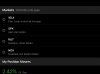

Short index and long 14K vols. Do the math (time stamp)
Assuming a $1,000,000 account, a 2% gain is 20 grand, man!

Looks like you found the holy grail. I have no idea how you did that, but here's what I am thinking:
1. In order to have zero BP reduction, the position must be completely covered. You can't have any uncovered short legs. Also a requirement for the position to be considered an arbitrage. With that kind of size, it had to be completely covered.
2. SN implies one underlying.
3. It's possible to sell vertical spreads to collect a credit, but that would result in a buying power reduction unless you were able to receive the full width of the spread as credit.
4. It's not possible to put on a long calendar or diagonal for a credit unless you legged into it after the market moved. In which case, you could have just closed the position for a profit instead of converting it to a risk-less position. Maybe the position was too illiquid to close efficiently. Short calendar / diagonal not possible without significant BP reduction.
Regarding the 2nd trade, you state that you could have entered the trade as a COB-order which I find hard to believe that such an extreme level of market inefficiency exists. Further, since you state that you legged into the trade, that implies that the inefficiency had to exist for a length of time suitable to manual (non-automated) trading. Looks like the trade started as a very deep ITM put butterfly.
In any case, nice trades!
I did a couple of trades on ES that showed 100% POP on IB's payoff diagram. Judging by this payoff diagram, IB uses BS as a pricing model, as payoff is flat no matter how DITM a put side trade may get, under the assumption of increasing back strike volatility, of course. Term structure was inverted when I put these trades on. However, these trades need to be actively managed as IV term structure changes because expectency will "Evolve". In other words, I lost on a trade with a 100% POP! Sigh... not even Destriero can make me profitable! The other trade, managed before expiration, did make money.
I would be more specific, assuming my structure was actually similar to Destriero's, but in respect to his "Scrutiny" statement, I'll leave it at that. By the way, it was easy to get a fill by splitting the B/A when entering the orders as a single trade.
- Status
- Not open for further replies.