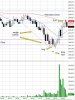
Very sad day...

Hello pinabetal,

Good questions.

I was in a trading room with a technical analysis discretionary trader just learning and follow his trades.

After trying and watching most indicators (ema, rsi, macd, etc) and the candles (price action), I always noticed that the actual price on the chart would move in the direction before the emas would change.

It was like the indicators was always behind the actual price. The indicators was lagging the actually price I was seeing on the chart. It was like "why I am waiting for this indicator line on MACD to cross up when price is already move up, I am going to miss a good entry" Plus it was there numbers in the indicators that confuse me. Like which number to use and why. Do I use the 7 ema, 8 ema, 20 ema, 4 rsi, etc etc.

Indicators was just a bit confusing at first. Maybe I was still learning and in-patience.

My simple thought process was "why do i need indicators, if I see the price moving up or down, like its right there, price is moving and here are the indicators following price by x amount of seconds, these indicators are useless"

So I took them off of my chart, cause they lagging price, I don't need them to tell me which direction price is moving. I see the price moving up and down clear as day.

I notice price would stop at these support and resistance, and thought my self, if price is moving up and goes above this resistance I see price struggling with, why not just get on board when price get above this resistance at decent entry where I can put a stop loss.

And that's my rationale for only using candles in conjunction with support/resistance.


NOWWW, fast forward 3 years, after learning alot, I would like to move more into automated trading, proper back testing and data collection/analyzing and my manual way of trading I can not code "my eyes see price going up, so get long". Therefore an indicator(s) makes sense now.


Interesting, well I think some indicators do a lot better if you understand better how accumulation and distribution works, not every indicator is bests used by simply immediately entering a position just because it gave a buy or sell signal or had a cross.

Not only is it important where the signal took place, sometimes you have to be patient for an entry. This may seem obvious, but I haven't personally seen a lot of talk about this, most of the time when people here "buy or sell signal" in my experience they think to immediately take a position and expect green in there account balance.
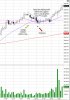
 
Wow... What a crazy day. I was green nearly 3500 dollars on my account... And I chased 3 stocks and held one of the stock thru earning.. . Guess what? My account from +3500 to - 900 dollars. I liquidate the bad earning stock right after hour. Regret... Regret... Regret... Should have..... Would have.... Should have sold before closing bells.....what a crazy day. All my moves were wrong... As soon as I entered a trade, it dropped and I got stopped out. When I shorted a stock, it went up....
Feeling sad and emotional now..... Very discouraged.

I agree earnings is a gamble. We all have been there, done that. Lost 35k on earnings, won 40k on earnings. Over the years, betting directionals is a coin flip. However if the long run, you can master a technique and step stops, you may be able to profit from earnings.
 
Hello pinabetal,

Good questions.

I was in a trading room with a technical analysis discretionary trader just learning and follow his trades.

After trying and watching most indicators (ema, rsi, macd, etc) and the candles (price action), I always noticed that the actual price on the chart would move in the direction before the emas would change.

It was like the indicators was always behind the actual price. The indicators was lagging the actually price I was seeing on the chart. It was like "why I am waiting for this indicator line on MACD to cross up when price is already move up, I am going to miss a good entry" Plus it was there numbers in the indicators that confuse me. Like which number to use and why. Do I use the 7 ema, 8 ema, 20 ema, 4 rsi, etc etc.

Indicators was just a bit confusing at first. Maybe I was still learning and in-patience.

My simple thought process was "why do i need indicators, if I see the price moving up or down, like its right there, price is moving and here are the indicators following price by x amount of seconds, these indicators are useless"

So I took them off of my chart, cause they lagging price, I don't need them to tell me which direction price is moving. I see the price moving up and down clear as day.

I notice price would stop at these support and resistance, and thought my self, if price is moving up and goes above this resistance I see price struggling with, why not just get on board when price get above this resistance at decent entry where I can put a stop loss.

And that's my rationale for only using candles in conjunction with support/resistance.


NOWWW, fast forward 3 years, after learning alot, I would like to move more into automated trading, proper back testing and data collection/analyzing and my manual way of trading I can not code "my eyes see price going up, so get long". Therefore an indicator(s) makes sense now.
ok
 
Last edited:
Hello pinabetal,

Good questions.

I was in a trading room with a technical analysis discretionary trader just learning and follow his trades.

After trying and watching most indicators (ema, rsi, macd, etc) and the candles (price action), I always noticed that the actual price on the chart would move in the direction before the emas would change.

It was like the indicators was always behind the actual price. The indicators was lagging the actually price I was seeing on the chart. It was like "why I am waiting for this indicator line on MACD to cross up when price is already move up, I am going to miss a good entry" Plus it was there numbers in the indicators that confuse me. Like which number to use and why. Do I use the 7 ema, 8 ema, 20 ema, 4 rsi, etc etc.

Indicators was just a bit confusing at first. Maybe I was still learning and in-patience.

My simple thought process was "why do i need indicators, if I see the price moving up or down, like its right there, price is moving and here are the indicators following price by x amount of seconds, these indicators are useless"

So I took them off of my chart, cause they lagging price, I don't need them to tell me which direction price is moving. I see the price moving up and down clear as day.

I notice price would stop at these support and resistance, and thought my self, if price is moving up and goes above this resistance I see price struggling with, why not just get on board when price get above this resistance at decent entry where I can put a stop loss.

And that's my rationale for only using candles in conjunction with support/resistance.


NOWWW, fast forward 3 years, after learning alot, I would like to move more into automated trading, proper back testing and data collection/analyzing and my manual way of trading I can not code "my eyes see price going up, so get long". Therefore an indicator(s) makes sense now.
Ok
 
Hello pinabetal,

Good questions.

I was in a trading room with a technical analysis discretionary trader just learning and follow his trades.

After trying and watching most indicators (ema, rsi, macd, etc) and the candles (price action), I always noticed that the actual price on the chart would move in the direction before the emas would change.

It was like the indicators was always behind the actual price. The indicators was lagging the actually price I was seeing on the chart. It was like "why I am waiting for this indicator line on MACD to cross up when price is already move up, I am going to miss a good entry" Plus it was there numbers in the indicators that confuse me. Like which number to use and why. Do I use the 7 ema, 8 ema, 20 ema, 4 rsi, etc etc.

Indicators was just a bit confusing at first. Maybe I was still learning and in-patience.

My simple thought process was "why do i need indicators, if I see the price moving up or down, like its right there, price is moving and here are the indicators following price by x amount of seconds, these indicators are useless"

So I took them off of my chart, cause they lagging price, I don't need them to tell me which direction price is moving. I see the price moving up and down clear as day.

I notice price would stop at these support and resistance, and thought my self, if price is moving up and goes above this resistance I see price struggling with, why not just get on board when price get above this resistance at decent entry where I can put a stop loss.

And that's my rationale for only using candles in conjunction with support/resistance.


NOWWW, fast forward 3 years, after learning alot, I would like to move more into automated trading, proper back testing and data collection/analyzing and my manual way of trading I can not code "my eyes see price going up, so get long". Therefore an indicator(s) makes sense now.
I am not a coder (i am an eyeball discretionary trader) but i would imagine the following could some how be automated. I draw support and resistance zones (not one line but two) on my chart. That is, two for resistance and two for support. I draw several different colors from previous days action and the present day as price action unfolds. The newer and latest zones change as they are dynamic. That is I move them as price moves. This is more true in trends. I also use patterns...wedges..flags..triangles..etc but I correlate these with the zones. For instance, i see a wedge bottom (reversal pattern) taking place. If it is happening in or near a support zone that increases the odds of it being a viable wedge bottom. So....to get better trade location i proceed to catch a falling knife (i know..i know..that is breaking the rules) but I am willing to take that chance that since the wedge bottom is at a support zone it has a higher probability of working. So to get a better position in my trade I won't wait for confirmation (also breaking the rules of many guru's) but i will enter long when price gets in the zone. Here is my reasoning. If i wait for confirmation price often will give a reversal signal after a wedge bottom is made and one takes the trade only to find the next couple of bars go back down and stop one out. However, if i am "in the trade" before the whipsawing then I have a better position and if it whips back to to my support zone my stop will keep me in the trade because my stop also has better location. If the wedge bottom is gonna work it will be pretty quickly coming. By getting in via a falling knife I am " "in the trade" early, so to speak. If the pattern succeeds then a fringe benefit is I immediatley have more profit as price moves in my favor than if i had waited for confirmation before taking my long position. Does this make any sense? I will try to post an example from todays trading. I am sure some smart coder could figure out how to make zones be dynamic and change automatically and code entries based on PA patterns taking place at or near those said zones. Does it fail? Sure sometimes it will fail and price will slice through the zone like a knife in hot butter. But then my stop will get me out. However, by buying the falling knife I increase my odds of winning because of a better entry location and better stop placement and I improve the odds of a bigger profit. Here is an example. Study it. Same principle applies all to PA patterns on the long side or the short side. I'm sure a programmer can figure out how to program the core concepts. I'm too old and fossilized to learn programing...LOL.
 

Attachments

  • IMG_4059.JPG
    IMG_4059.JPG
    100.3 KB · Views: 53
not as sad as my day/week back in 2015 trying to "invest" in the shanghai index; i bought into the chinese stock market hype back when the chinese government was pumping money into the market thinking the bubble would keep on going

went almost all in on margin in the shanghai index on a friday using ADRs, it gapped down 9% on sunday except the ADR i had gapped down 15% when it opened trading monday. Liquidated all of it (15-20k loss) and bought twitter the same day. I made 50% of my losses back on twitter and decide to hold it into earnings...so the earnings come around and it gaps up, i make back all my losses from the chinese crash back the same day. Except my (ex) broker is fucking retarded and makes it hard to sell in after hours....twitter gapped up for about 5 minutes until it erased all gains and dumped 10% as the CFO started talking

by tuesday's opening bell my loss was -30k...so yeah, you got off easy
 
I am not a coder (i am an eyeball discretionary trader) but i would imagine the following could some how be automated. I draw support and resistance zones (not one line but two) on my chart. That is, two for resistance and two for support. I draw several different colors from previous days action and the present day as price action unfolds. The newer and latest zones change as they are dynamic. That is I move them as price moves. This is more true in trends. I also use patterns...wedges..flags..triangles..etc but I correlate these with the zones. For instance, i see a wedge bottom (reversal pattern) taking place. If it is happening in or near a support zone that increases the odds of it being a viable wedge bottom. So....to get better trade location i proceed to catch a falling knife (i know..i know..that is breaking the rules) but I am willing to take that chance that since the wedge bottom is at a support zone it has a higher probability of working. So to get a better position in my trade I won't wait for confirmation (also breaking the rules of many guru's) but i will enter long when price gets in the zone. Here is my reasoning. If i wait for confirmation price often will give a reversal signal after a wedge bottom is made and one takes the trade only to find the next couple of bars go back down and stop one out. However, if i am "in the trade" before the whipsawing then I have a better position and if it whips back to to my support zone my stop will keep me in the trade because my stop also has better location. If the wedge bottom is gonna work it will be pretty quickly coming. By getting in via a falling knife I am " "in the trade" early, so to speak. If the pattern succeeds then a fringe benefit is I immediatley have more profit as price moves in my favor than if i had waited for confirmation before taking my long position. Does this make any sense? I will try to post an example from todays trading. I am sure some smart coder could figure out how to make zones be dynamic and change automatically and code entries based on PA patterns taking place at or near those said zones. Does it fail? Sure sometimes it will fail and price will slice through the zone like a knife in hot butter. But then my stop will get me out. However, by buying the falling knife I increase my odds of winning because of a better entry location and better stop placement and I improve the odds of a bigger profit. Here is an example. Study it. Same principle applies all to PA patterns on the long side or the short side. I'm sure a programmer can figure out how to program the core concepts. I'm too old and fossilized to learn programing...LOL.

You've brought up a great topic, it probably even deserves its own thread. If you "catch the falling knife" on the micro timeframe, I don't believe that you are "breaking the rules". I think that is the point. You bought right into a support area on the 30/60min chart.

That is the problem with many of the "rules" that I hear. Once you get locked into it "broke support" on my 1 minute chart, you might be the bait for the higher timeframe trader. Notice those pivot lows at 23.50, 25.25, 27.00 during the run-up broke one tick below the boxed range. Immediately prices shot higher off those touches. Each time it may have been some weakness on a micro timeframe.
 
I forgot to say the chart i posted was a 5 minute chart of ES Today 2-14-2017 in the afternoon. It can be helpful to compare with 15 minute or 30 minute TF when trading but i usually don't. I generally trade just the 5 minute. However, when drawing the larger support zone i may bump up to a higher TF if needed. The more dynamic support zones i draw and change on the 5 minute chart but i am aware of the larger TF zones and where they are at.
 
Here is another example from a wedge bottom this morning 2-15-2017 in the ES on a 5 minute chart. Just took place. In addition price now in the resistance zone with a wedge top. Time to short the wedge top and make some $ as price moves back down. I am sure it is moving down as I type this. But I coud be wrong it can also slice back up thru the resistance zone but odds favor a move back down. We will see what happens.
 

Attachments

  • ES 2-15-2017test.JPG
    ES 2-15-2017test.JPG
    87.6 KB · Views: 39
I might add this I use mainly for scalping 1 to 6 points. Also, I normally would prefer to see price get further up into the resistance zone before shorting as described in this last example in order to get better trade location but the general trend has been down all night so there is selling pressure. the move down should be good for a 1 to 3 point scalp unless price just roars back up through the resistance zone.
 
Back
Top