Seeing as how the rabid right here seem to be rather isolated from, or intentionally ignorant of, all things science, I thought I would post this in the interest of widening their exposure to it. Your welcome.
WASHINGTON (AP) â America set an off-the-charts heat record in 2012.
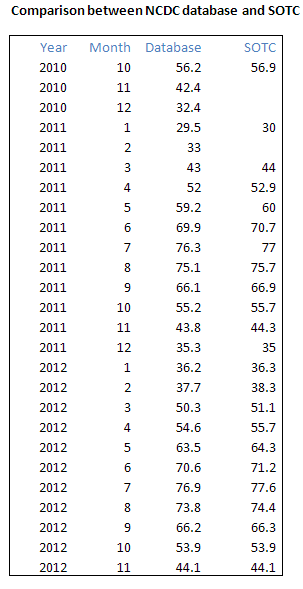
A brutal combination of a widespread drought and a mostly absent winter pushed the average annual U.S. temperature last year up to 55.32 degrees Fahrenheit, the government announced Tuesday. That's a full degree warmer than the old record set in 1998.
Breaking temperature records by an entire degree is unprecedented, scientists say. Normally, records are broken by a tenth of a degree or so.
"It was off the chart," said Deke Arndt, head of climate monitoring at the National Climatic Data Center in Asheville, N.C., which calculated the temperature records.
Last year, he said, will go down as "a huge exclamation point at the end of a couple decades of warming."
The data center's figures for the entire world won't come out until next week, but through the first 11 months of 2012, the world was on pace to have its eighth warmest year on record.
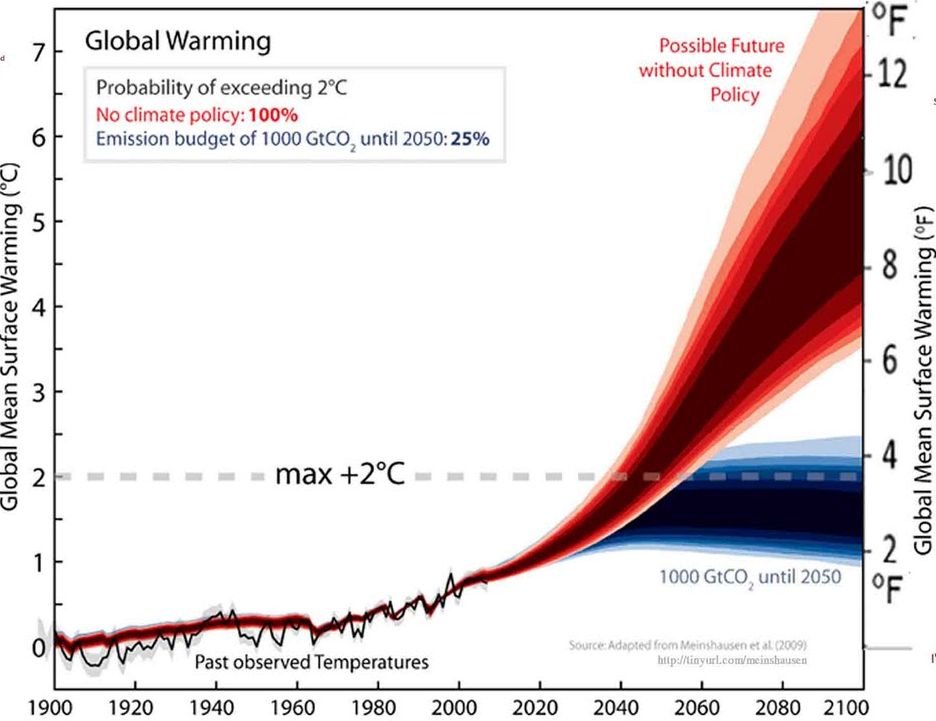
Scientists say the U.S. heat is part global warming in action and natural weather variations. The drought that struck almost two-thirds of the nation and a La Nina weather event helped push temperatures higher, along with climate change from man-made greenhouse gas emissions, said Katharine Hayhoe, director of the Climate Science Center at Texas Tech University. She said temperature increases are happening faster than scientists predicted.
"These records do not occur like this in an unchanging climate," said Kevin Trenberth, head of climate analysis at the National Center for Atmospheric Research in Boulder, Colo. "And they are costing many billions of dollars."
Global warming is caused by the burning of fossil fuels â coal, oil and natural gas â which sends heat-trapping gases, such as carbon dioxide, into the air, changing the climate, scientists say.
What's happening with temperatures in the United States is consistent with the long-term pattern of "big heat events that reach into new levels of intensity," Arndt said.
Last year was 3.2 degrees warmer than the average for the entire 20th century. Last July was the hottest month on record. Nineteen states set yearly heat records in 2012, though Alaska was cooler than average.
U.S. temperature records go back to 1895 and the yearly average is based on reports from more than 1,200 weather stations across the Lower 48 states.
Several environmental groups, including the World Wildlife Fund, took the opportunity to call on the Obama Administration to do more to fight climate change.
According to the National Oceanic and Atmospheric Administration, 2012 also had the second-most weather extremes on record after hurricane-heavy 1998, based on a complex mathematical formula that includes temperature records, drought, downpours, and land-falling hurricanes.
Measured by the number of high-damage events, 2012 ranked second after 2011, with 11 different disasters that caused more than $1 billion in damage, including Superstorm Sandy and the drought, NOAA said.
The drought was the worst since the 1950s and slightly behind the Dust Bowl of the 1930s, meteorologists said. During a drought, the ground is so dry that there's not enough moisture in the soil to evaporate into the atmosphere to cause rainfall, which leads to hotter, drier air. This was fed in the U.S. by La Nina, which is linked to drought.
Scientists say even with global warming, natural and local weather changes mean that temperatures will go up and down over the years. But overall, temperatures are climbing. In the United States, the temperature trend has gone up 1.3 degrees over the last century, according to NOAA data. The last year the U.S. was cooler than the 20th-century average was 1997.
The last time the country had a record cold month was December 1983.
What has scientists so stunned is how far above other hot years 2012 was. Nearly all of the previous 117 years of temperature records were bunched between 51 and 54 degrees, while 2012 was well above 55.
"A picture is emerging of a world with more extreme heat," said Andrew Dessler, a Texas A&M University climate scientist. "Not every year will be hot, but when heat waves do occur, the heat will be more extreme. People need to begin to prepare for that future."
___
Online:
National Climatic Data Center summary of US weather in 2012, http://1.usa.gov/UHhwpx
NCDC chart showing 2012 versus other years, http://1.usa.gov/13eHTrJ
WASHINGTON (AP) â America set an off-the-charts heat record in 2012.
A brutal combination of a widespread drought and a mostly absent winter pushed the average annual U.S. temperature last year up to 55.32 degrees Fahrenheit, the government announced Tuesday. That's a full degree warmer than the old record set in 1998.
Breaking temperature records by an entire degree is unprecedented, scientists say. Normally, records are broken by a tenth of a degree or so.
"It was off the chart," said Deke Arndt, head of climate monitoring at the National Climatic Data Center in Asheville, N.C., which calculated the temperature records.
Last year, he said, will go down as "a huge exclamation point at the end of a couple decades of warming."
The data center's figures for the entire world won't come out until next week, but through the first 11 months of 2012, the world was on pace to have its eighth warmest year on record.
Scientists say the U.S. heat is part global warming in action and natural weather variations. The drought that struck almost two-thirds of the nation and a La Nina weather event helped push temperatures higher, along with climate change from man-made greenhouse gas emissions, said Katharine Hayhoe, director of the Climate Science Center at Texas Tech University. She said temperature increases are happening faster than scientists predicted.
"These records do not occur like this in an unchanging climate," said Kevin Trenberth, head of climate analysis at the National Center for Atmospheric Research in Boulder, Colo. "And they are costing many billions of dollars."
Global warming is caused by the burning of fossil fuels â coal, oil and natural gas â which sends heat-trapping gases, such as carbon dioxide, into the air, changing the climate, scientists say.
What's happening with temperatures in the United States is consistent with the long-term pattern of "big heat events that reach into new levels of intensity," Arndt said.
Last year was 3.2 degrees warmer than the average for the entire 20th century. Last July was the hottest month on record. Nineteen states set yearly heat records in 2012, though Alaska was cooler than average.
U.S. temperature records go back to 1895 and the yearly average is based on reports from more than 1,200 weather stations across the Lower 48 states.
Several environmental groups, including the World Wildlife Fund, took the opportunity to call on the Obama Administration to do more to fight climate change.
According to the National Oceanic and Atmospheric Administration, 2012 also had the second-most weather extremes on record after hurricane-heavy 1998, based on a complex mathematical formula that includes temperature records, drought, downpours, and land-falling hurricanes.
Measured by the number of high-damage events, 2012 ranked second after 2011, with 11 different disasters that caused more than $1 billion in damage, including Superstorm Sandy and the drought, NOAA said.
The drought was the worst since the 1950s and slightly behind the Dust Bowl of the 1930s, meteorologists said. During a drought, the ground is so dry that there's not enough moisture in the soil to evaporate into the atmosphere to cause rainfall, which leads to hotter, drier air. This was fed in the U.S. by La Nina, which is linked to drought.
Scientists say even with global warming, natural and local weather changes mean that temperatures will go up and down over the years. But overall, temperatures are climbing. In the United States, the temperature trend has gone up 1.3 degrees over the last century, according to NOAA data. The last year the U.S. was cooler than the 20th-century average was 1997.
The last time the country had a record cold month was December 1983.
What has scientists so stunned is how far above other hot years 2012 was. Nearly all of the previous 117 years of temperature records were bunched between 51 and 54 degrees, while 2012 was well above 55.
"A picture is emerging of a world with more extreme heat," said Andrew Dessler, a Texas A&M University climate scientist. "Not every year will be hot, but when heat waves do occur, the heat will be more extreme. People need to begin to prepare for that future."
___
Online:
National Climatic Data Center summary of US weather in 2012, http://1.usa.gov/UHhwpx
NCDC chart showing 2012 versus other years, http://1.usa.gov/13eHTrJ