Understanding price action

  • Thread starter Thread starter Erin
  • Start date Start date
Price action develops by how buy and sell orders are filled. We can interpret these orders in the bars on the charts we trade with some simple understanding of what is occurring within the bar. If we have a bar that stops going higher we understand that it hit sell orders at that level. In the same manner if that bar stops going lower then we understand that it hit buy orders. That one bar does not give direction the next bar does. When the next bar opens and heads higher then the previous bar we know we have more buyers then sellers if we did not then we could not have gone above the sellers. We also understand because we have more buyers then sellers when the third bar opens it should not go lower then the bar that just closed. Now in saying this the close of the bar matters. For us to see commitment in the buyers going above those sell orders we want the bar to close above the previous bar. This thread is for the traders interested in reading a chart without using indicators or oscillators.

It would be very helpful if you would figure out the difference between THEN and THAN. I found it hard (impossible) to follow your post because you seem to use them indiscriminately. I think you may have had something interesting to say, but I gave up trying to decipher what you meant vs what you wrote. I'd love it if you'd try again with THEN and THAN corrected.
 
Verification will undoubtably be asked for next..Lol

I think someone will ask for statistical analysis, backtest results or simulation trading results before they ask for verification of any real money trade performance. :cool:

Those that typically do that have not arrived to this thread. Hopefully they're not sick from Covid-19. Seriously, I've notice a few active members in this forum have not posted since mid March.

wrbtrader
 
In your example, all during the building of a single bar; sell and buy market orders are being filled by buy and sell orders at limit.

When the bar fails to go higher, the re-supply at limit equals market orders entering and crossing the spread. There are transactions at each price, since there are standing limit orders at each price. When you say, “once the buyers took over price ran up to the nearest sell orders” that would be true only in illiquid and thinly traded instruments.

It sounds like what you mean by nearest “sell orders”, you are referring to this state of re-supply at limit that can absorb current market orders entering.

Perhaps, you’ll clarify.
Hi Sprout, this is going to be a can of worms. Ok so yes there are contracts at every price point and those contracts are retail limit orders, maybe small institutions as well, you will never see institutional orders. What moves the market is Institutional market orders. The volume you see is retail volume and even the chart itself we trade is just filled retail orders. Our retail limit orders go to filling institutional orders.
 
It would be very helpful if you would figure out the difference between THEN and THAN. I found it hard (impossible) to follow your post because you seem to use them indiscriminately. I think you may have had something interesting to say, but I gave up trying to decipher what you meant vs what you wrote. I'd love it if you'd try again with THEN and THAN corrected.
Sorry I will try to be more attentive to my written word
 
Hi Sprout, this is going to be a can of worms. Ok so yes there are contracts at every price point and those contracts are retail limit orders, maybe small institutions as well, you will never see institutional orders. What moves the market is Institutional market orders. The volume you see is retail volume and even the chart itself we trade is just filled retail orders. Our retail limit orders go to filling institutional orders.
it comes down to understanding who you are buying your contracts from and who you are selling them to...which you will never know but there are clues within the chart. If you are buying from an institute or selling to one - your trade failed the minute you hit the execute button. Trading on the same side as the institutes is the only viable trade and it means getting the best possible entry based on clues that the institutes have left behind
 
Those that typically do that have not arrived to this thread. Hopefully they're not sick from Covid-19. Seriously, I've notice a few active members in this forum have not posted since mid March.

wrbtrader
It's not the Corona. They were so busy exchanging crap among themselves on this forum they forgot to sell their stocks. :banghead:
 
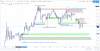
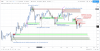
Im going to place a chart up showing the varies different levels that can form. Individual bar swap levels, groups of bars that swap, highs of bars that are showing a lower high form sell levels as well as higher lows demonstrate buy levels - it is not a trade - it just shows how to find levels
 

Attachments

  • elite 18.PNG
    elite 18.PNG
    131.3 KB · Views: 85
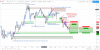
Individual bar swaps can be used to ensure the trade is developing in your favor. In saying this there are bars retracing showing swaps in the opposing direction. Basic rule if price is falling we do not want an up bar to close higher then the nearest opposing down bar, which is the direction you want. Once we get a higher close then the nearest up bar it signals that momentum is changing - the sell orders are drying up leaving only buy orders.
 

Attachments

  • elite 19.PNG
    elite 19.PNG
    133.8 KB · Views: 55
Back
Top