U.S. Debt Crisis May Cause âFall of Romeâ Scenario, Duncan Says
Share | Email | Print | A A A
http://www.bloomberg.com/apps/news?pid=newsarchive&sid=aJ6jnKWHrQgI
By Patrick Rial
Sept. 23 (Bloomberg) -- U.S. budget deficits will continue to pile up in the next decade, eventually reaching an unsustainable level that may result in an economic collapse, according to Richard Duncan, author of âThe Dollar Crisis.â
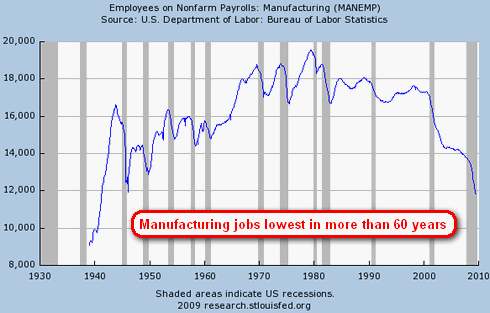
The U.S. has little chance of resolving its deteriorating financial position because the manufacturing industry continues to shrink, leaving the nation with few goods to export, said Duncan, now at Singapore-based Blackhorse Asset Management.
In âThe Dollar Crisis,â first published in 2003, Duncan argued that persistent current account deficits by the U.S. were creating an unsustainable boom in global credit that was destined to break down, resulting in a worldwide recession.
âThe bad news is at the end of a 10-year period weâre still not going to have fixed the problem,â Duncan said in an interview in Hong Kong yesterday. âEventually it will lead to high rates of inflation well down the line and really destabilize things to the point where there may be irreparable damage. A kind of âFall of Romeâ scenario.â
The federal budget deficit will total $1.6 trillion this year, while combined shortfalls are forecast to total $9.05 trillion in the next 10 years, according to projections from the nonpartisan Congressional Budget Office.
The U.S. has run a current account deficit every year since 1982 except one, with a peak of $788 billion in 2006. Foreign purchases of U.S. debt has propped up the dollar and allowed a credit-fueled spending boom by the nationâs consumers, according to Duncan.
Falling Wages
U.S. workers are now likely to face declining wages and that may create a political backlash against free-trade policies, he said. The nationâs jobless rate jumped to a 26-year high of 9.7 percent in August, while wages logged a 2.6 percent increase from the previous year.
âAs unemployment remains above 10 percent well into the foreseeable future, it wonât be long before Americans start voting for protectionism,â Duncan said. âThatâs going to be bad because protectionism will mean world trade will diminish and will overall reduce global prosperity.â
Once the U.S. debt burden becomes too large and the government can no longer sell debt to the public the Federal Reserve will likely step in and monetize it, resulting in high levels of inflation, he said.
Economic Crisis
The MSCI World Index plunged by a record 42 percent last year as the collapse of Lehman Brothers Holdings Inc. triggered a credit crunch that forced financial institutions to post more than $1.6 trillion in losses and writedowns.
As an analyst, Duncan began warning of imbalances in Thailandâs economy in 1993 that eventually led to the devaluation of the baht in 1997 and a regional economic crisis. The nationâs SET Index dropped as much as 88 percent from its 1994 peak to a low in 1998.
Prior to joining Blackhorse, Duncan was the head of investment strategy at ABN Amro Asset Management. He has also held positions at James Capel, Indosuez W.I. Carr and Salomon Brothers.
To contact the reporter for this story: Patrick Rial in Hong Kong at prial@bloomberg.net.
Last Updated: September 22, 2009 21:10 ED
Share | Email | Print | A A A
http://www.bloomberg.com/apps/news?pid=newsarchive&sid=aJ6jnKWHrQgI
By Patrick Rial
Sept. 23 (Bloomberg) -- U.S. budget deficits will continue to pile up in the next decade, eventually reaching an unsustainable level that may result in an economic collapse, according to Richard Duncan, author of âThe Dollar Crisis.â
The U.S. has little chance of resolving its deteriorating financial position because the manufacturing industry continues to shrink, leaving the nation with few goods to export, said Duncan, now at Singapore-based Blackhorse Asset Management.
In âThe Dollar Crisis,â first published in 2003, Duncan argued that persistent current account deficits by the U.S. were creating an unsustainable boom in global credit that was destined to break down, resulting in a worldwide recession.
âThe bad news is at the end of a 10-year period weâre still not going to have fixed the problem,â Duncan said in an interview in Hong Kong yesterday. âEventually it will lead to high rates of inflation well down the line and really destabilize things to the point where there may be irreparable damage. A kind of âFall of Romeâ scenario.â
The federal budget deficit will total $1.6 trillion this year, while combined shortfalls are forecast to total $9.05 trillion in the next 10 years, according to projections from the nonpartisan Congressional Budget Office.
The U.S. has run a current account deficit every year since 1982 except one, with a peak of $788 billion in 2006. Foreign purchases of U.S. debt has propped up the dollar and allowed a credit-fueled spending boom by the nationâs consumers, according to Duncan.
Falling Wages
U.S. workers are now likely to face declining wages and that may create a political backlash against free-trade policies, he said. The nationâs jobless rate jumped to a 26-year high of 9.7 percent in August, while wages logged a 2.6 percent increase from the previous year.
âAs unemployment remains above 10 percent well into the foreseeable future, it wonât be long before Americans start voting for protectionism,â Duncan said. âThatâs going to be bad because protectionism will mean world trade will diminish and will overall reduce global prosperity.â
Once the U.S. debt burden becomes too large and the government can no longer sell debt to the public the Federal Reserve will likely step in and monetize it, resulting in high levels of inflation, he said.
Economic Crisis
The MSCI World Index plunged by a record 42 percent last year as the collapse of Lehman Brothers Holdings Inc. triggered a credit crunch that forced financial institutions to post more than $1.6 trillion in losses and writedowns.
As an analyst, Duncan began warning of imbalances in Thailandâs economy in 1993 that eventually led to the devaluation of the baht in 1997 and a regional economic crisis. The nationâs SET Index dropped as much as 88 percent from its 1994 peak to a low in 1998.
Prior to joining Blackhorse, Duncan was the head of investment strategy at ABN Amro Asset Management. He has also held positions at James Capel, Indosuez W.I. Carr and Salomon Brothers.
To contact the reporter for this story: Patrick Rial in Hong Kong at prial@bloomberg.net.
Last Updated: September 22, 2009 21:10 ED