
Fine job you are doing there, Elon. Over 2 Billion in advertising revenue wiped out in under a month. Now that you have allowed all the promoters of hatred, violence, and misinformation back on the platform in a wholesale manner -- this loss of revenue will only accelerate.
50 of Twitter's top 100 advertisers have pulled out of the platform since Elon Musk took over, report says
https://www.businessinsider.com/twitter-lost-half-top-advertisers-elon-musk-takeover-report-2022-11
In the 25 days since Elon Musk took over Twitter, half of its top 100 advertisers have stopped advertising on the platform, according to the research center Media Matters.
- Half of Twitter's top 100 advertisers have stopped promoting on the platform, per Media Matters.
- Since 2020, those 50 companies have spent $2 billion on Twitter advertising.
- Some publicly announced their decisions, but others are seemingly "quiet quitters."
Since 2020, those 50 companies have accounted for nearly $2 billion in advertising revenue. This year alone, they spent $750 million, Media Matters said.
Some of the companies – like Chevrolet, Ford, and Chipotle – have publicly announced that they were stopping advertising on Twitter.
Media Matters says the others are "quiet quitters," because its analysis of Pathmatics data shows that they have stopped advertising for a "significant period of time."
Coca-Cola, Kellogg's, and Meta are among those who have pulled their advertising budgets away from Twitter, according to Media Matters. The list of all 50 is available in Media Matters' report.
The media center cites "direct outreach, controversies, and warnings from media buyers" as causes behind those companies' decisions.
Insider has reached out to all 50 companies for comment.
Mars clarified that they first suspended advertising on Twitter in late September, before Musk's takeover was complete.
Insider's Lara O'Reilly and Lindsay Rittenhouse previously reported that Musk had tried to reassure top advertisers that Twitter was safe, in a virtual meeting soon after his takeover.
Around the same time, Musk blamed activist groups "trying to destroy free speech in America" for "pressuring advertisers."
On November 11, the world's biggest ad-buyer, Group M, designated Twitter "high-risk" for advertisers and warned its clients against buying promotions on the platform.
According to Digiday, advertisers grew concerned after Twitter's head of trust and safety, Yoel Roth, quit his job. In the role, he had tried to ease concerns about misinformation and hate speech on the platform.
GroupM also raised concerns over brand impersonation, because an $8 subscription to Twitter Blue could allow anyone to get a blue-tick.
Nintendo and McDonald's were among the companies which were impersonated, while another troll pretending to be the pharmaceutical company Eli Lilly falsely said: "Insulin is free now."
Musk has since paused paid-verification until the issues can be sorted with "high confidence."
The author Stephen King also joked on Tuesday: "Pretty soon the only advertiser left on Twitter will be My Pillow," referring to the company led by Mike Lindell, an outspoken Donald Trump supporter and conspiracy theorist.

You are using an out of date browser. It may not display this or other websites correctly.
You should upgrade or use an alternative browser.
You should upgrade or use an alternative browser.
Twitter and Musk
- Thread starter VicBee
- Start date
Let's see the latest group of people suing Musk his shenanigans.
Elon Musk must face fraud lawsuit for disclosing Twitter stake late
https://www.reuters.com/legal/elon-...uit-disclosing-twitter-stake-late-2023-10-03/
Elon Musk must face fraud lawsuit for disclosing Twitter stake late
https://www.reuters.com/legal/elon-...uit-disclosing-twitter-stake-late-2023-10-03/
This change is a "fraud enabler" it makes it simple to post text claiming to be an article with a link -- where the link leads to something totally different --- like a malware site which infects your computer.
Elon Musk adds to a long list of bizarre changes to X by ditching article headlines
https://www.businessinsider.com/elon-musk-bizarre-change-x-twitter-ditch-article-headlines-2023-10
Elon Musk adds to a long list of bizarre changes to X by ditching article headlines
https://www.businessinsider.com/elon-musk-bizarre-change-x-twitter-ditch-article-headlines-2023-10
At most Twitter is valued at $8 Billion -- significantly less than the $44 Billion that Elon Musk spent to purchase the platform.
Twitter has dropped to #65 on the App Store -- which is far lower than it ranked prior to Elon Musk coming in and destroying the platform.
Twitter ad revenue under Elon Musk is down well over 50%.
Twitter 2.0 is overrun with hate speech with little to no moderation. As outlined by the EU, X/Twitter has more hate speech on it than all the other major social platforms combined.
Twitter has lost countless features -- including the ability for news outlets to share headlines in links on the platform.
Here's the thing: Twitter isn't dying.
It's already dead.
Twitter has dropped to #65 on the App Store -- which is far lower than it ranked prior to Elon Musk coming in and destroying the platform.
Twitter ad revenue under Elon Musk is down well over 50%.
Twitter 2.0 is overrun with hate speech with little to no moderation. As outlined by the EU, X/Twitter has more hate speech on it than all the other major social platforms combined.
Twitter has lost countless features -- including the ability for news outlets to share headlines in links on the platform.
Here's the thing: Twitter isn't dying.
It's already dead.
Twitter 2.0 is in such poor financial shape that it may wind up being repossessed by the bank(s).
Elon Musk’s X is a black hole of value
https://www.reuters.com/article/us-twitter-yaccarino-breakingviews-idDEKBN3131P0
X is still worth something, but not for the people running it. Boss Linda Yaccarino is set to present her plans for the social network formerly known as Twitter to bankers holding nearly $13 billion of its debt, the Financial Times reported. Looming over talks is the likelihood that X’s value is substantially less than even that figure.
This week’s meeting with seven banks led by Morgan Stanley that supported Elon Musk’s $44 billion acquisition of the platform caps off a tumultuous first four months for Yaccarino, a former advertising executive at Comcast-owned NBCUniversal. That includes a contentious interview last week in which she seemed caught off-guard by Musk’s announced ambition to charge X users a monthly fee to combat bots.
Despite Musk’s big pronouncements about pushing into subscriptions, X has historically relied on advertising, which contributed over 90% of revenue when it was a public company. But that business is spiraling, and the platform’s shifting policies could threaten more branding deals. In July, Musk posted that cash flow was negative because of a 50% drop in advertising sales.
The apparent strategic disconnect between the company’s ad-focused chief executive and its subscription-hungry owner comes as valuations are falling. TikTok parent ByteDance was recently valued at $224 billion, down by about a quarter from a year ago, the Information reported. Disappearing messaging app Snap’s market value has slumped by more than 10% over the past year.
Put it all together, and X isn’t just worth less than Musk paid for it, but likely less than its debt. Assume that the company’s revenue last year was $4.7 billion, based on results before it was taken private. If advertising has dropped by half, then this year’s sales should be a bit over $2.5 billion. Put that on the same enterprise-value-to-sales multiple as Snap, which is down to a mere 3 times, and X is worth around $8 billion.
The company is so far covering its hefty interest payments of $300 million per quarter, and Yaccarino sees profitable days ahead. But between Musk’s impromptu product shifts and the need to woo back advertisers, her task is daunting. If things deteriorate further, the company’s bankers - already nursing billions in on-paper losses - face the prospect of taking back the keys to a diminished platform that is worth less than even their claim on it. Like a financial black hole, X threatens to consume most of whatever value it once had.
CONTEXT NEWS
Linda Yaccarino, the chief executive of Elon Musk-owned X, is planning to meet with bankers to lay out her plans to kickstart growth at the social media platform, the Financial Times reported on Sept. 28.
Yaccarino is set to meet with a group of seven banks, led by Morgan Stanley, that provided $12.5 billion in debt financing to fund Musk’s $44 billion acquisition of X, then known as Twitter, in 2022.
Elon Musk’s X is a black hole of value
https://www.reuters.com/article/us-twitter-yaccarino-breakingviews-idDEKBN3131P0
X is still worth something, but not for the people running it. Boss Linda Yaccarino is set to present her plans for the social network formerly known as Twitter to bankers holding nearly $13 billion of its debt, the Financial Times reported. Looming over talks is the likelihood that X’s value is substantially less than even that figure.
This week’s meeting with seven banks led by Morgan Stanley that supported Elon Musk’s $44 billion acquisition of the platform caps off a tumultuous first four months for Yaccarino, a former advertising executive at Comcast-owned NBCUniversal. That includes a contentious interview last week in which she seemed caught off-guard by Musk’s announced ambition to charge X users a monthly fee to combat bots.
Despite Musk’s big pronouncements about pushing into subscriptions, X has historically relied on advertising, which contributed over 90% of revenue when it was a public company. But that business is spiraling, and the platform’s shifting policies could threaten more branding deals. In July, Musk posted that cash flow was negative because of a 50% drop in advertising sales.
The apparent strategic disconnect between the company’s ad-focused chief executive and its subscription-hungry owner comes as valuations are falling. TikTok parent ByteDance was recently valued at $224 billion, down by about a quarter from a year ago, the Information reported. Disappearing messaging app Snap’s market value has slumped by more than 10% over the past year.
Put it all together, and X isn’t just worth less than Musk paid for it, but likely less than its debt. Assume that the company’s revenue last year was $4.7 billion, based on results before it was taken private. If advertising has dropped by half, then this year’s sales should be a bit over $2.5 billion. Put that on the same enterprise-value-to-sales multiple as Snap, which is down to a mere 3 times, and X is worth around $8 billion.
The company is so far covering its hefty interest payments of $300 million per quarter, and Yaccarino sees profitable days ahead. But between Musk’s impromptu product shifts and the need to woo back advertisers, her task is daunting. If things deteriorate further, the company’s bankers - already nursing billions in on-paper losses - face the prospect of taking back the keys to a diminished platform that is worth less than even their claim on it. Like a financial black hole, X threatens to consume most of whatever value it once had.
CONTEXT NEWS
Linda Yaccarino, the chief executive of Elon Musk-owned X, is planning to meet with bankers to lay out her plans to kickstart growth at the social media platform, the Financial Times reported on Sept. 28.
Yaccarino is set to meet with a group of seven banks, led by Morgan Stanley, that provided $12.5 billion in debt financing to fund Musk’s $44 billion acquisition of X, then known as Twitter, in 2022.
X/Twitter CEO Linda Yaccarino brags that she brought major advertisers back to Twitter. Let's see how much they are actually spending.
Twitter ad numbers plummet! Visa bought just $10 in ads in last 12 weeks, according to report
https://boingboing.net/2023/10/06/t...ads-in-last-12-weeks-according-to-report.html
Media Matters looked into Xitter CEO Linda Yaccarino's claim that "90% of the top 100 advertisers have returned to the platform. In the last 12 weeks alone, about 1500 have returned – whether it is small business or big brands like AT&T, Visa, Nissan, all returning."
What she didn't share was the fact that the brands that have returned aren't buying nearly as many ads as they did before Musk and his army of sociopathic manbabies took over the platform. For instance, Visa bought $10 worth of advertising over the past 12 weeks, a 99.99% decline compared to the pre-Musk days.
From the report:
But in our latest analysis, Media Matters found that the company's ad revenue is still decimated. The company has earned an average monthly ad revenue of $69.5 million from roughly 1,900 average monthly advertisers in the last 11 months — 42% less revenue and 28% fewer advertisers than in the 11 months before Musk acquired the company.
What's more, during Yaccarino's tenure as CEO, the majority of Twitter's top 100 advertisers pre-Musk have spent just a fraction — at least 90% less — of what they spent in the 12 weeks prior to Musk's acquisition.
During the September 27 interview, Yaccarino also claimed, "In the last 12 weeks alone, about 1,500 [advertisers] have returned. So whether it is small business or big brands, right? Like AT&T, Visa, Nissan, all returning." Of those three companies she specifically mentioned, AT&T is the only one that was a top advertiser pre-Musk, and the company has spent just $781 in the last 12 weeks — 99.96% less than the more than $1.77 million it spent during the 12 weeks before Musk's acquisition.
Visa and Nissan are similarly spending just a fraction of what they spent pre-Musk. Visa spent just $10, and Nissan spent just $687, in the last 12 weeks — 99.99% and 99.77% less than they respectively spent during the 12 weeks before Musk's acquisition.
…
Even the company's top advertiser pre-Musk, HBO, spent only nearly $23,500 in the last 12 weeks — 99.9% less than the $28.3 million it had spent during the 12 weeks before Musk's acquisition.
I emailed press@twitter.com to ask for a comment on the report and received the following reply: "Busy now, please check back later."
Twitter ad numbers plummet! Visa bought just $10 in ads in last 12 weeks, according to report
https://boingboing.net/2023/10/06/t...ads-in-last-12-weeks-according-to-report.html
Media Matters looked into Xitter CEO Linda Yaccarino's claim that "90% of the top 100 advertisers have returned to the platform. In the last 12 weeks alone, about 1500 have returned – whether it is small business or big brands like AT&T, Visa, Nissan, all returning."
What she didn't share was the fact that the brands that have returned aren't buying nearly as many ads as they did before Musk and his army of sociopathic manbabies took over the platform. For instance, Visa bought $10 worth of advertising over the past 12 weeks, a 99.99% decline compared to the pre-Musk days.
From the report:
But in our latest analysis, Media Matters found that the company's ad revenue is still decimated. The company has earned an average monthly ad revenue of $69.5 million from roughly 1,900 average monthly advertisers in the last 11 months — 42% less revenue and 28% fewer advertisers than in the 11 months before Musk acquired the company.
What's more, during Yaccarino's tenure as CEO, the majority of Twitter's top 100 advertisers pre-Musk have spent just a fraction — at least 90% less — of what they spent in the 12 weeks prior to Musk's acquisition.
During the September 27 interview, Yaccarino also claimed, "In the last 12 weeks alone, about 1,500 [advertisers] have returned. So whether it is small business or big brands, right? Like AT&T, Visa, Nissan, all returning." Of those three companies she specifically mentioned, AT&T is the only one that was a top advertiser pre-Musk, and the company has spent just $781 in the last 12 weeks — 99.96% less than the more than $1.77 million it spent during the 12 weeks before Musk's acquisition.
Visa and Nissan are similarly spending just a fraction of what they spent pre-Musk. Visa spent just $10, and Nissan spent just $687, in the last 12 weeks — 99.99% and 99.77% less than they respectively spent during the 12 weeks before Musk's acquisition.
…
Even the company's top advertiser pre-Musk, HBO, spent only nearly $23,500 in the last 12 weeks — 99.9% less than the $28.3 million it had spent during the 12 weeks before Musk's acquisition.
I emailed press@twitter.com to ask for a comment on the report and received the following reply: "Busy now, please check back later."
X/Twitter CEO Linda Yaccarino brags that she brought major advertisers back to Twitter. Let's see how much they are actually spending.
Twitter ad numbers plummet! Visa bought just $10 in ads in last 12 weeks, according to report
https://boingboing.net/2023/10/06/t...ads-in-last-12-weeks-according-to-report.html
Media Matters looked into Xitter CEO Linda Yaccarino's claim that "90% of the top 100 advertisers have returned to the platform. In the last 12 weeks alone, about 1500 have returned – whether it is small business or big brands like AT&T, Visa, Nissan, all returning."
What she didn't share was the fact that the brands that have returned aren't buying nearly as many ads as they did before Musk and his army of sociopathic manbabies took over the platform. For instance, Visa bought $10 worth of advertising over the past 12 weeks, a 99.99% decline compared to the pre-Musk days.
From the report:
But in our latest analysis, Media Matters found that the company's ad revenue is still decimated. The company has earned an average monthly ad revenue of $69.5 million from roughly 1,900 average monthly advertisers in the last 11 months — 42% less revenue and 28% fewer advertisers than in the 11 months before Musk acquired the company.
What's more, during Yaccarino's tenure as CEO, the majority of Twitter's top 100 advertisers pre-Musk have spent just a fraction — at least 90% less — of what they spent in the 12 weeks prior to Musk's acquisition.
During the September 27 interview, Yaccarino also claimed, "In the last 12 weeks alone, about 1,500 [advertisers] have returned. So whether it is small business or big brands, right? Like AT&T, Visa, Nissan, all returning." Of those three companies she specifically mentioned, AT&T is the only one that was a top advertiser pre-Musk, and the company has spent just $781 in the last 12 weeks — 99.96% less than the more than $1.77 million it spent during the 12 weeks before Musk's acquisition.
Visa and Nissan are similarly spending just a fraction of what they spent pre-Musk. Visa spent just $10, and Nissan spent just $687, in the last 12 weeks — 99.99% and 99.77% less than they respectively spent during the 12 weeks before Musk's acquisition.
…
Even the company's top advertiser pre-Musk, HBO, spent only nearly $23,500 in the last 12 weeks — 99.9% less than the $28.3 million it had spent during the 12 weeks before Musk's acquisition.
I emailed press@twitter.com to ask for a comment on the report and received the following reply: "Busy now, please check back later."
Major advertisers don't like their ads being placed next to neo-Nazis -- but this is what the Twitter 2.0 algorithms do -- place ads from major advertisers next to users who are most viewed. Since Twitter 2.0 is now a hate platform dedicated to right-wing extremists --- these are the accounts of white supremacists and neo-Nazis.
Elon Musk’s X faces advertiser backlash after placing marketing for major brands on notorious white supremacist account
https://www.cnn.com/2023/10/05/media/x-advertisements-reliable-sources/index.html
The Elon-Musk owned social media platform, X, confidently claims that it harnesses industry-leading brand safety tools to ensure a positive experience for advertisers on the platform — but a quick glance at where advertisements for prominent brands actually appear tells an entirely different story.
Over the last 24 hours, a Reliable Sources review found advertisements for a cohort of major companies and organizations have appeared directly on the verified profile account of VDARE, an openly racist, white supremacist outlet that publishes some of the most vile content on the internet.
Those companies and organizations include Amazon, Samsung, the Denver Broncos, Cox Communications, STARZ, The Wall Street Journal, The Michael J. Fox Foundation, the University of Missouri, New York Waterway, Axios, Puck, Ad Age, Morning Brew, and the Asian Development Bank.
The fact that X permits a publication like VDARE to operate a verified account on the platform — giving it access to monetization and boosting its visibility to users — is in itself seriously concerning (Facebook and YouTube, for instance, have banned the outlet from their platforms). But that it apparently also believes it is appropriate to monetize the outlet’s vicious hate speech says volumes not only about the company’s ethics, but its supposed commitment to brand safety.
X must be well aware that it is pairing advertisements with racist content, given that the NFL made noise about this very problem last week. The league expressed concern its ads were being displayed on accounts featuring racist material, including VDARE’s, following a report from the progressive watchdog Media Matters, which brought the issue to attention.
And yet, X has taken little if any discernible action to remedy the problem. Instead, it has continued to place advertisements for some of the world’s most recognizable companies directly on the account of one of the most notorious white supremacist outlets on the web.
All the while, Linda Yaccarino, the former NBCUniversal advertising boss turned X executive, has claimed publicly and privately that X has taken incredible measures to ensure advertisers don’t find their brands adjacent to hate speech on the website. But those claims don’t seem to hold much water, given the ugly reality of what is transpiring on X.
In a Thursday night statement, X effectively acknowledged it has more work to do to make the platform safe for brands.
“X cares about the health and safety of the platform for all its users, advertisers and publishers, and we’re accelerating products so our content partners can be removed from some in-app placements like profile and search,” a company spokesperson told CNN.
The statement from X — rare these days — was likely a sign of how things are going behind the scenes. Some of the brands whose advertisements appeared on VDARE’s account expressed strong displeasure on Thursday when they became aware of the situation.
“Racist hate speech is completely antithetical to everything the STARZ brand stands for and we have suspended all advertising on X immediately and indefinitely,” a STARZ spokesperson told me Thursday evening.
A spokesperson for the New York Waterway told me that it found the news “disturbing” and that the company had “no knowledge” of the matter and would “definitely be contacting” X about it. The representative added that New York Waterway “wants nothing to do with hate speech, and we do not want our ads near any organization or entity that promotes it.”
Jon Kelly, co-founder and editor-in-chief of Puck, said that it was “obviously appalling and completely antithetical” to the company’s values to advertise on VDARE’s profile. Kelly said the outlet has since “enacted various measures to hopefully ensure this was the first and last time that this happens.”
The University of Missouri said it does not “condone organizations that promote intolerance.” Cox Communications said it was investigating the matter. And a spokesperson for the NFL pointed to its previous statement expressing concern that its advertisements were appearing on the accounts belonging to racists.
Spokespeople for The Wall Street Journal, Axios, Morning Brew, Ad Age, The Michael J. Fox Foundation, and the Asian Development Bank either declined or did not respond to requests for comment.
That said, it is, frankly, astonishing that big companies continue to believe that the current iteration of X is a friendly corner of the web to advertise their carefully manicured brands on, when they should know full well by now that it is a chaotic platform, rife with content moderation problems.
As Lou Paskalis, a seasoned advertising executive, said on Thursday, “Having ads run against racist and antisemitic content is the proverbial third rail for major advertisers who have enterprise-wide initiates to support diversity, to support inclusion, that are not only important to their brands but their employees and shareholders.”
“A single incident of this, screen shot and circulated, undoes years of hard work,” Paskalis added. “And no amount of advertising benefit would ever displace the potential risk of one incident where your ad shows up next to unsavory content.”
Advertising revenue at Musk's hate social media site goes down every month. There is to future for this fiasco.
Nearly a year after Elon Musk’s acquisition, X’s revenue has been decimated almost 60%: report
The data comes a week after X CEO Linda Yaccarino painted a rosier picture of the platform’s advertising deals.
https://www.marketingbrew.com/stori...s-revenue-has-been-decimated-almost-60-report
Elon’s Musk acquisition of X, formerly known as Twitter, hasn’t been great for its bottom line.
X’s monthly revenue has tanked an average of 55% year over year in each of the past 12 months, according to data firm Guideline. Revenue has fallen every month in that period, per Guideline’s research. Musk took over the company at the end of October last year.
The platform’s revenue fell an average of 61% between May and August this year compared to the same time period in 2022. It fell 78% year over year in December, the sharpest drop over the last 12 months. The last time the company reported earnings, in June of last year, it said it had made $1.2 billion in revenue during Q2.
X did not respond to a request for comment. Guideline’s figures are in line with stats Musk shared recently. Last month, he tweeted that “US advertising revenue is still down 60%,” though he didn’t provide a timeframe and claimed without evidence that it was “primarily due to pressure on advertisers by [the Anti-Defamation League] (that’s what advertisers tell us).”
Guideline’s research stands in contrast with the rosy outlook X CEO Linda Yaccarino tried to present at Vox Media’s Code Conference last week. During an onstage interview, she said that 90% of its top 100 advertisers have come back to the platform recently, and that X has 540 million monthly active users.
During and after the conversation, observers noted that Yaccarino seemed unprepared for or unwilling to answer questions from the interviewer, CNBC’s Julia Boorstin, including one about Musk’s proposed plan to charge users a monthly fee. Yaccarino held her phone up during one point of the interview, inadvertently revealing that she did not have the X app on her home screen.
“Who wouldn’t want Elon Musk sitting by their side running product?” Yaccarino said at one point, prompting laughter and some in the audience to raise their hands.
Meanwhile, changes at X continue: This week, X removed headlines and text descriptions from links shared in posts. Musk previously tweeted that the change was designed to “greatly improve the esthetics [sic]” of the platform.
The company has taken part in a number of new initiatives as of late in what seems to be a move to address the loss of ad revenue. Last month, it started selling programmatic ads via Google. More recently, it inked a deal with Paris Hilton in a deal that will involve her producing exclusive content for the platform through her marketing agency, 11:11 Media.
This week, the Anti-Defamation League said it would start to advertise on X again in an effort to “to bring our important message on fighting hate to X and its users.” Last month, after Musk suggested that the nonprofit was behind a scare campaign to drive advertisers away, the ADL received a surge in threats, its CEO told CNN.
“To be clear, any allegation that ADL has somehow orchestrated a boycott of X or caused billions of dollars of losses to the company or is ‘pulling the strings’ for other advertisers is false,” the ADL wrote in a statement this week. “Indeed, we ourselves were advertising on the platform until the anti-ADL attacks began a few weeks ago. We now are preparing to do so again.”
Nearly a year after Elon Musk’s acquisition, X’s revenue has been decimated almost 60%: report
The data comes a week after X CEO Linda Yaccarino painted a rosier picture of the platform’s advertising deals.
https://www.marketingbrew.com/stori...s-revenue-has-been-decimated-almost-60-report
Elon’s Musk acquisition of X, formerly known as Twitter, hasn’t been great for its bottom line.
X’s monthly revenue has tanked an average of 55% year over year in each of the past 12 months, according to data firm Guideline. Revenue has fallen every month in that period, per Guideline’s research. Musk took over the company at the end of October last year.
The platform’s revenue fell an average of 61% between May and August this year compared to the same time period in 2022. It fell 78% year over year in December, the sharpest drop over the last 12 months. The last time the company reported earnings, in June of last year, it said it had made $1.2 billion in revenue during Q2.
X did not respond to a request for comment. Guideline’s figures are in line with stats Musk shared recently. Last month, he tweeted that “US advertising revenue is still down 60%,” though he didn’t provide a timeframe and claimed without evidence that it was “primarily due to pressure on advertisers by [the Anti-Defamation League] (that’s what advertisers tell us).”
Guideline’s research stands in contrast with the rosy outlook X CEO Linda Yaccarino tried to present at Vox Media’s Code Conference last week. During an onstage interview, she said that 90% of its top 100 advertisers have come back to the platform recently, and that X has 540 million monthly active users.
During and after the conversation, observers noted that Yaccarino seemed unprepared for or unwilling to answer questions from the interviewer, CNBC’s Julia Boorstin, including one about Musk’s proposed plan to charge users a monthly fee. Yaccarino held her phone up during one point of the interview, inadvertently revealing that she did not have the X app on her home screen.
“Who wouldn’t want Elon Musk sitting by their side running product?” Yaccarino said at one point, prompting laughter and some in the audience to raise their hands.
Meanwhile, changes at X continue: This week, X removed headlines and text descriptions from links shared in posts. Musk previously tweeted that the change was designed to “greatly improve the esthetics [sic]” of the platform.
The company has taken part in a number of new initiatives as of late in what seems to be a move to address the loss of ad revenue. Last month, it started selling programmatic ads via Google. More recently, it inked a deal with Paris Hilton in a deal that will involve her producing exclusive content for the platform through her marketing agency, 11:11 Media.
This week, the Anti-Defamation League said it would start to advertise on X again in an effort to “to bring our important message on fighting hate to X and its users.” Last month, after Musk suggested that the nonprofit was behind a scare campaign to drive advertisers away, the ADL received a surge in threats, its CEO told CNN.
“To be clear, any allegation that ADL has somehow orchestrated a boycott of X or caused billions of dollars of losses to the company or is ‘pulling the strings’ for other advertisers is false,” the ADL wrote in a statement this week. “Indeed, we ourselves were advertising on the platform until the anti-ADL attacks began a few weeks ago. We now are preparing to do so again.”
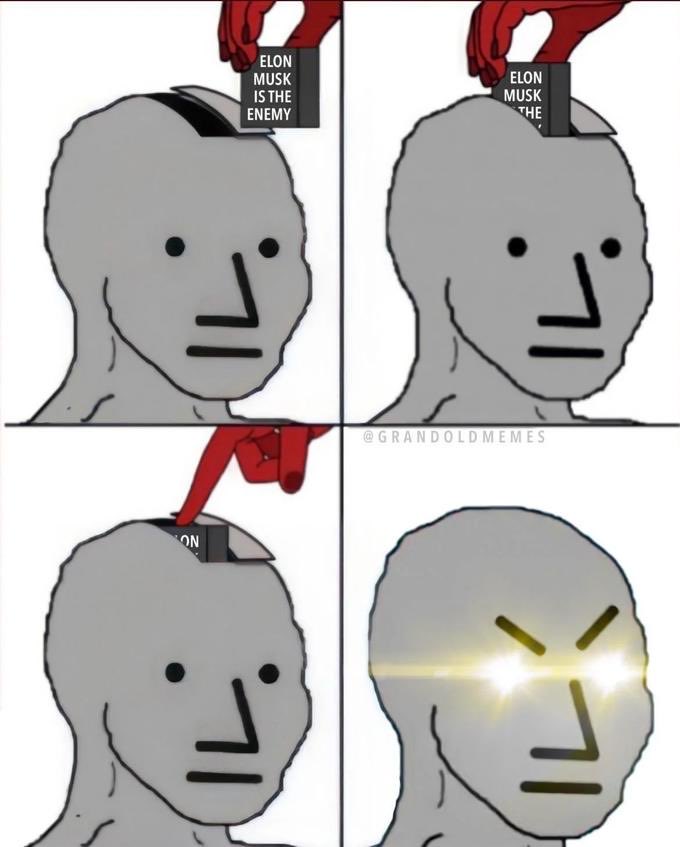
Perhaps it is time they locked Elon up in jail for defying the subpoena summons -- you know like they would do to most other defendants.
Elon Musk is stonewalling the SEC, and now he’s getting sued
Musk refused to show up to testimony after receiving a subpoena.
https://www.theverge.com/2023/10/5/23905307/elon-musk-sec-testify-lawsuit-subpoena
Elon Musk is stonewalling the SEC, and now he’s getting sued
Musk refused to show up to testimony after receiving a subpoena.
https://www.theverge.com/2023/10/5/23905307/elon-musk-sec-testify-lawsuit-subpoena