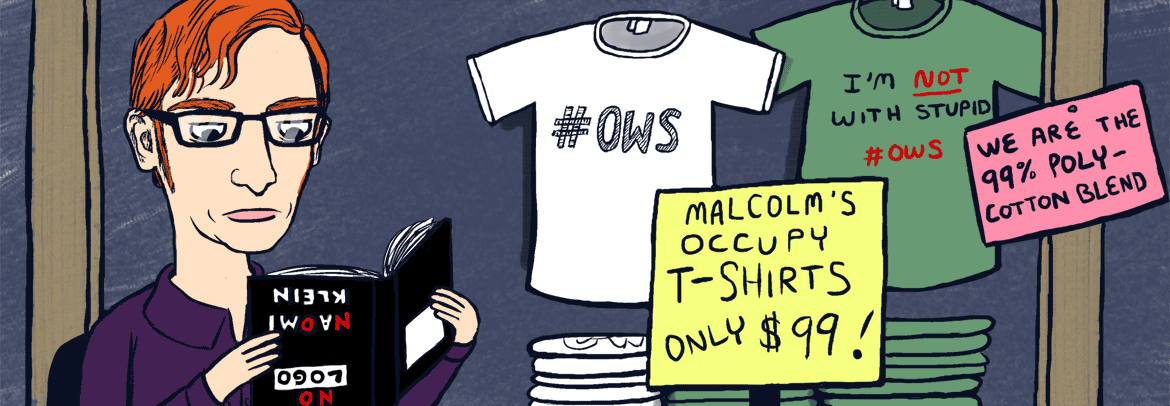
Lest you get the idea that the author of this article isnt a little commie weasel, here is his picture, he even sports his little commie red neck scarf, eo show what a little badass he is. It really is amazing how far these turds are willing to go to fabricate racism.

âBreaking Badâ: White supremacist fable?
The series is just the latest Hollywood offering to get the drug trade wrong--and provide a dicey racial narrative
BY MALCOLM HARRIS
If you judged by TV and movies alone, youâd think âpureâ drugs were seeping out of American societyâs every pore, along with hot doctors and secret agents gone rogue. Even if suburban 15-year-olds donât ask their dealers for THC percentages after seeing Oliver Stoneâs Savages â and smart money says some of them are â craft beer isnât the only boutique intoxicant buzzing around the nationâs subconscious. In the shadow of the high-fructose-corn-syrup backlash, everyone from the Olive Garden to the proverbial Brooklyn popsicle startup is trying to cash in on craftsmanship. Meanwhile, screenwriters (clever advertisers in their own right) have found that the easiest way to hook viewers on drug-dealer protagonists is to sell crack as small-batch artisanal rock cocaine.
The New Inquiry Would AMCâs Breaking Bad be as popular if high school chemist turned meth cook Walter White made an average product instead of his â99 percent pureâ blue glass? From the pilot on, the quality of Whiteâs output has driven the showâs narrative arc. As a careful midgrade cook with DEA connections, he could have flown under the radar in a community overrun with the stuff and taken care of his chemo costs and family just fine. But what makes White more attractive than your garden-variety tweaker to both international cartels and viewers alike is his craftsmanship and attention to detail. He brings class to the New Mexico meth scene.
For a show set in the dirty world of methamphetamine, Breaking Bad is obsessive about cleanliness. Hardly an episode goes by without a discussion of potential impurities. The equipment always seals perfectly, the vats stainless steel. But thatâs how you make meth! No, itâs not. Thatâs how Walter White makes meth on Breaking Bad.
White isnât some junkie cook; heâs a scientist. The exurbs are going crazy for the special meth that only he can make because itâs pure and a scientist made it with stainless steel and itâs blue. Thatâs how a timid high school teacher became a regional drug kingpin over the course of a year. The point isnât that the show is unrealistic or hard to believe, but the narrative function of the ways in which it is: Which disbeliefs are viewers asked to suspend, and which ideologies are they encouraged to retain?
As far as Breaking Bad is concerned, Walterâs meth is bought and used in unadulterated form, whereas in any believable scenario distributors would dilute (âstep onâ) the product for sale. Finally, toward the end of the fifth season, Walter is forced to explain to a new organization that customers will pay more for his product than, say, one that was 85 percent pure. The other manufacturer seems to accept Walterâs logic even though, as an ostensibly experienced dealer, he should know it doesnât make any sense. America isnât flooded with pure meth, and itâs not because our chemists are too ethical. The illegal drug market simply doesnât reward peerless expertise in the same way celebrity cooking shows do.
The idea that people will always pay more for purer or small-batch products makes a lot of sense to demographics used to paying more for quality gimmicks â conveniently, the same demos advertisers pay a premium for. But it doesnât make sense for the consumers Breaking Bad so sparingly depicts. When we do see Whiteâs ultimate customers, theyâre zombies: all scabs and eroded teeth. Weâre not talking about impulse buyers or comparison shoppers here; itâs a textbook case of what freshman economics students call inelastic demand. As Stringer Bell told DâAngelo Barksdale in another show about drugs, in direct contrast to what Walter claims, âWhen itâs good, they buy. When itâs bad, they buy twice as much. The worse we do, the more money we make.â
Demographically, the viewers AMC wants are more likely to do a lot of pills than unscrew a light bulb to smoke some ice, even if the substances are chemically similar. There are plenty of expert scientists making tons of money cooking up and selling amphetamines, but theyâre not robbing trains or toting guns. Big Pharma brings in a $250 billion annually in the U.S. alone, much of it from the same chemical compounds in Whiteâs lab. When itâs 89 percent pure, itâs illegal meth; when itâs 99 percent pure, methamphetamine is sold by Lundbeck Inc. under the trademark name Desoxyn, for âthe short-term management of exogenous obesity.â Walter isnât making crank; he is manufacturing black-market pharmaceuticals.
A Breaking Bad in which the street dealers were diluting the product would have had Walter and his partner Jesse Pinkman competing with every local operation, struggling to set up a larger distribution network without costly middlemen and, well, interacting with meth users a lot. But The Wire on Ice isnât sexy enough to sell a Dodge, and a teacher slanging to his fucked-up former students would turn stomachs, not open wallets. Suffice to say it would be a darker show.Even if Breaking Badâs dramatic arc is âdark,â during most minutes of most episodes the viewer is allowed to root for the resourceful protagonists. His brutality is dressed up as sublime competence.
Which brings us to the other thing that sets White and Pinkman apart from their competitors: color. And I donât mean blue.
The white guy who enters a world supposedly beneath him where he doesnât belong yet nonetheless triumphs over the inhabitants is older than talkies. TV Tropes calls it âMighty Whitey,â and examples range from Tom Cruise as Samurai and Daniel Day Lewis as Mohican to the slightly less far-fetched Julia Stiles as ghetto-fabulous. But whether itâs a 3-D Marine playing alien in Avatar or Bruce Wayne slumming in a Bhutanese prison, the story is still good for a few hundred million bucks. The story changes a bit from telling to telling, but the meaning is consistent: a white person is (and by extension, white people are) best at everything.
In Savages, another recent story of Mighty Whitey getting people stoned, Berkeley-educated botanist Chon (maybe the only name whiter than âWhiteâ) and his war-vet buddy Ben combine exported Afghan seeds and a public-Ivy STEM degree to create a strand of superweed. A narrator asserts Afghanistan is the source of the best weed on earth with the same revelatory reverence that Anthony Bourdain might declare Iberia the source of the best pork. Itâs not enough that these two 20-somethings grow and sell weed; they have to do it better than anyone else by a huge margin. Chon and Benâs bud has a THC content of 40 percent (the 2011 Cannabis Cup winner Liberty Haze tops out at 25 percent) and sells for a laughable $6,000 per pound. The botanist-manager uses his profits the way youâd expect a self-respecting white person to: sustainable charity projects in Asia and Africa.
Because of their (third-)world-beating products, Ben and Chon, and Walter and Jesse, attract the interest of the big bad other in the American drug imaginary: Mexican cartels. The cartels (often referred to in the singular, as if monolithic) are merciless and invincible, with money and power that seems limitless. But for all their government connections and firepower, the cartels have a Kryptonite: white people.
âBreaking Badâ: White supremacist fable?
The series is just the latest Hollywood offering to get the drug trade wrong--and provide a dicey racial narrative
BY MALCOLM HARRIS
If you judged by TV and movies alone, youâd think âpureâ drugs were seeping out of American societyâs every pore, along with hot doctors and secret agents gone rogue. Even if suburban 15-year-olds donât ask their dealers for THC percentages after seeing Oliver Stoneâs Savages â and smart money says some of them are â craft beer isnât the only boutique intoxicant buzzing around the nationâs subconscious. In the shadow of the high-fructose-corn-syrup backlash, everyone from the Olive Garden to the proverbial Brooklyn popsicle startup is trying to cash in on craftsmanship. Meanwhile, screenwriters (clever advertisers in their own right) have found that the easiest way to hook viewers on drug-dealer protagonists is to sell crack as small-batch artisanal rock cocaine.
The New Inquiry Would AMCâs Breaking Bad be as popular if high school chemist turned meth cook Walter White made an average product instead of his â99 percent pureâ blue glass? From the pilot on, the quality of Whiteâs output has driven the showâs narrative arc. As a careful midgrade cook with DEA connections, he could have flown under the radar in a community overrun with the stuff and taken care of his chemo costs and family just fine. But what makes White more attractive than your garden-variety tweaker to both international cartels and viewers alike is his craftsmanship and attention to detail. He brings class to the New Mexico meth scene.
For a show set in the dirty world of methamphetamine, Breaking Bad is obsessive about cleanliness. Hardly an episode goes by without a discussion of potential impurities. The equipment always seals perfectly, the vats stainless steel. But thatâs how you make meth! No, itâs not. Thatâs how Walter White makes meth on Breaking Bad.
White isnât some junkie cook; heâs a scientist. The exurbs are going crazy for the special meth that only he can make because itâs pure and a scientist made it with stainless steel and itâs blue. Thatâs how a timid high school teacher became a regional drug kingpin over the course of a year. The point isnât that the show is unrealistic or hard to believe, but the narrative function of the ways in which it is: Which disbeliefs are viewers asked to suspend, and which ideologies are they encouraged to retain?
As far as Breaking Bad is concerned, Walterâs meth is bought and used in unadulterated form, whereas in any believable scenario distributors would dilute (âstep onâ) the product for sale. Finally, toward the end of the fifth season, Walter is forced to explain to a new organization that customers will pay more for his product than, say, one that was 85 percent pure. The other manufacturer seems to accept Walterâs logic even though, as an ostensibly experienced dealer, he should know it doesnât make any sense. America isnât flooded with pure meth, and itâs not because our chemists are too ethical. The illegal drug market simply doesnât reward peerless expertise in the same way celebrity cooking shows do.
The idea that people will always pay more for purer or small-batch products makes a lot of sense to demographics used to paying more for quality gimmicks â conveniently, the same demos advertisers pay a premium for. But it doesnât make sense for the consumers Breaking Bad so sparingly depicts. When we do see Whiteâs ultimate customers, theyâre zombies: all scabs and eroded teeth. Weâre not talking about impulse buyers or comparison shoppers here; itâs a textbook case of what freshman economics students call inelastic demand. As Stringer Bell told DâAngelo Barksdale in another show about drugs, in direct contrast to what Walter claims, âWhen itâs good, they buy. When itâs bad, they buy twice as much. The worse we do, the more money we make.â
Demographically, the viewers AMC wants are more likely to do a lot of pills than unscrew a light bulb to smoke some ice, even if the substances are chemically similar. There are plenty of expert scientists making tons of money cooking up and selling amphetamines, but theyâre not robbing trains or toting guns. Big Pharma brings in a $250 billion annually in the U.S. alone, much of it from the same chemical compounds in Whiteâs lab. When itâs 89 percent pure, itâs illegal meth; when itâs 99 percent pure, methamphetamine is sold by Lundbeck Inc. under the trademark name Desoxyn, for âthe short-term management of exogenous obesity.â Walter isnât making crank; he is manufacturing black-market pharmaceuticals.
A Breaking Bad in which the street dealers were diluting the product would have had Walter and his partner Jesse Pinkman competing with every local operation, struggling to set up a larger distribution network without costly middlemen and, well, interacting with meth users a lot. But The Wire on Ice isnât sexy enough to sell a Dodge, and a teacher slanging to his fucked-up former students would turn stomachs, not open wallets. Suffice to say it would be a darker show.Even if Breaking Badâs dramatic arc is âdark,â during most minutes of most episodes the viewer is allowed to root for the resourceful protagonists. His brutality is dressed up as sublime competence.
Which brings us to the other thing that sets White and Pinkman apart from their competitors: color. And I donât mean blue.
The white guy who enters a world supposedly beneath him where he doesnât belong yet nonetheless triumphs over the inhabitants is older than talkies. TV Tropes calls it âMighty Whitey,â and examples range from Tom Cruise as Samurai and Daniel Day Lewis as Mohican to the slightly less far-fetched Julia Stiles as ghetto-fabulous. But whether itâs a 3-D Marine playing alien in Avatar or Bruce Wayne slumming in a Bhutanese prison, the story is still good for a few hundred million bucks. The story changes a bit from telling to telling, but the meaning is consistent: a white person is (and by extension, white people are) best at everything.
In Savages, another recent story of Mighty Whitey getting people stoned, Berkeley-educated botanist Chon (maybe the only name whiter than âWhiteâ) and his war-vet buddy Ben combine exported Afghan seeds and a public-Ivy STEM degree to create a strand of superweed. A narrator asserts Afghanistan is the source of the best weed on earth with the same revelatory reverence that Anthony Bourdain might declare Iberia the source of the best pork. Itâs not enough that these two 20-somethings grow and sell weed; they have to do it better than anyone else by a huge margin. Chon and Benâs bud has a THC content of 40 percent (the 2011 Cannabis Cup winner Liberty Haze tops out at 25 percent) and sells for a laughable $6,000 per pound. The botanist-manager uses his profits the way youâd expect a self-respecting white person to: sustainable charity projects in Asia and Africa.
Because of their (third-)world-beating products, Ben and Chon, and Walter and Jesse, attract the interest of the big bad other in the American drug imaginary: Mexican cartels. The cartels (often referred to in the singular, as if monolithic) are merciless and invincible, with money and power that seems limitless. But for all their government connections and firepower, the cartels have a Kryptonite: white people.