Trading Wisdom for Aspiring Hedge Fund Managers

Status
Not open for further replies.
Quote from marketsurfer:


No firepit photo attached. Please post here.

firepit.jpg


Via http://www.mercenarytrader.com/2012/09/kicking-back-at-lake-tahoe/

 
Trading Wisdom 25: The first requirement for success

"Sun Tzu said if you sit by the river long enough, you'll see the bodies of your enemies float by. The key is "long enough." If you live long enough, you have to be the survivor. When I was a kid, we didn't have the video games you have today, so we used to listen to comedy records. One of the greatest ones was Mel Brooks doing the 2000 year old man. Carl Reiner says to him, "how did you get to be the world's oldest man?" And he says, "Simple. Don't die." How do you get to be the world's oldest investor? The answer is don’t crap out.

"So if you look at distressed debt where we started in 1988, I could tell you who our number one competitor was in every year through 1995 and not one is a main competitor today. And it's not because of what we did; all we did is perform consistently. They crapped out. It sounds simplistic to say, but the first requirement for success is survival..."

- Howard Marks

JS Comment:

What steps do you take to ensure survival as a trader?

Do you think about markets from the perspective of wanting to be around for a very long time? How do you proactively make that happen?

Blowing up, bleeding to death, and grinding out are different ways to "die." Imagine three failed traders, one for each of the ways. What might the postmortems look like?


Get Trading Wisdom via e-mail
 
Trading Wisdom 26: The Symbol of the Trader

"The symbol of all relationships among such men, the moral symbol of respect for human beings, is the trader. We, who live by values, not by loot are traders, both in manner and spirit. A trader is a man who earns what he gets and does not give or take the undeserved. A trader does not ask to be paid for his failures, nor does he ask to be loved for his flaws. A trader does not squander his body as fodder, or his soul as alms. Just as he does not give his work except in trade for material values, so he does not give the values of his spirit - his love, his friendship, his esteem - except in payment and in trade for human virtue, in payment for his own selfish pleasure, which he receives from men he can respect. The mystic parasites who have, throughout the ages, reviled the trader and held him in contempt, while honoring the beggars and the looters, have known the secret motive of the sneers: a trader is the entity they dread - a man of justice."

- John Galt, Atlas Shrugged


JS comment:

Ayn Rand is a controversial figure. Do you agree with her idealistic portrayal of the trader? What do you think of Objectivism in general - excellent philosophy or narcissistic bullshit?

Some traders are obviously immoral, corrupt, incompetent, etcetera. But does this matter relative to the ideal of what trading in the pure abstract can represent?

Are you proud to call yourself a trader? Do you have a trader's code that you follow, or any type of moral code for that matter, by which you set certain rules, habits and attitude guidelines for yourself based on aesthetic and intrinsic merit?

If so, where did your code come from? Did you purposely adopt it, or inherit it by accident or default? Have you ever considered modifying, enhancing, or clarifying it?

If no code to speak of, have you considered the potential life benefits of creating or embracing one - to better shape and define a sense of purpose and who you are?


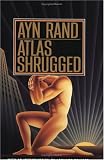
Buy Atlas Shrugged on Amazon

Get Trading Wisdom via e-mail
 
Quote from darkhorse:

Trading Wisdom 26: The Symbol of the Trader

"The symbol of all relationships among such men, the moral symbol of respect for human beings, is the trader. We, who live by values, not by loot are traders, both in manner and spirit. A trader is a man who earns what he gets and does not give or take the undeserved. A trader does not ask to be paid for his failures, nor does he ask to be loved for his flaws. A trader does not squander his body as fodder, or his soul as alms. Just as he does not give his work except in trade for material values, so he does not give the values of his spirit - his love, his friendship, his esteem - except in payment and in trade for human virtue, in payment for his own selfish pleasure, which he receives from men he can respect. The mystic parasites who have, throughout the ages, reviled the trader and held him in contempt, while honoring the beggars and the looters, have known the secret motive of the sneers: a trader is the entity they dread - a man of justice."

- John Galt, Atlas Shrugged


JS comment:

Ayn Rand is a controversial figure. Do you agree with her idealistic portrayal of the trader? What do you think of Objectivism in general - excellent philosophy or narcissistic bullshit?

Some traders are obviously immoral, corrupt, incompetent, etcetera. But does this matter relative to the ideal of what trading in the pure abstract can represent?

Are you proud to call yourself a trader? Do you have a trader's code that you follow, or any type of moral code for that matter, by which you set certain rules, habits and attitude guidelines for yourself based on aesthetic and intrinsic merit?

If so, where did your code come from? Did you purposely adopt it, or inherit it by accident or default? Have you ever considered modifying, enhancing, or clarifying it?

If no code to speak of, have you considered the potential life benefits of creating or embracing one - to better shape and define a sense of purpose and who you are?


Buy Atlas Shrugged on Amazon

Get Trading Wisdom via e-mail

The quote is sophomoric as applied to trading in a financial market. An expert trader would never post this quote.
 
crumbs...what do you guys smoke?

All this physoloigcal "mumbo jumbo" is great...but are there any facts/proof behind these ramblings?
 
You claimed that a losing streak is more dangerous for someone in a downswing than an upswing, even if they have identical present capital. Assuming a losing streak is the result of chance (rather than an edge disappearing, or a trader going on tilt), then the mortality risk is no greater for someone who went from 2 million to 1 million and is now betting 1% per trade, than from someone who went from 500k to 1 million and is now betting 1% per trade. If either trader has a huge losing streak, they will lose exactly the same amount, since they are making the same % bets, taking the same trades, and experiencing the same market outcomes.

Your other main claim was that what you call a 'profit cushion' has some kind of influence on results. This is pure mental accounting - accumulated profit is economically identical to initial capital: it buys the same things, funds trading positions exactly the same, it is indistinguishable. Otherwise brokers would allow reduced margin rates for 'accumulated P&L' rather than deposited funds, and luxury goods retailers would offer discounts to those whose dollars were earned by profitable trading, and charge more to people experiencing equity drawdowns. When Forbes calculate their rich list, they don't place a trader higher because he is at a new equity high, or mark someone lower because his stock fell 50% last year - they calculate based on how many dollars he has.

I agree about pro-cyclical market conditions (and other things like edges degrading, trading worse under psychological pressure etc), but one should adjust for these based on the relevant factors (present market conditions; present psychological state & sharpness of the trader), not the irrelevant ones (past drawdown, or past winning streak).

Winning streaks in poker have an effect on the plays of other players, in a way that doesn't occur in the markets, so it's not a good analogy. Aggressive betting is also superior in poker for reasons related to that card game's specifics; in the markets, aggressive betting is inferior for reasons that are specific to the nature of financial markets (i.e. unpredictable risks, edge-degredation, liquidity constraints, 'runs' by depositors or fund investors and so on). Furthermore, the mean-reverting nature of fund and star trader performance gives good reason to think the opposite - that you should become more sceptical and risk-averse after a long winning streak. Most experienced traders also know that winning streaks actually tend to lead to cockiness and over-betting (see the earlier Soros quote you gave), which is another reason not to press a hot hand.


Quote from darkhorse:

a trader with a cushion of profit in his account has "earned the right to swing" at a conviction based trade because his mortality risk has been reduced.

[...]

In similar fashion, one can take conviction-based trades in bigger size with an accumulated cushion of profit because the profit cushion itself reduces mortality risk.

[...]

Then, too, there are positive outlier considerations - especially given that winning and losing streaks for a trading methodology are typically not entirely random, and may not actually be random at all. If you are on an exceptional hot streak in markets lately, it may be that conditions are aiding your methodology and that those conditions will persist. If you are on a rough losing streak in markets lately, it may be that conditions are creating headwinds and those headwinds will persist. This is even more reason to be pro-cyclical in one's sizing efforts. By reducing risk when your cushion of profits is not there, you reduce the odds of being taken out and reduce your total market exposure in general terms in periods when results are poor. On the flip side, intelligently increasing risk while all is going well increases the odds of potentially exploiting what poker players refer to as a "heater" or a "sick run," while generally maximizing exposure when conditions are favorable.

In sum, because of mortality risk and pro-cyclical factors relating to market conditions, a smart discretionary trader will size positions differently well above the zero line than he will at the ZRL or below it, and it is absolutely rational and logical to do so.
 
Quote from darkhorse:

I've read Rand's Atlas Shrugged and The Fountainhead several years ago. Pseudo-intellectual crap. She obviously had a hysterical knee-jerk reaction to the oppressive regime from which she hailed, and figured that if one extreme is destructive, then the other extreme must be the way to go. I think the attraction of her "philosophy" is two-fold. First it appeals to a lot of people's darker sides and validates their baser tendencies. Second, unlike other philospohies, it is much more accessible because it is so one-dimensional. Therefore, falling prey to false equivalency of philosophical thought, it is the lazy man's shortcut to becoming a "deep thinker."
 
Quote from darkhorse:

p.s. Strangely enough, the above as described would still have value even if one had an "infinite bankroll" i.e. mortality risk of zero (even though such is never a reality).

If two traders with infinite bankrolls were competing in markets, and one used dynamic position sizing while the other did not, the trader who used dynamic sizing would have more favorable exposure levels over time - he would spend more time trading large while trading well, correspondingly trading smaller while trading poorly (regardless of where the poor trading came from) - as such beating the trader who always used fixed sizing and was neither consistently bigger when hot nor consistently smaller when cold. The perceived advantage of making back drawdowns faster (via not trading smaller when cold) would be crushed by the positive competitive outlier of trading much larger in significant rush periods. It is worth it to trade small most of the time, so you can trade big (perhaps very big) into the right trends.

But this assumes that i) rushes exist and are predictable ii) overbetting due to cockiness doesn't swamp the potential positive effects of rushes iii) there is no way to anticipate favourable trading conditions or performance other than witnessing prior abnormal profits.

It is quite possible for rushes not to exist, for traders to be able to identify when they are 'trading well' (i.e. following their approach faithfully, working hard) and 'trading poorly' (i.e. making mistakes), and to observe when conditions are favourable or hostile and adjust size accordingly. Unlike the trader who relies on past P&L as a rough proxy for these factors, the trader who observes the factor inputs directly will get a more accurate picture.

You are simply asserting/assuming that your view is correct, without providing any evidence to back it up.
 
Status
Not open for further replies.
Back
Top