Low-Carbohydrate Diets: Heresy or Hype
David A. Levitsky, Ph.D.,
Professor, Division of Nutritional Sciences,
Cornell University
"FORGET THE FIGHT AGAINST FAT! BREAK THE
SUGAR-STARCH HABIT TODAY AND ENJOY STEAK,
EGGS, CHEESE, EVEN WINE AS YOU GET HEALTHY
AND LOSE WEIGHT WITH SUGAR BUSTERS!"
http://www.sugarbusters.com/sbfiles/home.html
Can this advertisement be true? Has everything that nutritionists and dietitians been telling the public about reducing fat been wrong?
Is reducing the fat content of your diet not a safe and effective way to lose weight?
The quote stated above was taken from a Web page advertising a diet book called Sugar Busters! Cut Sugar to Trim Fat by H. Leighton Steward, Dr. Samuel S. Andrews, Dr. Luis A. Balart and Dr. Morrison C. Bethea. There are many other books that also sell the same idea, namely you can lose weight by eating a low-carbohydrate diets. Perhaps the low-carbohydrate diet that has received the most attention in the press is described in a book written by Dr. Robert C. Atkins, entitled Dr. Atkins' New Diet Revolution, which is actually an evolution from his previous book, Dr Atkins' Diet Revolution; The High Calorie Way to Stay Thin Forever written over 25 years ago. A similar theme is put forth in a book entitled, The Carbohydrate Addict's Diet: The Lifelong Solution to Yo-Yo Dieting" by Dr. Rachael F. Heller and Dr. Richard F. Heller. Another husband and wife team, Michael and Mary Eades wrote Protein Power: The High-Protein/Low Carbohydrate Way to Lose Weight, Feel Fit, and Boost Your Health-in Just Weeks! several years ago, but have co-authored a more recent version of the high fat, low carbohydrate diet with Charles Hunt called Charles Hunt's Diet Evolution : 'Eat Fat and Get Fit!'.
Are Carbohydrates the Culprits?
The basic idea that unites all of these books against the traditional nutrition advice establishment is that excess dietary carbohydrate is the major cause of overweight and obesity today. According to these diet gurus, excessive carbohydrate consumption stimulates an over-production of insulin. Insulin is the hormone responsible for transporting nutrients into fat cells and causing them to synthesize fat. Thus, our increasing prevalence of overweight and obesity is a direct result of eating too many carbohydrates.
If one accepts this simple notion, then the solution for overweight individuals is to decrease their intake of carbohydrates, which leaves foods that are mainly high in protein and/or fat. The only low-carbohydrate sources of protein are meat and meat products. Plant sources of protein typically come packaged with complex carbohydrates. Animal sources of protein typically come packaged with fat, particularly saturated fat. Consequently, as one begins to eat greater amounts of dietary protein, the amount of dietary fat ingested is also increased. Because of these relationships between macronutrients, a low-carbohydrate diet is usually high in both protein and fat.
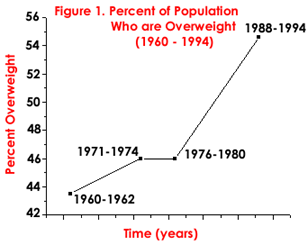
How much of the argument in favor of a low-carbohydrate diet for weight control is supported by scientific literature? Like so many nutritional scams, there is always a grain of truth in what is said. Do carbohydrates cause overweight and obesity? Figure 1 shows some data that frighten many public health officials and support the claims of the diet gurus: Americans are getting fatter. Figure 1 shows that the percent of Americans who are considered overweight by the Centers for Disease Control and Prevention (95th percentile for Body Mass Index) has been increasing ever since they began collecting health data in 1960 (1). The prevalence of obesity has been increasing at similar rates. It should be noted from this figure, however, that the biggest jump in BMI occurred between 1980 and 1994.
cont..
David A. Levitsky, Ph.D.,
Professor, Division of Nutritional Sciences,
Cornell University
"FORGET THE FIGHT AGAINST FAT! BREAK THE
SUGAR-STARCH HABIT TODAY AND ENJOY STEAK,
EGGS, CHEESE, EVEN WINE AS YOU GET HEALTHY
AND LOSE WEIGHT WITH SUGAR BUSTERS!"
http://www.sugarbusters.com/sbfiles/home.html
Can this advertisement be true? Has everything that nutritionists and dietitians been telling the public about reducing fat been wrong?
Is reducing the fat content of your diet not a safe and effective way to lose weight?
The quote stated above was taken from a Web page advertising a diet book called Sugar Busters! Cut Sugar to Trim Fat by H. Leighton Steward, Dr. Samuel S. Andrews, Dr. Luis A. Balart and Dr. Morrison C. Bethea. There are many other books that also sell the same idea, namely you can lose weight by eating a low-carbohydrate diets. Perhaps the low-carbohydrate diet that has received the most attention in the press is described in a book written by Dr. Robert C. Atkins, entitled Dr. Atkins' New Diet Revolution, which is actually an evolution from his previous book, Dr Atkins' Diet Revolution; The High Calorie Way to Stay Thin Forever written over 25 years ago. A similar theme is put forth in a book entitled, The Carbohydrate Addict's Diet: The Lifelong Solution to Yo-Yo Dieting" by Dr. Rachael F. Heller and Dr. Richard F. Heller. Another husband and wife team, Michael and Mary Eades wrote Protein Power: The High-Protein/Low Carbohydrate Way to Lose Weight, Feel Fit, and Boost Your Health-in Just Weeks! several years ago, but have co-authored a more recent version of the high fat, low carbohydrate diet with Charles Hunt called Charles Hunt's Diet Evolution : 'Eat Fat and Get Fit!'.
Are Carbohydrates the Culprits?
The basic idea that unites all of these books against the traditional nutrition advice establishment is that excess dietary carbohydrate is the major cause of overweight and obesity today. According to these diet gurus, excessive carbohydrate consumption stimulates an over-production of insulin. Insulin is the hormone responsible for transporting nutrients into fat cells and causing them to synthesize fat. Thus, our increasing prevalence of overweight and obesity is a direct result of eating too many carbohydrates.
If one accepts this simple notion, then the solution for overweight individuals is to decrease their intake of carbohydrates, which leaves foods that are mainly high in protein and/or fat. The only low-carbohydrate sources of protein are meat and meat products. Plant sources of protein typically come packaged with complex carbohydrates. Animal sources of protein typically come packaged with fat, particularly saturated fat. Consequently, as one begins to eat greater amounts of dietary protein, the amount of dietary fat ingested is also increased. Because of these relationships between macronutrients, a low-carbohydrate diet is usually high in both protein and fat.
How much of the argument in favor of a low-carbohydrate diet for weight control is supported by scientific literature? Like so many nutritional scams, there is always a grain of truth in what is said. Do carbohydrates cause overweight and obesity? Figure 1 shows some data that frighten many public health officials and support the claims of the diet gurus: Americans are getting fatter. Figure 1 shows that the percent of Americans who are considered overweight by the Centers for Disease Control and Prevention (95th percentile for Body Mass Index) has been increasing ever since they began collecting health data in 1960 (1). The prevalence of obesity has been increasing at similar rates. It should be noted from this figure, however, that the biggest jump in BMI occurred between 1980 and 1994.
cont..