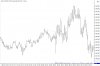
Spent a good chunk of yesterday reading Wycoff's Day Trader's Bible. Its amazing how much of it still applies today. I found it curious that he always enters with market orders, but perhaps times are different so our stop limit entries is what is called for today. Anyway, the other part that I found interesting, or perhaps I just forgot from reading him before, is how much he talks about 50% levels. He fully expects price to retrace 50% of the move after he's in. So if he went long at 50 and price went to 53, he expects a retrace to 51.5 without this causing trouble if it doesn't go below.
Anyway... moving along.
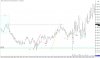
A - Before the open, there is this range I outline, complete with the mean.
(Tanget: I have also spent quite a bit of time going over some of Db's stuff over at TL where he talked more about S&R. To be honest, I found it all a little confusing. So many lines going everywhere! Its hard to make sense of how they are drawn. Swing points are easy, but there are just so many tiny ranges that then produce a mean, and with the charts he was using at the time that had a grid pattern, there were just so many lines going all over the place. Now these were higher time frame charts, so on a 1 minute chart, there might only be one of two levels that come into view... so I never did get a chance to explore how this would affect day trading, but man, figuring out these ranges and their means gets a bit subjective for me. Its like drawing trend lines... you can make them tight or lose, and hence can make them break if you want or not. So you either need to develop more skill and a sense for how to draw them, or you need something a bit more objective to use)
Anyway, saying that, I focus on the ranges that I can see and here is one, so lets mark in the mean. (it does actually turn out to be useful)
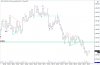
B - This is a no brainer here. We had excellent support yesterday at 42 that I outlined in prep, which is also the PDL as well, so although we poke below, we very quickly come back up. In fact, we even have a range up here, from 43-46.
C - This first move up comes back down to exactly the 50% level.
D - We come up some more and curiously turn around at the mean of the that previous range which now seems to be providing resistance.
E - We retrace down to pretty much exactly the 50% level of this compete up move now from 41 to 51.
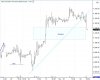
O - We open here, and try up first, but this is quickly rejected. We end up forming a higher low, so I mark in a short below the first bar. This all happens very quick but it might fill on the way down.
F - We only make it down this far. (Its beautiful how this all works when you get your levels right). There might have been a few points to be made here if you're quick to get out.
G - So after that huge down bar closes, I can now mark in a long here. We have a solid REJ down at 42, but this entry of 48.50 is just so far away from 42 if we go down to test it again. So I might get filled, price might drop, and none of this would invalidate the trade unless we broke 42... so this is quite risky.
H - I was also prepared for a short in case price came down again. We are in a downtrend after all, so if we break 42, we might have a great down move, and getting into a short above 44 might still give us room to get out in case 42 holds again. Price never did come down so nothing to think about here.
I - So that first long from G would work, but here is the official RET. I found this one tricky because had I entered here, I'm always scared of double tops and no room to get out. Something about the action here also made me think that buyers just weren't jumping over each other to buy, there wasn't a huge thrust. As it turns out, the trade would trigger and drop back down into congestion.
Each one of the next few bars has a lower low, and although price does move sideways, so not straight down, this doesn't look good. I note the 50% level of this up move, so we don't penetrate that, but all of this action after our entry is still means that the trade is in the negative at the moment.
J - There was a big instinct to put in another long here. We successfully stayed above the 50% level, and the next few bars after the low just above 50% have a higher low. The trade would fill, we have a higher high, but come back down again.
K - As we come down, we would go through the new 50% level of this up move.
L - Not noticed in real time, but here is a hinge perhaps, given the lower highs and higher lows. It breaks out the bottom first before going higher. The trouble with this hinge is in happens in an area of consolidation, and even now you can see how it just looks like a messy trading range of some sort, not a perfect hinge.
SUMMARY
Ok.. I know I'm stopping early... but once again, I need to be making a plan. We are after all going up, but unless one gets into a long from the bounce at 42 right after the open, this is all quite messy. If you're watching a tick chart, and you see your level at 42 which I think many knew about, getting in at 43 or 44 with a tight stop is more than possible. It was an easy 10 points up, although perhaps once we broke the 50% level on the way down, only 5 points might be captured is this long was sold.
I have been talking quite a bit about holding longer. Sure some days price might go completely back to your entry and you get out BE and make no money. But you know, often enough, price takes all day to make its move and somehow ends up 30 point higher and you wonder how it got there. So if the goal is to make money, letting some go to BE might be what is necessary in order to get those 30 points moves, and might be more profitable in the long run than just getting out each time for 5 or 10 points. This of course requires testing..... sigh....
Today would have been a good day to be in SIM to see how nimble I could be with all of this shit that I say I see. Could I really take that first short on the way down to 42 right after the open? Could I really quickly reverse and take a long? Could I add to the long once a proper SLA trade sets up? Could I hold the longs when the first 50% level isn't breached? Would I get out at "K" when the 2nd 50% levels is breached? Would I see the hinge and take the exit down, and perhaps quickly switch to long once we faked going out the bottom at "L"?
I don't doubt that I wouldn't be able to do half of this. If in SIM, it might be easier to follow price since doing the right things is easier when loses aren't a worry, and not knowing what is going to happen doesn't bother you, so I'm not sure how well my simming match trading with real money. Sadly, my only excuse for not doing it is because if I see a really really good trade, I want to be able to take it with my real money so that I can at least make a bit of profit for all my hard work. I guess I'm very much putting the cart before the horse, but this is at least my honest answer, so hopefully pointing out my stupidity will help others.
I really wanted to do just this week of SIM... then see if at the end of the week I'm actually up in points which would give me the confidence to see that I kind of maybe have a clue about some of the stuff that I'm doing. But 2 days into the week now, I still haven't ventured into my SIM account for fear or losing out on a good trade, but this is of course just hindering my learning and growth, and this ironically is actually hindering being able to put on that good trade. Sigh....
CONTINUED
So as I was typing all this up and just casually glancing at the chart because it was all messy, a perfect opportunity presented itself.. which of course I missed.
M - Here I note the lower highs.
N - Here is a level of support after our series of higher lows getting up to here.
P - We break through the support, quite hard, and this would be the first RET after this down move. Its a trade that would fill, but after such a quick thrust down... its risky. This is exactly why its risky.. price shoots back up.
Q - This bar above just pokes that support level. After coming up this far, you absolutely have to be trailing a sell stop below these bars, especially once we hit that previous support level which now may be resistance. This is a perfectly set up trade, and although it might go against you for a minute, look at how the drop continues.
R - We come down to the previous low at "F", and it looks like we have a nice bounce.
S - If we tried for a long, one point above this bar, it would fill, but fails very quickly. This down move is just too strong so lets not mess with it.
T - I note this hinge in real time. Sometimes price breaks through a bit, but it only widens the limits of the hinge as here.
U - We drop out the bottom, and even come up to test the apex before dropping down lower.
Sigh.. this sucks... such a good move... zero profits.

 I find it interesting that one set of traders overnight, the Asia/EU market often has a completely different idea of what the price should be. My feeling going into the open was that there were lots of levels in this quick rise up that were missed so we needed to go down first, but its just funny how you never really know and all of these huge price swings are just created by the damn traders trying to make the most money, so they let it go higher in order to be able to short at a better price, then let the price drop so they can buy nice and low... rinse and repeat.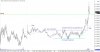

 )
)