The well-preserved head of Tollund Man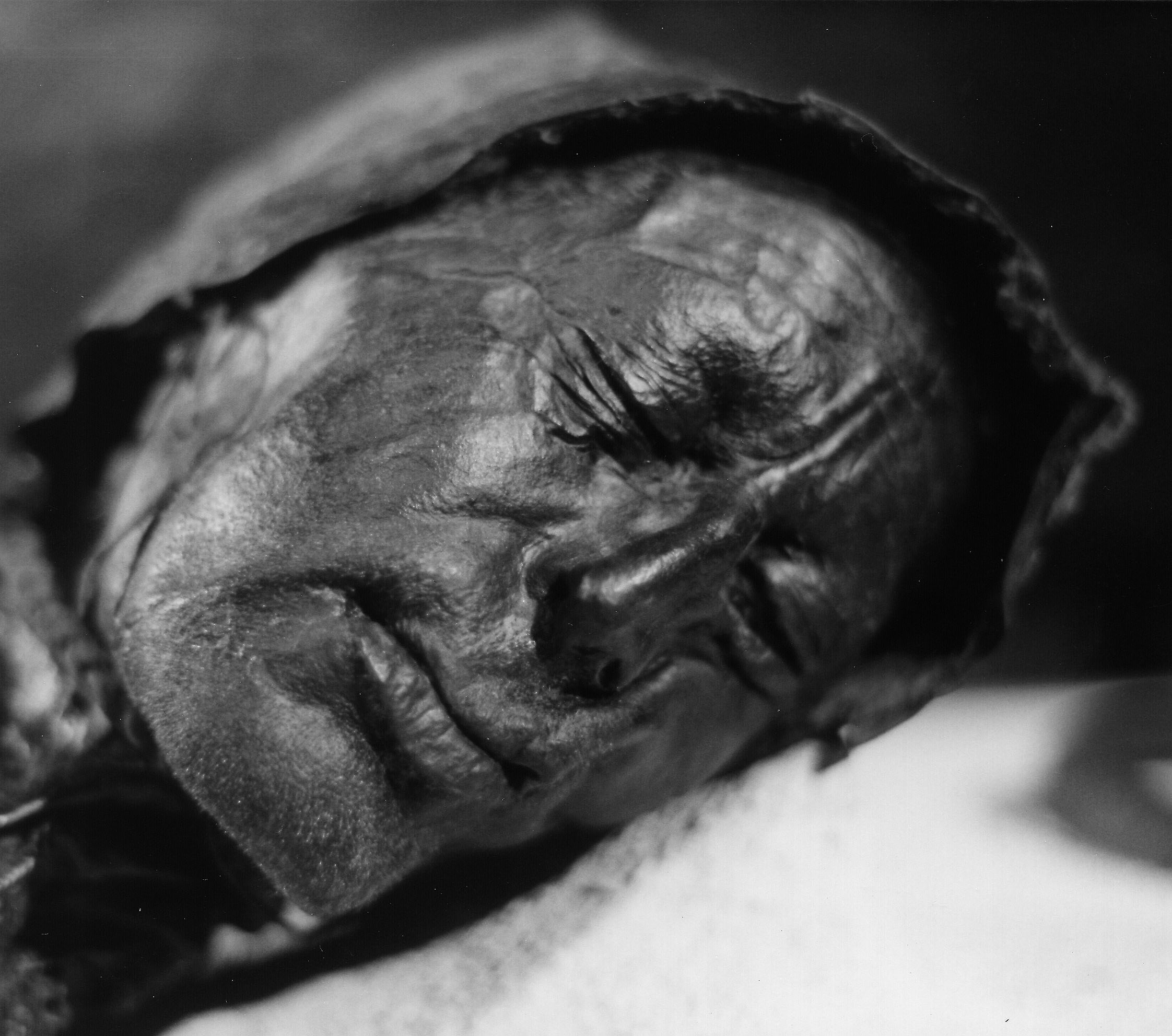
Tollund Man is a naturally mummified corpse of a man who lived during the 4th century BC, during the period characterised in Scandinavia as the Pre-Roman Iron Age.[1] He was found in 1950 on the Jutland Peninsula in Denmark, buried in a peat bog which preserved his body. Such a find is known as a bog body.[2] The man's physical features were so well-preserved that he was mistaken at the time of discovery for a recent murder victim.[3] Twelve years before Tollund Man's discovery, another bog body, Elling Woman, had been found in the same bog.[4]
https://en.wikipedia.org/wiki/Tollund_Man
Scientific examination and conclusions
C14 radiocarbon dating of Tollund Man indicated that he died in approximately 375–210 BC.[8] The preserved tender soft tissues of his body are the consequence of the acid in the peat, along with the lack of oxygen underneath the surface and the cold climate of the Nordic countries. The acid in the peat, needed for the preservation of a human body is caused by a bryophyte named Sphagnum. Sphagnum fight against degradation due to resistant phenolic compounds contained in their cell walls.[9] Due to the acidity of peat, bones are typically dissolved rather than preserved.