To all thee would-be traders out there....

Truth101

Honestly now, after reading 10 posts
to what you desire,

are you ahead now?

do you know now,
what are some essentials
needed to be mastered
in order to become marginally
successful and profitable in trading?

Like to hear from your perspectives,
if you have the time, K?

Thx
 
Truth101

Honestly now, after reading 10 posts
to what you desire,

are you ahead now?

do you know now,
what are some essentials
needed to be mastered
in order to become marginally
successful and profitable in trading?

Like to hear from your perspectives,
if you have the time, K?

Thx
100 post LOL
 
The ten cases of price are pretty simple. Out of 81 daily bars, all of them can be sorted into ten buckets.

Most people will not attempt thinking through it. Two cases make money. One case makes money both long and short. Four cases have no statistically significant measure of price movement, therefore by identifying just those four cases will give one clarity with trade timing in regards to about 50% of daily market movement. If this 50% is known then we work half as much for they are holds if we are in the market and waits if we are sidelined.

Could be anything, but assuming an open, a close and each bar being of either three: wide, narrow or nil (compared to a mean volatility or desired threshold), you've got 10 permutations of meaningful variations. Statistically profitable bars would be 2 wide body bars in opposite direction. Areas of consolidation in this frame of sampling (4 values per sample, OHLC) would be where open and close are near eachother (consolidation). Am I close?
 
Last edited:
Could be anything, but assuming an open, a close and each bar being of either three: wide, narrow or nil (compared to a mean volatility or desired threshold), you've got 10 permutations of meaningful variations. Statistically profitable bars would be 2 wide body bars in opposite direction. Areas of consolidation in this frame of sampling (4 values per sample, OHLC) would be where open and close are near eachother (consolidation). Am I close?

You've taken the biggest and hardest step, well done. Thinking through the concepts assist in building LTM.

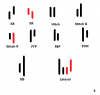
First we start with an image to get the basic definitions.

ten cases (4).png

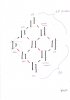
Then, let's add some geometry.

Copy this diagram until you can see redraw it without having to look at it.

Most bar to bar migration of price opens and closes within the "body" of the previous bar

Ten Cases Geometry 2.jpeg .

Starting at the leftmost two bar combo, we have a Symmetrical pennant. From there price can do two things, either becomes a FBP or a FTP. Once it commits to one, the other cannot be.


Following price through the matrix, there is a flow, a sequence. This sequence repeats itself.

A PV chart just shows the artifact of the market's system of operation. This is a building block.

Out of the ten cases, which ones make money?

Set aside the idea of a bar being short or long. We are just looking at the form atm.
 
You've taken the biggest and hardest step, well done. Thinking through the concepts assist in building LTM.

First we start with an image to get the basic definitions.

View attachment 174988

Then, let's add some geometry.

Copy this diagram until you can see redraw it without having to look at it.

Most bar to bar migration of price opens and closes within the "body" of the previous bar

View attachment 174989 .

Starting at the leftmost two bar combo, we have a Symmetrical pennant. From there price can do two things, either becomes a FBP or a FTP. Once it commits to one, the other cannot be.


Following price through the matrix, there is a flow, a sequence. This sequence repeats itself.

A PV chart just shows the artifact of the market's system of operation. This is a building block.

Out of the ten cases, which ones make money?

Set aside the idea of a bar being short or long. We are just looking at the form atm.

@Sprout

More power to you, trying to help out new traders.

Perhaps, you could start out stating the objective first, like

the objective is to....

that will help readers focus on what you have to said....

chow
 
Following price through the matrix, there is a flow, a sequence. This sequence repeats itself.

A PV chart just shows the artifact of the market's system of operation. This is a building block.

Out of the ten cases, which ones make money?

Set aside the idea of a bar being short or long. We are just looking at the form atm.

The two directional extremes makes money to a significant degree (what we're after), ie. beyond short-term volatility. So is this a kind of simplified model of both price volatility and movement?

Two bars enough for assuming a channel/trend. Breakout is from previous bar extremes, except for FBP, but maybe the lack of symmetry with FTP is an error?

This could provide ideas on how to scale in / out, set partial stop-losses, trade management of "trend breaks", etc., depending on what system one wants to make (assuming this is for system-builders and not copycats).

Ie., when at one extreme, combined with a very long body (double extreme combo), better be on lookout for some pullback / short-term reversal. Entries would be natural to look for within the horizontal center, except maybe for OB which could be too late or too indecisive for an entry. OR: FTP and FBP look like the best setups here, leading to the extremes (HH+HL or LL+LH). Although these are just patterns and not necessarily signals by themselves.

Not sure what LTM stands for, though seems to stand for some kind of "light bulb moment".
Flow is always from left to right during build-up of bar ("escape-path" of price).
 
Last edited:
The thing about telling the truth is that know one likes to hear it....
When i say all these bad things people can't believe it, like OMG so negative. Seriously? Is called reality of the market and what it takes to be successful. This tread isn't to start a flaming war.

I should have made myself a little bit more clear. This post was originally for the amateurs, the guys that don't really know what they are getting into. And hopefully someone can benefit from my experience. This is also form of mental catharsis for me. It's obvious that most of you are getting very offended and taking defensive stands against what im saying. I may have came on a little too strong, but don't take personally it's just how i talk... Like i said im mainly talking about s&p day trading, but you can also apply it to short swing trading.

Im not here to completely teach you TA, you have to do the work yourself. Besides even if did break it all down, you wouldn't "see it". "seeing it" takes a tremendous amount of screen time during intra-day action, which is why you need to stare at a chart for as long as it takes until you perceive the market differently. This is like being in a high school math class, when you have those light bulb moments and everything clicks.

Fundamentals are inferior to TA at the end of day - because what moves markets is volume and price. You have to understand that the news is a catalyst for the informed "Big Boy" traders to move the market in their favor. After all the accumulation or distribution is done, we can finally move out of a range, because of the offsetting of volume that has occurred. I doubt anyone here has deeper pockets than Goldman, so don't fight them rather join them.

For people that think they are too smart for TA, or that TA is somehow not a good enough reason to trade, then you don't understand anything about TA. TA is so counter-intuitive because it's very elementary in it's nature. People want explanations of why the market did this or that, but it's better to see learn HOW not why. You can theorize all day after you can see the how. TA isn't going to tell you with absolute certainty that the market is going up, in-fact nothing will be able to guarantee what will occur in the future, but it will give you a good idea. therefore allowing you to ANTICIPATE the next move. This will allow you to make an educated BET on which way it may go. By the way, the people that say trading is not gambling are wrong - we are clearly gamblers, albeit we use tactics to bet SMART. People saying TA doesn't help long term. Are you joking? If you think TA is for lower time frames only - NEWS FLASH the time frames all exhibit the same behavior.

Making 1 mil in your first year of trading, with no trading experience is almost impossible - sure you might get lucky. Hell, there are experienced traders out there that probably make millions on a good volatile day. If the account is large enough there is no profit cap. But like all those .com fellas trading a bubble in 2000 - all lost what they made after the bust. If you don't know how you made the money, you will more than likely give it right back.

The "gurus" make money from their countless subs. They may be able to trade, but they make easy money collecting from suckers. The chat rooms and systems can be in the hundreds or thousands of dollars, and the chat rooms are paid monthly. Yeah, those "gurus" are making bank. End of story.

TA is only one piece of the puzzle. There are many aspects of trading that you will have to figure out for yourself - but If i had to pick the top 3 skills:
1) chart reading
2) money management = cutting losses swiftly (mostly underrated by newbies)
3)timing of entry/exits (also underrated and rarely spoken of, especially the exit where the money is made)

TA doesn't work for some people because they don't understand how to apply it effectively. TA is developing the ability to really read a chart. To be able to see repeatable price action patterns and play them effectively. This is why i say stare at a chart, 3 months , 6 months, 1 year or how ever long it takes for you to see things differently, to see structure, accumulation, distribution ,etc. It's all a matter of perspective. People asks whats the best time frame to trade - their isn't one. Ill say this though, tick charts are better than time charts intra-day.

Better to start fresh and learn organically, than to latch on to someones method because they showed you 50k pnl on one trade.
~follow the price action...

Bravo. Well said. Could not agree more!
 
The two directional extremes makes money to a significant degree (what we're after), ie. beyond short-term volatility. So is this a kind of simplified model of both price volatility and movement?

Two bars enough for assuming a channel/trend. Breakout is from previous bar extremes, except for FBP, but maybe the lack of symmetry with FTP is an error?

This is a very good deduction. You are correct, the market has symmetry. The FBP has an error. It should be a reflection of the FTP. If we start at the Sym, the parallel lines that touch H.1 and L.1 and are drawn horizontally create a reference line to determine if H.0 and L.0 are within the bounds. This is the CW view of support and resistance.

If we look at the Sym and draw a line that connect the L.1 to L.0, this is the RTL. Copying that slope and drawing a parallel line that connects H.1, there will be a gap where H.0 does not make it to the LTL. This parallelogram is very useful. It has symmetry and can be applied to the short dimension as well. This parallelogram extends into the future. It is a boundary that give us a reference as price moves from the future into the present.

The RTL is our line in the sand. When price closes outside the boundary of the parallelogram it gives an early indication that something has changed.
The LTL is less well known. This is where advanced experts are trading, carving turns as sentiment shifts. Trading on the LTL is also a different approach to risk management. It's the early bird that catches the worm.

If you would be willing to use the convention of green lines for long trend, red lines for short trend, and purple lines for horizontal trends, please post a more accurate price case diagram.

Also, place the ten case where appropriate.


This could provide ideas on how to scale in / out, set partial stop-losses, trade management of "trend breaks", etc., depending on what system one wants to make (assuming this is for system-builders and not copycats).

Yes, this is a foundation block for systems building. Many traders just take pieces and parts and apply it to their particular methodologies. This is a whole systems approach.


Ie., when at one extreme, combined with a very long body (double extreme combo), better be on lookout for some pullback / short-term reversal. Entries would be natural to look for within the horizontal center, except maybe for OB which could be too late or too indecisive for an entry. OR: FTP and FBP look like the best setups here, leading to the extremes (HH+HL or LL+LH). Although these are just patterns and not necessarily signals by themselves.

This is very good thinking. When we get to differentiating volume, the movements of price become clearer.
OB's are workhorses, they make money both ways when one anticipates the turn. Some OB's are turns while others are not. Monitoring volume as the independent variable will dictate the dependent variable of price.


Not sure what LTM stands for, though seems to stand for some kind of "light bulb moment".
Flow is always from left to right during build-up of bar ("escape-path" of price).

A three-ringed binder with a working glossary will support building your long term memory.

Comments within quoted text.
 
You've taken the biggest and hardest step, well done. Thinking through the concepts assist in building LTM.

First we start with an image to get the basic definitions.

View attachment 174988

Then, let's add some geometry.

Copy this diagram until you can see redraw it without having to look at it.

Most bar to bar migration of price opens and closes within the "body" of the previous bar

View attachment 174989 .

Starting at the leftmost two bar combo, we have a Symmetrical pennant. From there price can do two things, either becomes a FBP or a FTP. Once it commits to one, the other cannot be.


Following price through the matrix, there is a flow, a sequence. This sequence repeats itself.

A PV chart just shows the artifact of the market's system of operation. This is a building block.

Out of the ten cases, which ones make money?

Set aside the idea of a bar being short or long. We are just looking at the form atm.
BOGUS
 
@Sprout

More power to you, trying to help out new traders.

Perhaps, you could start out stating the objective first, like

the objective is to....

that will help readers focus on what you have to said....

chow

Thank you for the request for clarity.

In any group there are 5 roles.
The ones with the forward intention.
The ones who supports the forward intention.
The ones who challenges the forward intention.
The ones who non-confronts the forward intention.
The ones who are a control problem.


My personal objective is to fulfill a promise of paying it forward. If it were not for the generous giving of lifetimes of experience found in this forum, I would never have had the opportunity to build my mind and create a spectrum of differentiation that allows a clarity of viewing market operation that has transformed my trading and supports me in every aspect of my life.

Reading will not change one's perception of the market;

engaging in civil discourse, performing MADA, doing drills, annotating, logging, debriefing and thinking will.

As a seasoned trader, I'm sure you would agree, the Market is always right and always has the final say. Why not learn to SEE the market in a way that the majority do not?

In other words, the objective is to support open-minded traders in the pursuit of excellence.
 
Back
Top