Three Psychologies in Trading

Psychology is everything in trading

  • Yes

  • No

  • May be


Results are only viewable after voting.
If you are attached to the money you are trading with...you probably should not be trading at all. Just saying ;)

Everytime someone switches brokers for better commission rates and fees...

Everytime someone switches banks for better customer service...

Everytime someone shops and pays for some item that's cheaper than another store that sales it much higher...

Everytime someone chooses a particular real estate agent over another for a better sale price

Everybody is attached to their money no matter the situation. :sneaky:

Don't misunderstand. The thread starter asked if psychology is "everything". I voted NO.

It's just important although that level of importance is different from trader to trader depending upon the other edges in the trading plan.
 
Last edited:
There are three psychologies in stock trading.


1. Stock Market Psychology (short-term scenario)

Probably more than 99% of stock traders are not businessmen and they know next to nothing about running a business. They react (not respond) to news and events mostly in emotional ways. Greed and fear are two highly frequenting emotions in stock trading among traders. Emotions are unpredictable and so is the stock market.

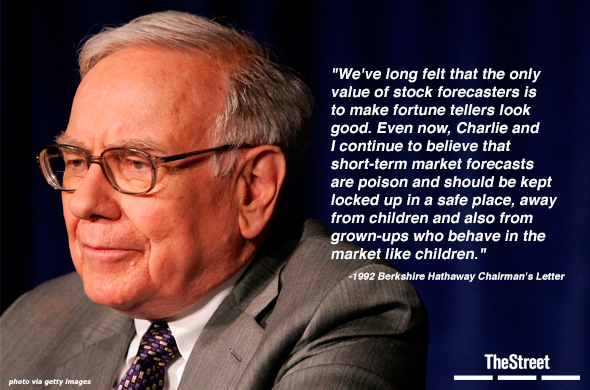
Simply short-term stock market forecasting is unreliable, because forecasting is based on business news and events while the actual reflections in the stock market are based vastly on greed and fear of traders who don't understand business.

Conclusion: Short-term stock market forecasts are unreliable.

Note : This is only a short-term scenario and has got nothing to do with long-term investments.

quote-if-stock-market-experts-were-so-expert-they-would-be-buying-stock-not-selling-advice-norman-ralph-augustine-8554.jpg

quote11.jpg


2. Stock Trading Psychology


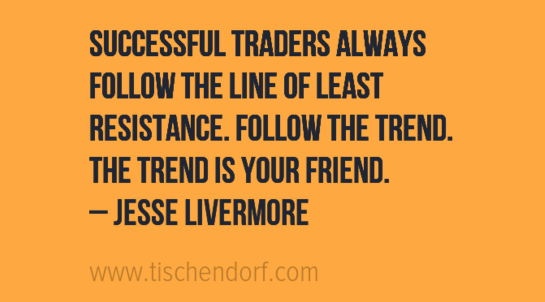
Stock market short-term forecasting may be unreliable. Yet the short-lived market trend is more predictable. Supports and resistances tells us some story that is far more reliable than the short-term forecasting. Technical charts (EMA, RSI, MACD, etc,) are diluted versions of this trend and not for professionals, may be of interest for beginners.

Conclusion : Trend based trading is more reliable.

Jesse-Livermore-Trading-Quotes-Line-of-Least-Resistance.png


3. Stock Trader's Psychology


There are two levels to trader's psychology :

Level 1: Trading is a business. Trader is a businessman. Trader's psychology is fundamentally a business psychology. The relationship between a businessman and his money can be compared to the relationship between a mother and her baby. Warren Buffet expresses the business attitude as follows....
164d806d9d8314735ff3d2c05d03748c.jpg


Level 2 : A businessman also need to understand his field of business. A stock trader has to understand and adopt 1) stock market psychology and 2) stock trading psychology.

Conclusion : Wear the business attitude and learn the business you are in.

A professional trader will always treat his money as his baby.

That is a long post to say one thing, fundamental trading skews to long term traders and technical trading skews to short term traders.

There are only two core patterns in the financial markets, one fundamental and one technical, everything else is a timeframe subset of these two.

Psychology is not everything, but it is a material component, if you don't have the tools, knowledge or capital to deploy it becomes moot.
 
Last edited:
People are 99% animal, 1% human.
And it's the human part that causes all the trouble. ... You'd think it would be the other way around."

The Last Days of Lehman Brothers (TV Movie 2009)
o_O
 
Last edited:
Complacency is one the biggest hurdle in trading. You can get any number of trades right but it only takes one big mistake to get a margin call. Traders have a tendency to get complacent and start holding onto predictions without realizing it until its too late.
 
Last edited by a moderator:
A state of mind, i`d say.

I agree. :)

A state of mind is mind viewing life from a specific view point. Psychology is a view point from where one tends to see things or life. This is mostly deep (subconscious) not shallow (conscious).
 
Guys, I think you mix up psychology with proper mental condition and work ethic. :D

Psychology means "view point", seeing things or life from a view point. Our understanding moves in and around that view point.

Mental condition, work ethic, etc, are products of view points (psychology).


"Trading is hard work", "trading is smart work", "trading is a business", "edge is simply a repeatable pattern", "edge is beyond repeatable pattern", "edge is in the data", "edge is in the chart", "edge is in the forecast",...

All are view points from which we try to see and understand things. Transformation means a shift from a narrow view point to a broader view point.

There is nothing right or wrong about view points. What is more important is sticking to view points until they work for us and when they don't work looking for another view point.

We are growing, means we are moving from narrow view points to broader view points from where we have a fresh look at things and our life.

Many people have trouble growing since they make their view points the absolute truth. Their absolute truth makes them obsolete. :)

There is always one more step ahead !
 
Last edited:
Wrong and Right.

The problem is the word "edge". Some traders have "many" edges...not just one. One of those edges may be psychological for those that are not automated or it may be several edges working together (e.g. money management, psychological, extremely low commissions, living rent free or anything that determines if profitable or loser).

Thus, without that psychological edge...they're losing or struggling traders. With that psychological edge with their other edges...they're profitable traders.

Reminds me of this guy that was a "drunk"...an alcoholic and a trader. The guy would consistently make crazy trades and have big losing days when "drunk" while trading. In contrast, during the periods he was "sober" (not drinking)...he was a highly profitable trader.

Therefore, his sobriety was part of his edge. It allowed him to make good trade decisions and make a lot of money.

Thus, an edge to someone may not be the same edge to someone else. Simply, go tell that "drunk trader" you need an edge to be successful. He may do rehab, sober up and trade profitably.

I appreciate your broader view point about trading. :)
 
That is a long post to say one thing, fundamental trading skews to long term traders and technical trading skews to short term traders.

There are only two core patterns in the financial markets, one fundamental and one technical, everything else is a timeframe subset of these two.

Psychology is not everything, but it is a material component, if you don't have the tools, knowledge or capital to deploy it becomes moot.

There are four types of business in stock market :
1. Investing based on wisdom
2. Trading based on technical analysis
3. Trading based on news and events
4. Long term trading based on functional analysis

There are many legends in the first two categories. Show me one legend in the 3rd and 4th category.

3 and 4 are confusions, not genuine business. :)

Genuine investment is purely based on the investor's instincts about the company and its industry. Fundamental analysis means nothing much to investors. They are just some numbers on the paper.

Investment has noting to do with stock market speculations.

Whereas trading has everything to do with speculations. Technical analysis is everything to a professional trader. (This is a view point which is again a psychology)

Both short-term forecasts based on news & events and long term forecasts based on fundamental analysis are not professional's choices.

There are financial institutes which encourages people to invest in these forecasts.

Forecasts are poison. :)

There are legendary investors.
There are professional technical traders.
There is no "in-betweens".

Infact investors are not stock people. They are actually industry people who invest only in industries they understand well. For example Warren Buffet don't understand IT industry and wont invest much in that industry.

Only traders are stock people.

Professional technical traders may or may not know about the industry. All that they know is to make money in speculations using technical analysis.

So the one and only genuine business "within" stock market is technical trading.
 
Last edited:
Everytime someone switches brokers for better commission rates and fees...

Everytime someone switches banks for better customer service...

Everytime someone shops and pays for some item that's cheaper than another store that sales it much higher...

Everytime someone chooses a particular real estate agent over another for a better sale price

Everybody is attached to their money no matter the situation. :sneaky:

Don't misunderstand. The thread starter asked if psychology is "everything". I voted NO.

It's just important although that level of importance is different from trader to trader depending upon the other edges in the trading plan.

For example what you have expressed in this post is your view point.

Psychology means "view point".

My point is every possible thing that we can think about which can influence our decisions and life are just "view points" which we categorize as psychology. :)

Psychology is everything in our life including our profession !
 
Back
Top