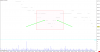
Thoughts on where to initiate a trade...

I certainly don't have a dog in this hunt


But..., KP brings up good points

To take this chart... and treat the B/O up as a fore gone conclusion - is incorrect


Many set ups on this chart - several I did not mark as it would be too cluttered

Many ways to read it - many potential outcomes for price to travel

Why seeing the bigger TF(s) (overall landscape)..., and factoring it in - is so vital

Up until price actually B/O (the last bar) - I could make a case for several different outcomes (based on what I'm presented here)

Factor in the higher TF(s) - may present a different story - but who could say here - as it not present

[


KP is asking good questions - he should not be dismissed so easily


Aside

Apologies for bad drawings - but an artist I'm not


jmo

RN


well the red rectangle.. should one use to make further decisions..

as price didnt actually just reacted and went back up...no..

price actually found "support" ...

one can take a short of any HL .. but one should be concerned if price fails to take out this level(sup.)... and close his position at least @ BE even a reverse play could be put in.. but that is/could be a topic on ones trading plan...
 
KP is asking good questions - he should not be dismissed so easily

With all dues respect, RN, there is a whole context that you are missing preceding this exchange between kp and myself. Furthermore, I never said and I never assume that that particular BO or any BO is a foregone conclusion - what I was referring to specifically was KP saying that the BO came out of nowhere, i.e. it surprised him. It certainly didn't surprise you, right? From your drawings, it certainly doesn't look like you would have been surprised. From your posts, I know you would not have missed the possibility.

My point to KP is simply that there were 9 minutes of HH-HL preceding the test of that high. The test was certainly not "out of nowhere." In fact, one might say the market was "telegraphing the punch."

As for whether or not to dimiss kp, you know I respect you, RN, and you and I will just have to agree to disagree on kp. My personal opinion of KP is that he is lost until he accepts the advice he's been given by successful traders, including you, RN. But that is my opinion, and I have no expectation for others to hold it as theirs as well. He is so far from understanding price action that one has to wonder how he could be so lost after an entire year of doing the work - other than he simply hasn't done the work.
 
Another view

Range within a range


upload_2015-3-1_12-34-0.png


RN
 
Please, don't quote me anymore and please don't comment on me anymore. You can do enough damage to others without having to drag me through your dirt.

I mean no disrespect 40D, but the fact of the matter is that I can comment all I want. This is a thread that I started. I appreciate your continued effort to steer me in the right direction, but the direction you have chosen now is to attack my psychology, as if you know the deep inner workings of my brain. I too realize how how those who fail like to attack others to make themselves feel better about their own failure, but this is quite a bit different. I'm trying to actually make this work, but you're not showing enough.

The above chart that you annotate, yes, it isn't out of nowhere, but point being, as I'm trying to get across is that, what you call a lower high on an hourly chart is only a lower high once that entire hour is up and that bar has fully formed and is written in stone. As this bar is forming, as I have pointed out, there could be what appears to be a lower high, but then, price makes a higher high, and if that entire sequence of 1 minute bars happened in that one hourly bar, then that hourly bar would have in fact been a higher high.

Furthermore, you always say to only focus on the extremes, so how is that hourly bar, the one that you call a lower high, of any significance since its not an extreme? Its just a bar with a high that is lower than the previous bar. The next bar after even has a high that is lower, so why don't we draw a line across this?

But you know, there is something else that has been bugging me, and I'd like to end with that. If you don't reply, that is fine, the entire community would have read it.

You had showed us this post back in January on how you got filled short for 20 contracts at 4206.

http://www.elitetrader.com/et/index.php?threads/observations-an-example.288938/page-5#post-4076786

I'm not a user of Ninja, so I'm not exactly sure where this fill happened given that the horizontal line intersects price twice, so I went looking into the tick data, trying hard to see these higher lows and higher highs and all that jazz. Its pretty obvious that you get filled around 10:23.19.

The view on your 5 min chart shows you already 2.75 points into profit, finally breathing a sigh of relief I'm sure. But here is the funny thing. When "the apprentice" shows his charts, his fill line is there just like yours, but so is the line to show where his stop is and profit target.

http://www.elitetrader.com/et/index.php?threads/observations-an-example.288938/page-23#post-4091800

If he wasn't in the live trade anymore, then I'm sure that we would see the entry and the exit as he so nicely shows most of the time. Now on your chart, we only see the entry, so you're still in the trade. Why wouldn't you have your stop and profit orders somewhere? The 5 minute view is wide enough that they should be there. You say you always have a 5 point disaster stop attached to each trade, so it should be there, at 4211 even if you're still using a 5 point disaster stop, but strangely, it isn't. You said before you start with a profit target of 20 points, just as the preset value, so this puts a profit target initially at 4186, but this isn't there either. Why would somebody trading live, trading with real money, trading 20 contracts, risk not having OCO orders?

I suppose there could be an option in Ninja to hide pending orders, which would be the OCO orders, and just show the fill, but to me, that line you show is the line you get from live orders that are displayed. If it was just a fill, and you chose not to display pending orders, then that fill should be the little triangle, not a line. But hey, I don't know Ninja well enough so I better be careful with what conclusions I draw. But if a trader who is trading only 1 contract can show a chart with a proper entry, stop and target, complete with fills that are plotted by the platform, why this is never on your charts I have to question. Why your charts are always drawn up with cute little shapes to show entries and exits when it would be far easier to just take a screen capture of your actual chart without having to draw this in manually I have to question.

There is something else that bugs me about your trade. This was a very slow time. I could even see this in the tick data. Sierra Charts gives me access to the actual tick data, which I assume is pretty accurate, so I went digging.

Since its pretty obvious that you got filled somewhere around 10:23.19, lets see what was going on there. I attach a chart of this tick data. Its big, but I wanted to make sure to leave plenty of space between the ticks so we could really see what is happening.

The red box outlines the time in question, about 3 seconds worth. Not a single transaction is for more than 4 contracts.. most are at 1. So I started to count how many happened at 4206. The first wave on the way down has 5 ticks at 4206, with a total of 9 contracts. When price comes back up and trades at 4206, there are a total of 6 transactions and the volume I count is 7 contracts traded. Jesus, I may be pretty dumb, but 9+7 is only 16 contracts at 4206, and these aren't even sequential. How on earth did you go short for 20 contracts at 4206?

Now perhaps this 4206 represents an average... so some were filled at 4206.25, and some were filled at 4205.75. Trouble is just before price hits 4206, the previous level is actually 2 ticks higher at 4206.50. I don't know how far I can take this, how accurate this data is, but I would imagine the average price is not going to be such a nice round number of 4206.

The thing is that volume was so low around this time that I just don't see how you're getting filled for 20 contracts at such a nice and neat price level. I have only ever traded 2 contracts max, and often when I've hit the reverse button to change my trade direction, switching from short to long, and therefore having to buy 2 contracts, these are filled 1 tick apart. During a much busier time and wanting to buy only 2 contracts gets me a fill not at the same price level! So this, given with that fact that there are no OCO orders attached, as per your own charts, makes me question what happened here.

You can call all of this trolling, but I think the onus is upon you to prove such an extraordinary claim of yours when I have shown sufficient evidence that would lead any reasonable person to have justifiable doubts.

Thanks for pissing me off and giving me the opportunity to share this. :)

If there are experts out there, please do jump in and share. Who is trading more than 10 contracts and can actually tell us what happens with fills? Who uses Ninja and can actually say what should be seen on a chart in reference to fills and active pending orders?

Ps. I have more circumstantial evidence if you wanna have more fun.

 

Attachments

  • 40D short on Jan 22.png
    40D short on Jan 22.png
    22.8 KB · Views: 117
Maybe...

This whole range (in blue) - is it a PB in a DT

Or a reversal

or..., or..., or..., or..., or

RN


upload_2015-3-1_12-38-30.png
 
Last edited:
I agree with everything you said, but why should a rookie like kp start to counter trend? It's harder enough for a rookie to be profitable with a trend..
This is an excellent question, so here is my explanation. Trading with the trend isn't actually easy. Once the trend is well under way, any pullbacks can be pretty deep that don't actually invalidate the trend. You could literally have price retrace 50% of the move and still consider an up trend in tact. Depending on where you enter, you might be hurting quite a bit.

The important thing, as I see it, is to get into that trend early. Once you can say its a trend and its under way.... you never know how far it will go. So the best way to get into a trend, its into a new trend if this is what you are expecting at what you think is an important support or resistance level. If you take the counter trend trade, you're either instantly right, or instantly wrong if the trend should happen to continue and stop you out.

So often I have tried to trade with the trend, and perhaps because of my bad entries, price would go against me, causing me to get out, and although the trend may have continued, getting out when price isn't doing what you think it should do is prudent.

So in many ways, a counter trend trade offers a really good risk:reward ratio I think with stops that can be tight which is some ways is good for a beginner.
 
So in many ways, a counter trend trade offers a really good risk:reward ratio I think with stops that can be tight which is some ways is good for a beginner.


The flip side - one is repeatedly beating their head up against a wall (repeated losses) until either a PB..., reversal..., or range materializes

Shit is hard enough - no need to make it harder

And thinking the R:R is somehow better - No Sir - it simply - you're trying to catch something not yet confirmed - on nothing but a hope and prayer

That is not PA trading


RN
 
KP is asking good questions - he should not be dismissed so easily


Aside

Apologies for bad drawings - but an artist I'm not


jmo

RN
Thanks RN. Wow.. I didn't realize I picked such a good random example which allowed you to consider so much of the price action. I do really like how you outline that bottom range in red, and show how price tries to re-enter but shoots up higher.

My main goal with this chart was to show that each time 40D says that there is a lower high in there on an hourly chart, that lower high doesn't mean much in the context of the hourly bars until that hourly bar is formed. If this bar should close, and its high is lower than the previous bar, then sure, the lower high is there, but if just before this bar closes price shoots up higher, past the high of the previous bar, then whatever lower high you said to look at has now been exceeded, and any trades made as a result of this would be at a loss now. So I'm just trying to show that yes, there is a lower high at first, and then there is a higher high. He can only point out the lower high because he sees the next bar already and hence he knows that the lower high was in fact a lower high.

I love your drawings though. I've never quite seen how you trade, so I'm enjoying watching you mark up some charts. The good thing is that I'm following along quite well as its not too different with what I'm able to see/understand.
 
The flip side - one is repeatedly beating their head up against a wall (repeated losses) until either a PB..., reversal..., or range materializes

Shit is hard enough - no need to make it harder

And thinking the R:R is somehow better - No Sir - it simply - you're trying to catch something not yet confirmed - on nothing but a hope and prayer

That is not PA trading


RN
Ok.. how about this... how about getting confirmation in a 5 second chart? I mean I've looked into just the 1 minute bars, and I see that often, if price rejects an overnight low as an example, buying above the 1 minute bar that rejects this low is a good strategy, but if this bar is 5 or 6 points high, then you gotta take a big stop just in case price should happen to test the low again as a double bottom (or triple bottom in this care).

So the sooner you get in, the smaller your stop can be, since the idea is to place a stop at the level where price shouldn't go. If price does in fact reject the overnight low, it shouldn't go below it, so as long as I get into a long with 1 or 2 points of the overnight low, I'm in with a tight stop. If I get in 5 points above the overnight low, my stop still has to be just slightly below the overnight low, and this is now over a 5 point stop!
 
Ok.. how about this... how about getting confirmation in a 5 second chart?

I mean I've looked into just the 1 minute bars, and I see that often, if price rejects an overnight low as an example, buying above the 1 minute bar that rejects this low is a good strategy, but if this bar is 5 or 6 points high, then you gotta take a big stop just in case price should happen to test the low again as a double bottom (or triple bottom in this care).

So the sooner you get in, the smaller your stop can be, since the idea is to place a stop at the level where price shouldn't go. If price does in fact reject the overnight low, it shouldn't go below it, so as long as I get into a long with 1 or 2 points of the overnight low, I'm in with a tight stop. If I get in 5 points above the overnight low, my stop still has to be just slightly below the overnight low, and this is now over a 5 point stop!


I can't..., and wouldn't - sit here and say what best for you (what TF(s) marry up best to your personality)


A 5 sec chart would cause me alzheimers..., epileptic seizure...., aspergers..., and uncontrollable shitting of my pants - all at the same time

Not an attempt at humor either

RN
 
Last edited:
Back
Top