Literally none. The stuff an average ET'er can trade are things like momentum and reversals, and for both of those, simplicity is key. Momentum should be measured as the slope of change in the stock price, while reversals are providing liquidity against the market move.
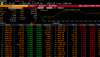
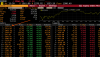
A smart ET'er spends 5 minutes in the morning to review macro data (if any), bond market stuff (yields and moves), volatility (vix and 9d), and market breadth (adv / dec). But the trading opportunities are really found in scanning for stocks that are top movers (up or down) at open, reviewing news on the stock and volume, and then making a trade either to capture momentum or a reversal.
When a stock is spiking up or down, you need to know why and figure out what you estimate fair value to be. Note: you cannot predict the eod close with just your time series data, but you can think about where volume will be in through the day (Average volume at time historically).
For example:
View attachment 262924
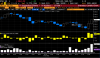
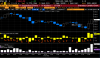
If momentum is the slope of the ROC then you would buy when ROC is accelerating and sell as it decelerates and goes negative (the opposite is true for shorting). Don't stare at the price chart.