Quote from Covertibility:
There is a long list to back this up.
Off the top of my head examples
The conservatives believe that raising the minimum wage causes or leads to unemployment yet every study out there has proven the opposite.
The conservative will tell you that cutting taxes can pay for themselves but it has been proven they don't.
"In the 1920s, tax rates were slashed 70 percent to less than 25 percent. What happened? Despite the reduction in rates, revenues rose from $719 million in 1921 to $1164 million in 1928, an increase of more than 61 percent.
Kennedy proposed across-the-board tax rate reductions that reduced the top tax rate from more than 90 percent down to 70 percent. What happened? Tax revenues climbed from $94 billion in 1961 to $153 billion in 1968, an increase of 62 percent.
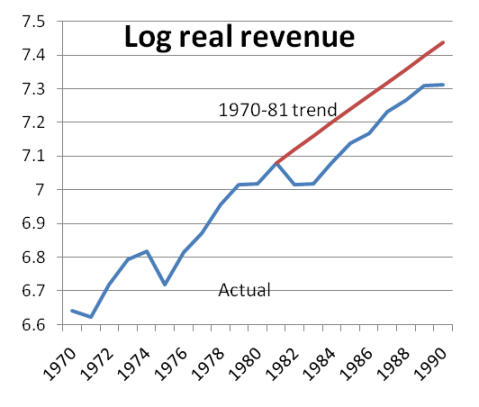
Reagan proposed sweeping tax rate reductions during the 1980s. What happened? Total tax revenues climbed by 99.4 percent during the 1980s. Once the economy received an unambiguous tax cut in January 1983, income tax revenues climbed dramatically, increasing by more than 54 percent by 1989.
According to Treasury Secretary Andrew Mellon:
The history of taxation shows that taxes which are inherently excessive are not paid. The high rates inevitably put pressure upon the taxpayer to withdraw his capital from productive business and invest it in tax-exempt securities or to find other lawful methods of avoiding the realization of taxable income. The result is that the sources of taxation are drying up; wealth is failing to carry its share of the tax burden; and capital is being diverted into channels which yield neither revenue to the Government nor profit to the people."
"The rich pay more when incentives to hide income are reduced.
The tax cuts of the 1920s
The share of the tax burden paid by the rich rose dramatically as tax rates were reduced. The share of the tax burden borne by the rich (those making $50,000 and up in those days) climbed from 44.2 percent in 1921 to 78.4 percent in 1928.
The Kennedy tax cuts
Just as happened in the 1920s, the share of the income tax burden borne by the rich increased following the tax cuts. Tax collections from those making over $50,000 per year climbed by 57 percent between 1963 and 1966, while tax collections from those earning below $50,000 rose 11 percent. As a result, the rich saw their portion of the income tax burden climb from 11.6 percent to 15.1 percent.
The Reagan tax cuts
The share of income taxes paid by the top 10 percent of earners jumped significantly, climbing from 48.0 percent in 1981 to 57.2 percent in 1988. The top 1 percent saw their share of the income tax bill climb even more dramatically, from 17.6 percent in 1981 to 27.5 percent in 1988."