http://www.absoluteastronomy.com/encyclopedia/s/sh/shuttle_buran.htm
Key differences with the NASA Space Shuttle
Buran was designed to be capable of both (Click link for more info and facts about manned) manned and (Click link for more info and facts about unmanned) unmanned flight, it had (Click link for more info and facts about automated) automated (The act of coming down to the earth (or other surface)) landing capability; the manned version has never been operational
The orbiter had no main (A jet engine containing its own propellant and driven by reaction propulsion) rocket engines, freeing space and weight for additional (The front part of a guided missile or rocket or torpedo that carries the nuclear or explosive charge or the chemical or biological agents) payload; the largest cylindrical structure is the (Click link for more info and facts about Energiya) Energiya carrier-rocket, not just a (Click link for more info and facts about fuel tank) fuel tank.
There were four (An amplifier for restoring the strength of a transmitted signal) boosters instead of two, and they used (A substance that is liquid at room temperature and pressure) liquid (Something that propels) propellant ( (A flammable hydrocarbon oil used as fuel in lamps and heaters) kerosene/ (A nonmetallic bivalent element that is normally a colorless odorless tasteless nonflammable diatomic gas; constitutes 21 percent of the atmosphere by volume; the most abundant element in the earth's crust) oxygen)
The Energiya carrier, including the main engines, was designed to be reusable but funding cuts meant that a reusable version of Energiya was never completed. The U.S. Space Shuttle has reuseable main engines in the (Man-made equipment that orbits around the earth or the moon) orbiter and reusable Solid Rocket Boosters.
Buran could lift 30 (A unit of weight equivalent to 1000 kilograms) tonnes to orbit, against the Space Shuttle's 25 tonnes.
The high lift-drag ratio of the space (An aircraft that has a fixed wing and is powered by propellers or jets) aeroplane Buran is 6.5 against 5.5 for Space Shuttle
Buran returned 20 tonnes of payload against 15 tonnes for Space Shuttle orbiter from an orbit to an (An airfield equipped with control tower and hangers as well as accommodations for passengers and cargo) aerodrome
The cutting lay-out pattern of thermoprotection tiles of Buran is optimal and (Click link for more info and facts about longitudinal) longitudinal slits of tile belts are orthogonal to the flow line. Sharp angles of tiles are absent.
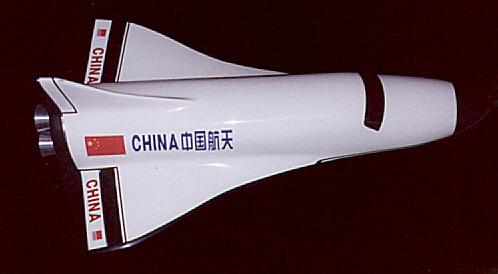
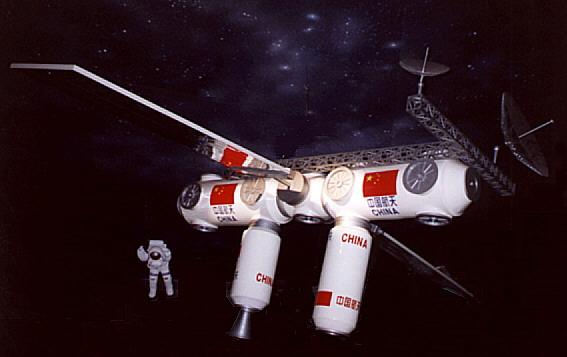
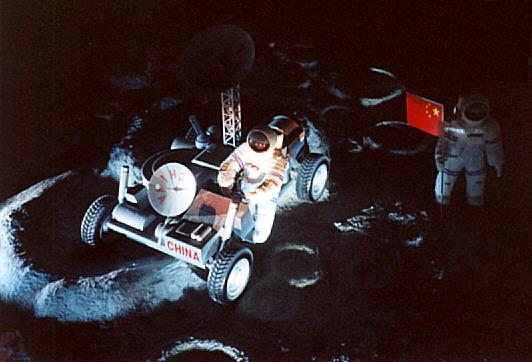
Here is a great review of china space program.
http://www.astronautix.com/articles/china.htm
good day