

Baron
ET Founder
If you workout with weights, protein supplementation really makes sense. The positive effect may not be as great as you think, but some extra protein may result in a kilogram (2.2 lbs) of extra muscle mass over a period of several months. A Canadian exercise scientist from McMaster University comes to this conclusion in a meta-study published in the British Journal of Sports Medicine.
Study
The meta-analysis by Robert Morton is the largest study of its kind to date. Morton collected 49 trials, involving a total of 1,863 test subjects. Those subjects trained between 6 and 52 weeks with weights. Some of them used whey or soy protein supplements, some didn't. The protein dose varied from 5 to 44 grams per intake.
Results
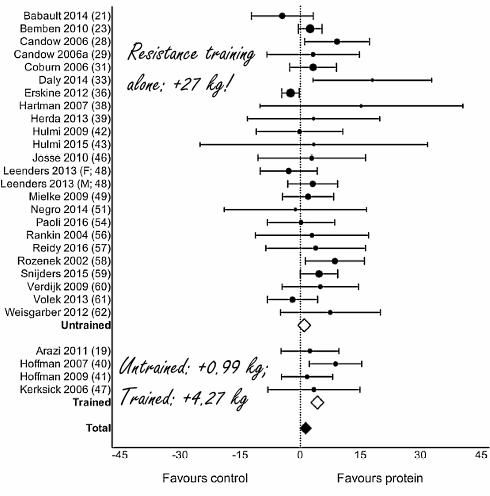
In the studies that Morton analyzed, strength training increased the maximum strength by 27 kilos. Protein supplementation added another kilogram to this if the subjects had no experience with strength training. In experienced lifters the max strength increased by 4 kilos.
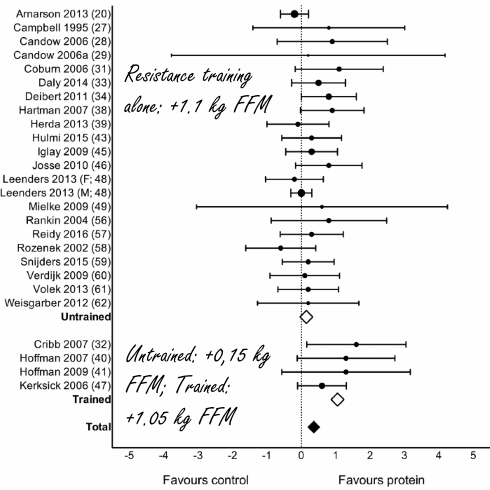
Strength training increased the lean body mass by 1 kilo. If the subjects were inexperienced, protein supplementation added 150 g to this. If the subjects were experienced, protein supplementation added 1 kg to the increase of of the fat-free mass.
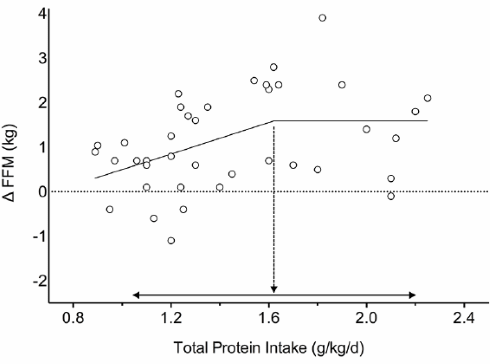
As far as optimal total protein intake is concerned [ingestion via regular diet and supplementation]: according to Morton's calculations this was 1.6 grams of protein per kilogram of bodyweight per day. So for a 200 lb male, that works out to be 145 grams of protein per day.
Higher doses did not lead to an even greater increase of the lean body mass.
Conclusion
"There have been mixed messages sent to clinicians, dieticians, and ultimately practitioners about the efficacy of protein supplementation", Robert Morton tells in a press release. [sciencedaily.com February 7, 2018] "This meta-analysis puts that debate to rest."
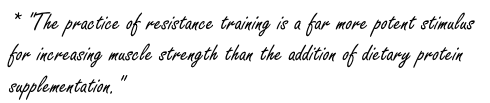
"Protein intake is critical for muscle health and this research suggests the recommended dietary allowance, of 0.8 g protein per kg per days, is too low."
Source:
Br J Sports Med. 2017 Jul 11. pii: bjsports-2017-097608.
Study
The meta-analysis by Robert Morton is the largest study of its kind to date. Morton collected 49 trials, involving a total of 1,863 test subjects. Those subjects trained between 6 and 52 weeks with weights. Some of them used whey or soy protein supplements, some didn't. The protein dose varied from 5 to 44 grams per intake.
Results
In the studies that Morton analyzed, strength training increased the maximum strength by 27 kilos. Protein supplementation added another kilogram to this if the subjects had no experience with strength training. In experienced lifters the max strength increased by 4 kilos.
Strength training increased the lean body mass by 1 kilo. If the subjects were inexperienced, protein supplementation added 150 g to this. If the subjects were experienced, protein supplementation added 1 kg to the increase of of the fat-free mass.
As far as optimal total protein intake is concerned [ingestion via regular diet and supplementation]: according to Morton's calculations this was 1.6 grams of protein per kilogram of bodyweight per day. So for a 200 lb male, that works out to be 145 grams of protein per day.
Higher doses did not lead to an even greater increase of the lean body mass.
Conclusion
"There have been mixed messages sent to clinicians, dieticians, and ultimately practitioners about the efficacy of protein supplementation", Robert Morton tells in a press release. [sciencedaily.com February 7, 2018] "This meta-analysis puts that debate to rest."
"Protein intake is critical for muscle health and this research suggests the recommended dietary allowance, of 0.8 g protein per kg per days, is too low."
Source:
Br J Sports Med. 2017 Jul 11. pii: bjsports-2017-097608.

 -- like a vampire drinking nourishing blood,