If its good news for a vaccine because we build immunity when exposed...
Its very good news for prospects of herd immunity.
Now there are still some questions... but they impact both vaccine and natural herd immunity. Like how long will it last.
However, unless you think we will have a vaccine soon...
this article is looking even better, so I will post it again.
Sweden’s Coronavirus Strategy Will Soon Be the World’s
Herd Immunity Is the Only Realistic Option—the Question Is How to Get There Safely
China placed 50 million people under quarantine in Hubei Province in January. Since then, many liberal democracies have taken aggressive authoritarian measures of their own to fight the novel coronavirus. By mid-March, almost all Organization for Economic Cooperation and Development (OECD) countries
had implemented some combination of school, university, workplace, and public transportation closures; restrictions on public events; and limits on domestic and international travel. One country, however, stands out as an exception in the West.
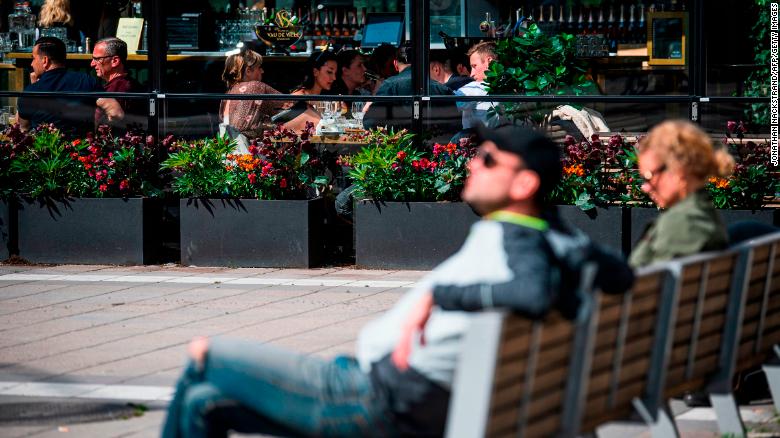
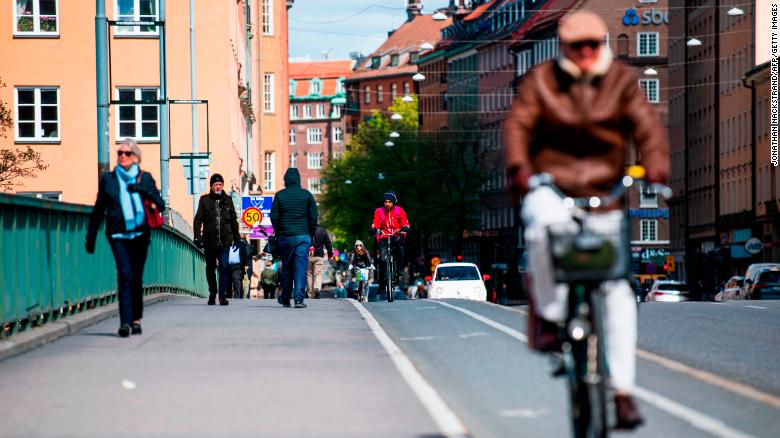
Rather than declare a lockdown or a state of emergency, Sweden asked its citizens to practice social distancing on a mostly voluntary basis. Swedish authorities imposed some restrictions designed to flatten the curve: no public gatherings of more than 50 people, no bar service, distance learning in high schools and universities, and so on. But they eschewed harsh controls, fines, and policing. Swedes have changed their behavior, but not as profoundly as the citizens of other Western democracies. Many restaurants remain open, although they are lightly trafficked; young children are still in school. And in contrast to neighboring Norway (and some Asian countries), Sweden has not introduced location-tracing technologies or apps, thus avoiding threats to privacy and personal autonomy.
Swedish authorities have not officially declared a goal of reaching herd immunity, which most scientists believe is achieved when more than 60 percent of the population has had the virus. But augmenting immunity is no doubt part of the government’s broader strategy—or at least a likely consequence of keeping schools, restaurants, and most businesses open.
Anders Tegnell, the chief epidemiologist at Sweden’s Public Health Agency, has projected that the city of Stockholm could reach herd immunity as early as this month. Based on updated behavioral assumptions (social-distancing norms are changing how Swedes behave), the Stockholm University mathematician Tom Britton has
calculated that 40 percent immunity in the capital could be enough to stop the virus’s spread there and that this could happen by mid-June.
Stay informed
In-depth analysis delivered weekly
Sweden has won praise in some quarters for preserving at least some semblance of economic normalcy and keeping its per capita death rate
lower than those of Belgium, France, Italy, the Netherlands, Spain, and the United Kingdom. But it has come in for criticism in other quarters for exceeding the per capita death rates of other Nordic countries and in particular, for failing to protect its elderly and immigrant populations. People receiving nursing and elder-care services account for upward of 50 percent of COVID-19 deaths in Sweden,
according to Tegnell, in part because many facilities were grievously slow to implement basic protective measures such as mask wearing. Immigrants have also suffered disproportionately, mainly because they are poorer on average and tend to work in the service sector, where working remotely is usually impossible. But Swedish authorities have
argued that the country’s higher death rate will appear comparatively lower in hindsight. Efforts to contain the virus are doomed to fail in many countries, and a large percentage of people will be infected in the end. When much of the world experiences a deadly second wave, Sweden will have the worst of the pandemic behind it.
When much of the world experiences a deadly second wave, Sweden will have the worst of the pandemic behind it.
Sweden’s response has not been perfect, but it has succeeded in bolstering immunity among the young and the healthy—those at the lowest risk of serious complications from COVID-19—while also flattening the curve. The country’s intensive care units have not been overrun, and hospital staffs, although under strain, have at least not had to juggle additional childcare responsibilities because daycares and lower schools continue to operate.
Whether or not they have openly embraced the Swedish approach, many other countries are now trying to emulate aspects of it. Both Denmark and Finland have reopened schools for young children. Germany is allowing small shops to reopen. Italy will soon reopen parks, and France has a plan to allow some nonessential businesses to reopen, including farmers’ markets and small museums, as well as schools and daycare centers. In the United States, which has by far the highest absolute number of reported COVID-19 deaths,
several states are easing restrictions at the urging of President Donald Trump, who despite
bashing the Swedish model, is pushing the country toward something very similar.
There are good reasons for countries to begin easing their restrictions. It will take several years to tally the total number of deaths, bankruptcies, layoffs, suicides, mental health problems, losses to GDP and investments, and other costs attributable not just to the virus but to the measures used to fight it. It should already be obvious, however, that the economic and social costs of lockdowns are enormous: estimates
from the OECD suggest that every month of pandemic-related restrictions will shrink the economies of advanced countries by two percent. France, Germany, Italy, Spain, the United Kingdom, and the United States, according to the OECD, will see their economies shrink by more than 25 percent within a year. Unemployment is rising to levels unheard of since the 1930s—fueling political backlash and deepening social divisions.
Lockdowns are simply not sustainable for the amount of time that it will likely take to develop a vaccine.
Lockdowns are simply not sustainable for the amount of time that it will likely take to develop a vaccine. Letting up will reduce economic, social, and political pressures. It may also allow populations to build an immunity that will end up being the least bad way of fighting COVID-19 in the long run. Much about the disease remains poorly understood, but countries that are locked down now could very well face new and even more severe outbreaks down the road. If these countries follow the Swedish path to herd immunity, the total cost of the pandemic will decrease, and it will likely end sooner.
Sweden’s approach to COVID-19 reflects the country’s distinctive culture, and aspects of it may not be easy to replicate elsewhere. In particular, reliance on official recommendations and individual responsibility may not travel well beyond Scandinavia. Sweden is a special country characterized by
high levels of trust—not just between people but between people and government institutions. Swedes were primed to take voluntary recommendations seriously in a way that citizens of other nations may not be.
Swedes are also generally healthier than citizens of many other countries, so additional precautions may be necessary to protect the infirm in other parts of the world. Countries lifting restrictions should also learn from Sweden’s missteps when it comes to the elderly and immigrants: masks and other protective equipment should be made immediately available in nursing homes, and greater emphasis should be placed on protecting service-sector workers who are at higher risk because of age or infirmity. But the emphasis must be on helping at-risk people stay safe and out of harm’s way, not locking entire societies down.
As scientists learn more about the virus and authorities develop new and better ways to work around the contagion—altering the parameters for calculating herd immunity to account for behavioral changes, for instance—the justification for general lockdowns grows weaker and weaker. Even in places like the United States and the United Kingdom, where the pool of at-risk people is much larger, the cost of protecting these people is much lower than forcing everyone to stay home. Managing the path to herd immunity means, above all, protecting the vulnerable. Sweden learned that the hard way, but the situation there is now under control.
As the pain of national lockdowns grows intolerable and countries realize that managing—rather than defeating—the pandemic is the only realistic option, more and more of them will begin to open up. Smart social distancing to keep health-care systems from being overwhelmed, improved therapies for the afflicted, and better protections for at-risk groups can help reduce the human toll. But at the end of the day, increased—and ultimately, herd—immunity may be the only viable defense against the disease, so long as vulnerable groups are protected along the way. Whatever marks Sweden deserves for managing the pandemic, other nations are beginning to see that it is ahead of the curve.
- NILS KARLSON is Professor of Political Science at Linköping University and President and CEO of the Ratio Institute.
- CHARLOTTA STERN is Professor of Sociology in Work and Organization at Stockholm University and Deputy CEO of the Ratio Institute.
- DANIEL B. KLEIN is Professor of Economics and JIN Chair at the Mercatus Center at George Mason University and Associate Fellow of the Ratio Institute.
https://www.foreignaffairs.com/arti...dens-coronavirus-strategy-will-soon-be-worlds
As noted in the headline of the press release it is good news for a vaccine. It does not mean much for "natural herd immunity" in bulk beyond that it is promising that individuals can demonstrate an immune response across coronavirus types. Nearly the entire text of the press release discusses why this is good news for vaccine development with a focus on crossreactivity.
Detailed analysis of immune response to SARS-CoV-2 bodes well for COVID-19 vaccine
Study finds robust antiviral T cell response in humans with COVID-19 and detects substantial crossreactivity in unexposed individuals; in a piece of good news provides a benchmark for testing of vaccine candidates
https://www.eurekalert.org/pub_releases/2020-05/ljif-dao051420.php
Scientists around the world are racing to develop a vaccine to protect against COVID-19 infection, and epidemiologists are trying to predict how the coronavirus pandemic will unfold until such a vaccine is available. Yet, both efforts are surrounded by unresolved uncertainty whether the immune system can mount a substantial and lasting response to SARS-CoV-2 and whether exposure to circulating common cold coronaviruses provides any kind of protective immunity.
A collaboration between the labs of Alessandro Sette, Dr. Biol. Sci. and Shane Crotty, Ph.D., at La Jolla Institute for Immunology is starting to fill in the massive knowledge gap with
good news for vaccine developers and is providing the first cellular immunology data to help guide social distancing recommendations.
Published in today's online edition of
Cell,
the study documents a robust antiviral immune response to SARS-CoV-2 in a group of 20 adults who had recovered from COVID-19. The findings show that the body's immune system is able to recognize SARS-CoV-2 in many ways, dispelling fears that the virus may elude ongoing efforts to create an effective vaccine.
"If we had seen only marginal immune responses, we would have been concerned," says Sette, a professor in the Center for Infectious Disease and Vaccine Research, and adds, "but what we see is a very robust T cell response against the spike protein, which is the target of most ongoing COVID-19 efforts, as well as other viral proteins.
These findings are really good news for vaccine development."
"
All efforts to predict the best vaccine candidates and fine-tune pandemic control measures hinge on understanding the immune response to the virus," says Crotty, also a professor in the Center for Infectious Disease and Vaccine Research. "People were really worried that COVID-19 doesn't induce immunity, and reports about people getting re-infected reinforced these concerns, but knowing now that the average person makes a solid immune response should largely put those concerns to rest."
In an earlier study, Sette and his team had used bioinformatics tools to predict which fragments of SARS-CoV-2 are capable of activating human T cells. The scientists then, in this newest research, tested whether T cells isolated from adults who had recovered from COVID-19 without major problems, recognized the predicted protein fragments, or so-called peptides, from the virus itself. The scientists pooled the peptides into two big groups: The first so-called mega-pool included peptides covering all proteins in the viral genome apart from SARS-CoV-2's "spike" protein. The second mega-pool specifically focused on the spike protein that dots the surface of the virus, since almost all of the vaccines under development right now target this coronavirus spike protein.
"We specifically chose to study people who had a normal disease course and didn't require hospitalization to provide a solid benchmark for what a normal immune response looks like, since the virus can do some very unusual things in some people," says Sette.
The researchers found that all COVID-19 patients had a solid CD4, or "helper", T cell response, which helps antibody production. Almost all patients had produced virus-specific CD8, or "killer", T cells, which eliminate virus-infected cells. "Our data show that the virus induces what you would expect from a typical, successful antiviral response," says Crotty.
And, although these results don't preclude that the immune response to SARS-CoV-2 may be detrimental, they provide an important baseline against which individuals' immune responses can be compared; or, as Sette likes to put it, "if you can get a picture of something, you can discuss whether you like it or not but if there's no picture there's nothing to discuss."
"We have a solid starting foundation to now ask whether there's a difference in the type of immune response in people who have severe outcomes and require hospitalization versus people who can recover at home or are even asymptomatic," adds Sette. "But not only that, we now have an important tool to determine whether the immune response in people who have received an experimental vaccine resembles what you would expect to see in a protective immune response to COVID-19, as opposed to an insufficient or detrimental response."
The teams also looked at the T cell response in blood samples that had been collected between 2015 and 2018, before SARS-CoV-2 started circulating. Many of these individuals had significant T cell reactivity against SARS-CoV-2, although they had never been exposed to SARS-CoV-2. But everybody has almost certainly seen at least three of the four common cold coronaviruses, which could explain the observed crossreactivity.
It is still unclear, though, whether the observed crossreactivity provides at least some level of preexisting immunity to SARS-CoV-2 and therefore could explain why some people or geographical locations are hit harder by COVID-19.
¬¬"Given the severity of the ongoing COVID-19 pandemic, any degree of cross-reactive coronavirus immunity could have a very substantial impact on the overall course of the pandemic and is a key detail to consider for epidemiologists as they try to scope out how severely COVID-19 will affect communities in the coming months," says Crotty.
###
The work was funded by the NIH NIAID (AI142742, AI135078, AI007036, AI00738475N9301900065, and U19 AI118626), the Bill and Melinda Gates Foundation, the Johnathan and Mary Tu Foundation and internal LJI institutional funds.
Full citation:
Alba Grifoni, Daniela Weiskopf, Sydney I. Ramirez, Jose Mateus, Jennifer M. Dan, Carolyn Rydyznski Moderbacher, Stephen A. Rawlings, Aaron Sutherland, Lakshmanane Premkumar, Ramesh S. Jadi, Daniel Marrama, Aravinda M. de Silva, April Frazier, Aaron Carlin, Jason A. Greenbaum, Bjoern Peters, Florian Krammer, Davey M. Smith, Shane Crotty, Alessandro Sette. Targets of T cell responses to SARS-CoV-2 coronavirus in humans with COVID-19 disease and unexposed individuals.
Cell, 2020. Doi:
https://doi.org/10.1016/j.cell.2020.05.015
About La Jolla Institute for Immunology
The La Jolla Institute for Immunology is dedicated to understanding the intricacies and power of the immune system so that we may apply that knowledge to promote human health and prevent a wide range of diseases. Since its founding in 1988 as an independent, nonprofit research organization, the Institute has made numerous advances leading toward its goal: life without disease.