

Stephen Bartholomeusz Senior business columnist
There has been a spate of Chinese companies defaulting on their bond repayments in the past few weeks, sending anxious ripples through the market that have even touched China’s sovereign bond yields and caused its central bank to pump liquidity into its bond market to try to calm it.
While there’s something of a focus of concern on the coal mining sector, which was hit hard by the impact of the coronavirus on demand, it isn’t confined to that sector.
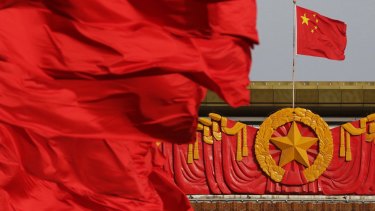
There are big question marks over the willingness and capacity of local governments, and the central government, to bail out troubled enterprises.CREDIT:BLOOMBERG
On Monday chip maker Tsinghua Group (also known as Unigroup) – a state-backed entity controlled by Tsinghua University and regarded as one of the stars of Beijing’s push to reduce its reliance on imported semiconductors – defaulted on a 1.3 billion yuan ($270 million) bond redemption that was due that day.
Last week state-owned Yongcheng Coal & Electricity Holding Group was unable to repay a 1 billion yuan bond, which sent shudders through the entire sector, tanking bond prices, and triggered an investigation by the bond market regulator into its disclosures. Other coal companies cancelled planned bond issues or shrunk the size of their offerings.
Last month Brilliance Auto Group, which has ties to BMW, was unable to redeem a 1 billion yuan bond and one of China’s biggest, and most indebted, property companies, China Evergrande, was forced to sell a major asset to raise 14.9 billion yuan to avert a liquidity crunch.
Those defaults and stresses have raised questions about the state of China’s corporate sector and a question mark over the willingness and capacity of local governments, and the central government, to bail out troubled enterprises.
Chinese banks and investors are reducing their bond holdings for fear that there will be more defaults as non-performing loans hit record levels. Bond yields are spiking to reflect the increases in perceived risk.
Even China’s sovereign bonds have been impacted, with 10-year government bond yields reaching their highest levels in nearly 18 months.
The failure of Yongcheng and the inability or unwillingness of its provincial government to bail it out before it defaulted has raised a broader concern about a credit crisis.
There is a significant level of moral hazard in the relationship between state-owned companies and their local governments.
The companies and their investors expect the governments to step in to avert losses of jobs and economic activity and therefore run higher levels of leverage than might otherwise be the case. The defaults question that assumption and their capacity to sustain excessive leverage.
More.....
https://www.smh.com.au/business/ban...conomy-have-been-exposed-20201119-p56g0a.html
There has been a spate of Chinese companies defaulting on their bond repayments in the past few weeks, sending anxious ripples through the market that have even touched China’s sovereign bond yields and caused its central bank to pump liquidity into its bond market to try to calm it.
While there’s something of a focus of concern on the coal mining sector, which was hit hard by the impact of the coronavirus on demand, it isn’t confined to that sector.
There are big question marks over the willingness and capacity of local governments, and the central government, to bail out troubled enterprises.CREDIT:BLOOMBERG
On Monday chip maker Tsinghua Group (also known as Unigroup) – a state-backed entity controlled by Tsinghua University and regarded as one of the stars of Beijing’s push to reduce its reliance on imported semiconductors – defaulted on a 1.3 billion yuan ($270 million) bond redemption that was due that day.
Last week state-owned Yongcheng Coal & Electricity Holding Group was unable to repay a 1 billion yuan bond, which sent shudders through the entire sector, tanking bond prices, and triggered an investigation by the bond market regulator into its disclosures. Other coal companies cancelled planned bond issues or shrunk the size of their offerings.
Last month Brilliance Auto Group, which has ties to BMW, was unable to redeem a 1 billion yuan bond and one of China’s biggest, and most indebted, property companies, China Evergrande, was forced to sell a major asset to raise 14.9 billion yuan to avert a liquidity crunch.
Those defaults and stresses have raised questions about the state of China’s corporate sector and a question mark over the willingness and capacity of local governments, and the central government, to bail out troubled enterprises.
Chinese banks and investors are reducing their bond holdings for fear that there will be more defaults as non-performing loans hit record levels. Bond yields are spiking to reflect the increases in perceived risk.
Even China’s sovereign bonds have been impacted, with 10-year government bond yields reaching their highest levels in nearly 18 months.
The failure of Yongcheng and the inability or unwillingness of its provincial government to bail it out before it defaulted has raised a broader concern about a credit crisis.
There is a significant level of moral hazard in the relationship between state-owned companies and their local governments.
The companies and their investors expect the governments to step in to avert losses of jobs and economic activity and therefore run higher levels of leverage than might otherwise be the case. The defaults question that assumption and their capacity to sustain excessive leverage.
More.....
https://www.smh.com.au/business/ban...conomy-have-been-exposed-20201119-p56g0a.html
