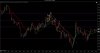
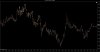
I've talked with many people via Skype and I may be confusing you with someone else, but I'm pretty sure I spoke to you one day while you were taking serious heat on a counter-trend IWM position. Because it was trending in a such a well-defined manner, I described my with-trend continuation setup, which is an A+ trade because a) you're trading in the direction of a strong trend, so "they" (the market participants in control and making money) are defending their thesis and they got your back, and b) I tested this setup at length and no matter how you slice it and dice it, it has positive expectancy even if you only manage to trade 80% of the appearances of this setup and you use an equal R:R.
How did I test this setup to determine if what looked like an edge really was an edge? I opened a spreadsheet and logged data surrounding every appearance of the setup. I discovered that there were multiple ways to enter and manage the trade once the setup appeared. I also made notes about the context of each appearance of the setup (range of 1-min pullback bars, proximity to key S/R levels, degree of the rising or falling 20EMA, where technically feasible stops would have to be placed, price action that voids the setup, and so on) and discovered that if certain contextual filters were implemented the edge became even sharper.
This was a tedious and boring undertaking that I spent many hours on. I've shared various iterations of this setup on ET (and a few folks who explored it have thanked me) and I've shared it with dozens of people via Skype.
Psychologically, it's difficult to put on these trades. It feels very counter-intuitive. That's where studying a book like The Disciplined Trader with the sort of attention a law student pays to preparing for the bar exam can help you make the leap from frustration to relaxed and profitable trading.
Possibly you weren't able to focus on what I was sharing with you because your counter-trend position had placed you in the state of mind that Mark Douglas describes in the video Rashid posted:
"What does the typical trader do? The exact opposite of the professional. Once they make up their mind itâs a winning trade, they donât pre-define their risk and they also donât have a plan to take profits because they think itâs gonna go on forever.
We donât want to get into trading with the possibility of being disappointed, with the possibility of being dissatisfied, or being even betrayed, because a lot of traders feel that way; they really feel betrayed, and the problem is that when that potential exists it has the effect of affecting the way that we see market information in detrimental ways.
All of us have these mental pain avoidance mechanisms that affect our perception of information. So, for an example, if Iâm in a losing trade and I got into this trade thinking I was going to be right (in other words, I did all my evaluation, I did all my analysis, I did my work, I built a case), as the marketâs moving against me, Iâm going to have the tendency to focus on information that tells me that Iâm right and ignore the information that tells me that the market is actually trending against me.
I can identify a trend, but I wonât be able to identify that trend if Iâm putting an inordinate amount of significance on the information thatâs telling me that Iâm rightâ¦[and] ignoring the information thatâs telling me Iâm wrong. The problem is, if Iâm susceptible to being disappointed or betrayed, meaning I get into a trade expecting it to do what I think itâs going to do, Iâm going to have this tendency to distort market information, that causes me to hang on to my losers, and in a winning trade whatâll happen is that instead of letting a winner runâ¦itâs the retracements we focus on instead of the fact that the marketâs still trending in our favor.
Most traders, because they evaluate, because they judge and because they analyze, and build a case for the pattern being right, they actually talk themselves out of believing that the risk even exists."
Or maybe I'm confusing you with someone else I spoke to that day.