
You are using an out of date browser. It may not display this or other websites correctly.
You should upgrade or use an alternative browser.
You should upgrade or use an alternative browser.
Techniques for Day Trading the ES, NQ, YM, MES, MNQ, and MYM
- Thread starter volpri
- Start date

Yep. You can see the intervals at the bottom.
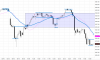
I don't get it. Maybe you mentioned and I didn't see it in your comments?Here are my trades for Friday. I have already explained in a post above the first two long trades (each one two points with multiple contracts). They are located in far left of box. After these first two trades when around 20 bars sideways to down were made I then drew the box. Price trade started trading back down around bar 11:55. Then started back up bar 12:15. Since I determined it was in a TR by then I waited until price got back up near the top 1/3 of the box. I then shorted 3 contracts bar 12:40 (my first entry short). Sometimes as it moves against me I will continue to scale but martingale on each successive entry. However, from bar 9:00 to bar 10:40 there was a strong move up. In a case like this it is probably best to reduce the size of each subsequent scale in so if price were to go quite a bit above the top of the box before turning back down one's risk is somewhat reduced as opposed to martingaling. So, as I scaled in my second entry short was on bar 12:55 where I added 2 contracts. It broke above the box and I added the third time but this time one contract. So now I have 6 contracts in place waiting for the move down. Why? because 80% of BOs top or bottom of a TR fail and price heads back into the range or at least towards the range (if it had gone out of the range).
On bar 13:35 I covered my third entry short (1 contract) for 7.5 points. I covered my second entry short (2 contracts) on bar 13:45 for 3.5 pts profit. I covered my first short entry (3 contracts) capturing 2 points also on bar 13:45.
So that is how one captures 13 points on one trade scaling in twice after initial entry and done so in a few minutes at the top of an established TR and scaling in as price moves against you, but reducing size on each subsequent scale in. Your stop loss has to be wide. to give the trade the opportunity to work.
Context is what is important here. Established TR. Price in top 1/3. Most BOs in a TR fail. So, odds are successful trade.
Add the other two previous trades of two points profit each one (and each with multiple contracts but no scaling in) and that makes capturing 17 points in a relative small amount of time.
No sitting around twiddling thumbs waiting for some obscure setup that or may not come during the session. This scalping. 1 to 8 points in an index. Manual HFT. LOL
Notice that bar 13:45 where my last two times I covered shorts. It went down with momentum and a BO out of bottom of TR and kept going down. Too bad I was not watching to move my profit target orders on such strong momentum and capture even more points but I had placed my Profit targets and was busy doing something else and they got executed.
View attachment 334155
But if I am reading chart pic correctly there are 2 entries before a range is set. Why?
Then there are two entries at top of range, but then a 3rd way out of in an area where half a dozen bars trade above range high. Then all 3 are covered once back in the range but way off the low of the range.
I understand they are meant to be scalps but why cover when the momo and current PA is expected to extend to range low?
Sure it is Monday morning quarterbacking, range traders usually continue to trade the range until it breaks one way the other. Most times, certainly not always, resuming the trend prior to the range.
Look at my post # 1803 for an explanation for first two. Why third trade? Bottom made on bar 12:10 tracking back up to top of a now established TR. I start shorting in 1/3 to 1/4 top of TR last short entry yes out of top of range by several bars but i just shorted anyway betting it would go back down in the range (80% BO attempts fail and price heads back towards or into TR usually within 5 bars or so) enough for a scalp. It did and since i believe in grabbing what the market gives me i did when all my short position gave me a profit.I don't get it. Maybe you mentioned and I didn't see it in your comments?
But if I am reading chart pic correctly there are 2 entries before a range is set. Why?
Then there are two entries at top of range, but then a 3rd way out of in an area where half a dozen bars trade above range high. Then all 3 are covered once back in the range but way off the low of the range.
I understand they are meant to be scalps but why cover when the momo and current PA is expected to extend to range low?
Sure it is Monday morning quarterbacking, range traders usually continue to trade the range until it breaks one way the other. Most times, certainly not always, resuming the trend prior to the range.
I did so regardless of what it does afterwards. Of course, it continued on down on that big bear bar after my last short was covered on that same bar. However, it could have just as well went back up to the top of the TR.
I scalp and that is the way I trade. When I short at top I usually cover on any move back down towards middle of the range or even a lessor move as long as I get a scalp. The reason: it could take an 30 minutes or an hour or even more to work back down to the bottom of TR. I am not content to wait. I grab the scalp and then look for another opportunity. Often times price will go down into the range just enough to give me a good scalp then simply go back up to top within a few bars. I will scalp short again. It may do this stuff for and hour or more giving me several more scalping opportunities BEFORE it every actually makes it back down to the bottom of the range.
Last edited:
Dear Volpri,
Thanks for your sharing.l I just wondering about the stoploss. In some case, you continue to add (average down) into the loss position. In another case, you take the stop very fast. So, How and when identify the approriate stoploss for the trade in PA?
I read through Al Brooks books but besides the stoploss must be wider, there is no specific mention about the way to place a stoploss in his book.
Thanks for your answers.
Thanks for your sharing.l I just wondering about the stoploss. In some case, you continue to add (average down) into the loss position. In another case, you take the stop very fast. So, How and when identify the approriate stoploss for the trade in PA?
I read through Al Brooks books but besides the stoploss must be wider, there is no specific mention about the way to place a stoploss in his book.
Thanks for your answers.
I understand but the last 3 short entries you covered about 3-5 pts back into the range, yet the range was about 15 pts overall?Look at my post # 1803 for an explanation for first two. Why third trade? Bottom made on bar 12:10 tracking back up to top of a now established TR. I start shorting in 1/3 to 1/4 top of TR last short entry yes out of top of range by several bars but i just shorted anyway betting it would go back down in the range (80% BO attempts fail and price heads back towards or into TR usually within 5 bars or so) enough for a scalp. It did and since i believe in grabbing what the market gives me i did when all my short position gave me a profit.
I did so regardless of what it does afterwards. Of course, it continued on down on that big bear bar after my last short was covered on that same bar. However, it could have just as well went back up to the top of the TR.
I scalp and that is the way I trade. When I short at top I usually cover on any move back down towards middle of the range or even a lessor move as long as I get a scalp. The reason: it could take an 30 minutes or an hour or even more to work back down to the bottom of TR. I am not content to wait. I grab the scalp and then look for another opportunity. Often times price will go down into the range just enough to give me a good scalp then simply go back up to top within a few bars. I will scalp short again. It may do this stuff for and hour or more giving me several more scalping opportunities BEFORE it every actually makes it back down to the bottom of the range.

I understand but the last 3 short entries you covered about 3-5 pts back into the range, yet the range was about 15 pts overall?
If he's averaged into a position, he'll typically exit once the first entry has a tiny profit.
@volpri,
As price approaches your target exit price (limit-order), are you ever following it up with a stop-market exit? For example, if you’re targeting 4 points and price is trading one tick below your target exit price (limit order), do you have a stop exit (for a profit) closely behind the current price? Grab those profits, or wait?
Would it be different if you’re doubled/tripled up to recover from a loss?
Thanks but that doesn't answer how I worded my question.If he's averaged into a position, he'll typically exit once the first entry has a tiny profit.
..
Why have a range if you are not going to use it completely. Why not just scalp regardless of range/trend/reversal/etc?
Yes because again I have no idea WHEN it will make down to the bottom of the range. Once all my shorts were in the money and it has gone back a little over 1/3 into the range I took my profits. I was out before that big bear bar went on back down to the bottom. I believe in locking in profits because with scalping 1 to 8 points you can have a profit then hold for more and in a few seconds later see your profits dissipate. Price is continually probing back and forth.I understand but the last 3 short entries you covered about 3-5 pts back into the range, yet the range was about 15 pts overall?
I have seen price just go back and forth in that top 1/3 to 1/4 of a TR giving multiple trading opportunities before finally heading on down. I don’t like waiting like that. In addition, it may not make it down until near the end of the session. But there might be multiple FBO (failed BO attempts out of the top of the TR). Tradeable stuff for a scalper.
The way I look at it is I can always go right back in if after exiting it continues in my favor as it did on that big bar. My last exit was on that big bar but BEFORE it became a big bar.
I don’t remember on that day if I was watching as this bar was forming or if I had just set exit orders to cover and left off watching the computer. That could well have been what happened as usually if I exit grabbing profit then if price continues on MOM i will jump right back in. In this case I did not.
I know I have been extremely busy the last month or so designing and correcting a course (nothing to do with trading) so I have not had much time to watch trades or even trade.
Thanks but that doesn't answer how I worded my question.
Why have a range if you are not going to use it completely. Why not just scalp regardless of range/trend/reversal/etc?
Because shorting in TR PA has high probability trades shorting in top 1/4 and even average scaling in on FBO’s and high probability doing the opposite at the bottom. In bottom 1/4 going long and averaging down on FBO. Why is this higher probability? Because 80% of BO attempts top or bottom of a range FAIL and prive will head back down within 5 bars or so towards the range or even down into the range for good scalping. But PA has to be going sideways for 20 bars or more to be called an establish range? Why is this? Because tge market has inertia and tends to keep doing what it is doing at least for a while longer until it doesn’t and there is a successful BO at takes price out of the TR and keeps it there. That is So exactly what happened after that large bear bar that I covered. For 10 bars after that bar the BO held. So, I would have changed my tactics to BO trading tactics (bearish). I didn’t trade any of that (must have been busy) but I am explaing the vharts PA and how I trade that type of PA.
Use TR scalping techniques in a trend and a trader can lose over and over again. The trend has inertia too and if one tries to scalp like it is a range kiss money goodbye.
That said I do scalp in trends too and reversals but use different techniques. Broad ranges will have trends in them and also nested ranges and channels. They can be scalpedbon smaller TFs if one has a mind too.
That reversal up after tge opening bear move …well the later 1/2 or so of that reversal later was clear seen to be tge first leg up in a developing TR. But a trader doesn’t know that until more than 20 bars later bar 10:10 PA bottoms after retracing 50% of the opening reversal up. Then on bar 10:15 it starts heading back up towards the previous high. This is TR behaviour. Hence tge reason I begin shorting as it nears the top of a TR box I can now draw. Inertia inertia…FBO’s 80% chance all BO attempts will now fail. Price is going to keep going side ways. At least for a while.
So, I don’t get greedy. I scalp and cover in top half of a drawn TR box and go long in lower 1/4 and exit those longs in bottom half (sometimes 1/3). I DO NOT TRY to capture all the TR movement. Because as a scalper I believe in locking in profits before they dissipate into thin air and I use what I call FOT or frequency of trades. I had rather be trading than waiting for the move to the bottom or top of the TR to capture the bigger move. I use high win rate and FOT to my advantage.
Maybe this will explain my perspective and why I do what I do? Maybe it will answer your questions?
Last edited: