

Basically the story is that in order to trade this system, regulations require an account with at least $25K to day trade (plus drawdown cushion) that I don't have. I have expenses and can save very little if any, perhaps $1K per month which means I may be able to start trading in 30+ months. Not ideal, so I'm looking for suggestions and perhaps some sort of collaboration.
I can provide more info and answer questions. From my perspective, what's most important is that the edge is real and not an illusion. This isn't random rules thrown on price data and then optimized. There's a fundamental reason why this strategy works, it can be thought of as collecting risk premium while not taking on a lot of risk.
About the risk management: Every position is always protected with a stop-loss. Each sub-system (there are two) is restricted to one trade per day. Plus it's daytrading and no positions are held overnight. Also the instrument is very liquid, has great borrowing availability, and low margins of 25% initial at one large broker.
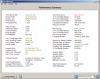
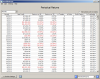
About backtesting assumptions: All orders are market, save for profit target (limit) and stop loss. The report shown is for $50K lot size per sub-system. Slippage and commission are set to 0.03% per half turn. This works out to $30 per round turn or about 2.5 cents per share per round turn. The instrument's bid/ask spread is typically 1 cent.
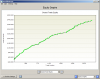
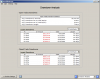
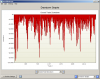
For 2:1 leverage with $50K initial capital used in the report, the historical max drawdown is less than $10K after cost assumptions. Since it's daytrading and stop loss protected, open drawdowns closely match closed drawdowns. (In other words, losses are closed rather than waited out.)
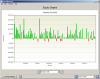
As far as "proving" the strategy: The easiest thing I could do is trade someone's paper IB account. I understand paper trading has limitations yet this is low frequency not scalping, average trade is high and order types are mostly market. Since every rolling 3 months period should be positive, it should take about that long to reach a conclusion. Besides a private collaboration, I'm also open to other suggestions like a prop firm that might be interested. Thanks.
I can provide more info and answer questions. From my perspective, what's most important is that the edge is real and not an illusion. This isn't random rules thrown on price data and then optimized. There's a fundamental reason why this strategy works, it can be thought of as collecting risk premium while not taking on a lot of risk.
About the risk management: Every position is always protected with a stop-loss. Each sub-system (there are two) is restricted to one trade per day. Plus it's daytrading and no positions are held overnight. Also the instrument is very liquid, has great borrowing availability, and low margins of 25% initial at one large broker.
About backtesting assumptions: All orders are market, save for profit target (limit) and stop loss. The report shown is for $50K lot size per sub-system. Slippage and commission are set to 0.03% per half turn. This works out to $30 per round turn or about 2.5 cents per share per round turn. The instrument's bid/ask spread is typically 1 cent.
For 2:1 leverage with $50K initial capital used in the report, the historical max drawdown is less than $10K after cost assumptions. Since it's daytrading and stop loss protected, open drawdowns closely match closed drawdowns. (In other words, losses are closed rather than waited out.)
As far as "proving" the strategy: The easiest thing I could do is trade someone's paper IB account. I understand paper trading has limitations yet this is low frequency not scalping, average trade is high and order types are mostly market. Since every rolling 3 months period should be positive, it should take about that long to reach a conclusion. Besides a private collaboration, I'm also open to other suggestions like a prop firm that might be interested. Thanks.


