steidlmeir(market profile) described price action as this...if you buy a box of irish cashmere sweaters and put them on the shelf at$10 and they are gone in a day,next day $20 same,$30 same,40 50,60 half a box, 70, 2 0r 3,buyers are not willing to pay that price so buyers or demand is exhausted,you come back down 60 ,50 ,40,now you found a value,pic of that action would be a bell curve

You are using an out of date browser. It may not display this or other websites correctly.
You should upgrade or use an alternative browser.
You should upgrade or use an alternative browser.
switching gears to Price Action via SLA
- Thread starter gears
- Start date
Trying out the soap opera approach to looking at the market. I like using lines to help me keep to the straight and narrow, but it seems as if they might be clouding my view. It certainly can't hurt to look at things this way so I'll give it a shot.
Cast of Characters:
Support Level of 3684.75
LSH high of 3679.75 (based on the hourly chart)
Overnight low of 3656.75
From about 0300 on, sellers had taken the lead with some buyer pushback, but buyers couldn't push price back up to the previous HH.
I'm likely trying to jump to conclusions so I can use this information sooner than I should. I'll keep trying to look at the market more like a soap opera and figure out the tug of war as it unfolds.
Cast of Characters:
Support Level of 3684.75
LSH high of 3679.75 (based on the hourly chart)
Overnight low of 3656.75
From about 0300 on, sellers had taken the lead with some buyer pushback, but buyers couldn't push price back up to the previous HH.
- At the open, sellers tried to push price down, but buyers weren't having it.
- Price began to rise a bit, but only for a few minutes.
- Price goes down almost to the level sellers had previously achieved.
- As quickly as price had dropped, it rises and goes up almost to the level of the overnight high with little to no resistance on the way up.
- Like a hot potato, price hits that level and then it starts to go down.
- There are some jibs and jabs (pauses) on the way, but price marches pretty steadily down to 3664.50.
- At that point, buyers rebound swiftly and bring it up to 3673.50 - a bit more than the 50% mark of the previous down move.
- Resoundingly after that, sellers bring price down even lower than what it was 10 minutes ago and lower than the overnight low.
- Price doesn't bounce off that level, but buyers slowly but surely cause price to rise. For 7 minutes, they march price up and up until a sharp increase occurs.
- Some stop to take their profits while others jump on the up move.
I'm likely trying to jump to conclusions so I can use this information sooner than I should. I'll keep trying to look at the market more like a soap opera and figure out the tug of war as it unfolds.
Attachments
You will get it
Encouragement is always appreciated - thanks Niko!
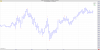
Yet another approach to looking at today's open. Being so rigid and only following lines (exits, etc) is too narrow. The soap opera thing felt unnatural to me and perhaps I could have described things better. Today I viewed things more of the general push and pull from buyers and sellers and tried to determine the intensity and who still had the upper hand.
Prior to the open, the market had been moving pretty much in an upward fashion. There was a big push up around 0900 and sellers steadily took things back down to the 50% mark of that short, but swift up move (0859-0900).
Today felt a little but like a tug of war. Buyers started out strong. Sellers took over and made quite a move. Buyers slowly and against some pressure, brought prices back up.
Though I'm trying to just observe and not think of things in the context of trades, I definitely noticed more the idea of "if you get in a trade and the market doesn't do what you expected, get out" play out.
Drawing the lines felt more like an illustrative tool rather than a containing tool for the first time. I'm not in control - I just have to read what's being told to me. The lines helped to do that more for me today than previously.
I thought I'd be chomping at the bit to get in the market with all the watching I'm doing. I think I've been burned too much and want to feel overly prepared before setting up my hypotheses (trading plan) and starting the testing process. I'm definitely not as spooked by the direction changes as I was.
Prior to the open, the market had been moving pretty much in an upward fashion. There was a big push up around 0900 and sellers steadily took things back down to the 50% mark of that short, but swift up move (0859-0900).
- At the open, price shot up to the midpoint area of the down move from Tuesday afternoon. If a steeper DL were drawn, it was broken almost immediately. A pause occurred (RET) and then then sellers resumed downward pressure.
- Price returned all the way down to what it was just before the open.
- SL broken but next bar immediately went down and price never went above the LSH. Still seems like sellers are in charge and pushing price down.
- Tighter SL was drawn after newer LL, but just as quickly as it was drawn, it was broken and with some fervor. But then again the next bar resumes downward movement, but doesn't meet the previous LL. With the break of the SL, I wasn't sure if it was a RET for a direction change.
- Price paused a bit but buyers weren't pressuring to raise prices and sellers weren't doing much either. Things were just moving sideways until sellers again pushed price down.
- Felt like sellers were in charge. The pauses were more sideways than up. Pops of price down and then more of a sideways move than an up move.
- Sellers were able to push price back down to 39 (had gotten to 38) overnight.
- No sooner than you realized that price had gotten down to the area of the previous low than it shot up like a geyser. Definitive SL break. Buyers did not like where things were going. If I'd decided to take a short from the 1000 RET, the movement at 1002 would have been behavior that would have absolutely told me to scratch the trade.
- DL in place and long would have been triggered. Db pointed out in chat that the long would have been stopped out. If I'm understanding, it's because it crossed the DL and 1007 made a LL than the LSL (1004)
- Same situation for a stopped out short because 1010 made a HH than 1008 - if I'm understanding the nature of the comment.
- Buyers resumed control and price rose again. Small sideways movement and then buyers were back in charge and price was just shy of the midpoint area (60).
- Sellers tried to push back a bit, but nothing substantial.
Today felt a little but like a tug of war. Buyers started out strong. Sellers took over and made quite a move. Buyers slowly and against some pressure, brought prices back up.
Though I'm trying to just observe and not think of things in the context of trades, I definitely noticed more the idea of "if you get in a trade and the market doesn't do what you expected, get out" play out.
Drawing the lines felt more like an illustrative tool rather than a containing tool for the first time. I'm not in control - I just have to read what's being told to me. The lines helped to do that more for me today than previously.
I thought I'd be chomping at the bit to get in the market with all the watching I'm doing. I think I've been burned too much and want to feel overly prepared before setting up my hypotheses (trading plan) and starting the testing process. I'm definitely not as spooked by the direction changes as I was.
Attachments
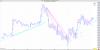
So db wrote this in kp's journal. I figured I could take the instructions and follow them literally and see how things went.
Basic rules: (Bride approach)
Enter 1 point up from the high of a RET in an up move and 1 point down from the low of a RET in a down move.
If the DL or SL broken = exit.
Being simple and strict with rules was pretty straightforward.
So this chart represents replay and drawing DLs and SLs and fanning only if a HH or LL occurred.But you're creating the overload.
1. Track the balances between supply and demand with straight lines.
2. When price takes off in one direction or the other, wait for a retracement.
3. Enter on that retracement, a few ticks above the trough of a \/ retracement or a few ticks below the crest of a /\ retracement, and stay in until your line is broken.
4.When the line is broken, exit and wait for a retracement in the opposite direction.
5. Continue until you enter chop (two consecutive trades that don't go anywhere and are accompanied by a higher low and a lower high, i.e., not trending).
And that's it. If a trader brings a lot of baggage with him, this gets real complicated real fast. But that's the trader's choice, not a characteristic of the approach.
Basic rules: (Bride approach)
Enter 1 point up from the high of a RET in an up move and 1 point down from the low of a RET in a down move.
If the DL or SL broken = exit.
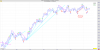
Being simple and strict with rules was pretty straightforward.
- Were there some losses and/or break even trades? Absolutely
- Would I feel comfortable entering and exiting this frequently in a live environment? Not likely.
- Can I continue using replay to practice and practice and practice? Sure thing
Attachments

Being simple and strict with rules was pretty straightforward.
- Were there some losses and/or break even trades? Absolutely
- Would I feel comfortable entering and exiting this frequently in a live environment? Not likely.
- Can I continue using replay to practice and practice and practice? Sure thing
It should be remembered that there are five phases here: observation, backtesting, forwardtesting, simtrading, real trading.
First, one must observe in order to find those "tells" which show the market's hand. In broad categories, these tells will manifest themselves in reversals, breakouts, retracements. This is analogous to meditation in that if one finds himself thinking about entries rather than focusing on price behavior, he should start over from the beginning. Eventually he will get tired of doing this and focus on the behavior in order to get through it.
Second, he then finds instances of these tells in old charts (i.e., anything before now) to see if he's onto something or if what he thought was a tell was just his imagination. And since he'll be working right to left, this can be done fairly quickly.
Third, he tests these suppositions via replay, "reading" the chart from left to right. If the suppositions don't pan out, then he goes back to step one. If they do pan out, he moves on to simtrading.
Fourth, he simtrades his suppositions to see if the data matches what he came up with during earlier steps. If it doesn't, then he has to back up until he finds where things went wrong. Part of what may be wrong is that in simtrading he cannot pause or stop or replay what he's just done. In replay, the trader is in control of just about everything. In simtrading, he has no control over anything other than his entries, management, and exits. The market doesn't pause because the trader is confused. There are no do-overs. The shock of moving from replay to simtrading is a reality check. It is here that the trader begins to realize that he didn't understand this stuff as well as he thought he did.
Therefore, to get to the point, finally, marking up charts and reviewing the day and even going through the day again in replay isn't going to accomplish much unless one has gone through the first two steps thoroughly. This is why those who read chat logs and thus review the day, with or without charts, are pretty much wasting their time. A great many traders just cannot reconcile the facts that each moment is unique and the outcome of any given trade is unknowable with the idea of determining the probabilities of success of a particular "set-up", or cluster of behaviors. One cannot trade successfully by staring into the rearview mirror. He must look forward, but while doing so he must also know what he's looking for and what to do with it if he finds it. Otherwise he can literally spend (waste) years examining charts and dwelling on couldawouldashoulda.
I go into this at this length because this whole subject is so murky to so many people, and too often they persuade themselves that they can become successful traders if only they study enough old charts. This is of course wildly unrealistic.
You now know that you would not "feel comfortable entering and exiting this frequently in a live environment". Now you have to figure out why. Is it that you don't know the territory thoroughly enough to recognize those features of the terrain that will be of most use? Or is it that you recognize them but haven't tested them thoroughly enough to rely on them in the crunch, i.e., you're relying on a map of the territory that isn't in synch with it? Or is it there are unexplored emotional issues here that are preventing you from taking advantage of what the market has to offer?
Studying old charts in order to define something is rarely enough, particularly if done superficially. In order to act on something like a hinge in real time for example, one has to understand its defining characteristics, its "essence". Otherwise, it's just an assemblage of lines. Ditto with a lower high, or a higher high that immediately fails. The task is not so much to compare this with those hundreds of examples of lower highs one has found in old charts but to understand what traders are doing in this one, here, right now. And, again, it's impossible to do this unless one has thoroughly worked his way through the first three steps. If you find yourself choking in real time, just back up to a phase in which you are in control, then venture out of it on an experimental basis in order to see how you perform. The doors to previous phases aren't closed and locked. One can go back as often as and for as long as he feels the need to do so.