
You are using an out of date browser. It may not display this or other websites correctly.
You should upgrade or use an alternative browser.
You should upgrade or use an alternative browser.
Surf Report
- Thread starter marketsurfer
- Start date
- Status
- Not open for further replies.

Got torn up by the chop today. close to 70 down today


Maybe you could start your own Journal and explain such things there?
I greatly fear Nobody would come look
If you provide compelling content you'll develop a readership, as Surf has.
Here's a smidgeon of insight on how the pro's predict moves and don't waste their lives staring at charts from IASG
http://blog.iasg.com/2017/03/08/mar...il&utm_term=0_43ebaac7c0-3b55670cc0-209146137
I was having a discussion with friends for where the SPX will end over the next three and six months as well as what could be the ending value for the year. The predictions were all over the map with a mix of investors saying the market will be either higher or lower. I also had some that said it would be both, first higher then lower, and others suggesting the first leg will be lower only to then go higher again.
These predictions should be grounded in reality, so looking at the distribution of returns given current volatility and the probabilities of a particular move are important to anchor predictions. The table below is a simple guide of what may be possible over different horizons. The question for someone making a prediction is whether they think the market will be more or less likely to move outside of the range depicted by volatility.
We can take current market volatility for an at-the-money option over the next three months and use it as a base case for finding probabilities for different sized moves. The annualized volatility can be converted into the volatility that will exist over a shorter horizon. Finally, simple benchmarks of up or down 5, 10, and 15% can serve as likely placeholders for some realism on possible gains or loses. Of course, it is simple, but it provides a grounding in current market reality.
http://blog.iasg.com/2017/03/08/mar...il&utm_term=0_43ebaac7c0-3b55670cc0-209146137
I was having a discussion with friends for where the SPX will end over the next three and six months as well as what could be the ending value for the year. The predictions were all over the map with a mix of investors saying the market will be either higher or lower. I also had some that said it would be both, first higher then lower, and others suggesting the first leg will be lower only to then go higher again.
These predictions should be grounded in reality, so looking at the distribution of returns given current volatility and the probabilities of a particular move are important to anchor predictions. The table below is a simple guide of what may be possible over different horizons. The question for someone making a prediction is whether they think the market will be more or less likely to move outside of the range depicted by volatility.
We can take current market volatility for an at-the-money option over the next three months and use it as a base case for finding probabilities for different sized moves. The annualized volatility can be converted into the volatility that will exist over a shorter horizon. Finally, simple benchmarks of up or down 5, 10, and 15% can serve as likely placeholders for some realism on possible gains or loses. Of course, it is simple, but it provides a grounding in current market reality.
thats it i don't think i can. LOL.If you provide compelling content you'll develop a readership, as Surf has.
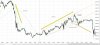
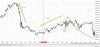
And here is what happened. In both the ES and NQ. May I remind Surf that this prediction was done hours before the fact. Not after the fact. Does that earn me a ride on the alum fishing skiff? Will skippy be there? Pizza?
Surf will you break out the high dollar wine? First some beer with the pizza ok...
ROFLMAO
Surf will you break out the high dollar wine? First some beer with the pizza ok...
ROFLMAO
Um ...excuse me Surf.. Did you read the "Past performance IS NOT indicative of future results"? Emphasis mine. Pro's...um..i don't think so...Nothing like your guaranteed 1000 point drop! I like guarantees. They should take up chart reading.Here's a smidgeon of insight on how the pro's predict moves and don't waste their lives staring at charts from IASG
http://blog.iasg.com/2017/03/08/mar...il&utm_term=0_43ebaac7c0-3b55670cc0-209146137
I was having a discussion with friends for where the SPX will end over the next three and six months as well as what could be the ending value for the year. The predictions were all over the map with a mix of investors saying the market will be either higher or lower. I also had some that said it would be both, first higher then lower, and others suggesting the first leg will be lower only to then go higher again.
These predictions should be grounded in reality, so looking at the distribution of returns given current volatility and the probabilities of a particular move are important to anchor predictions. The table below is a simple guide of what may be possible over different horizons. The question for someone making a prediction is whether they think the market will be more or less likely to move outside of the range depicted by volatility.
We can take current market volatility for an at-the-money option over the next three months and use it as a base case for finding probabilities for different sized moves. The annualized volatility can be converted into the volatility that will exist over a shorter horizon. Finally, simple benchmarks of up or down 5, 10, and 15% can serve as likely placeholders for some realism on possible gains or loses. Of course, it is simple, but it provides a grounding in current market reality.
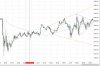
Continuing to hold shorts, big downside will continue in the YM. surf
Robert Green, who's always excellent, has a tax tip for the TA crowd in Forbes today.
- Status
- Not open for further replies.