First of all the constitutional basis of Roe wasn’t before the court in the Mississippi case. The AG for Mississippi said so himself during the hearing and after the decision. So it wasn’t any arguments that persuaded the court but activist judges with an agenda.
I will also add your question about the turban falls under “business necessity”. If the turban contradicts a uniform used for a business reason then the employer is not obligated to accommodate. This was an issue in the military.
The clerical “uniform” creates an interesting question within the context of the wacky Kennedy decision. Where is the religious line now?
UsualTard said:
"First of all the constitutional basis of Roe wasn’t before the court in the Mississippi case. The AG for Mississippi said so himself during the hearing and after the decision. So it wasn’t any arguments that persuaded the court but activist judges with an agenda."
Not precisely true but I will agree that it was quirky. The Mississippi AG - somewhat disingenously I will admit or maybe brilliantly- advanced the case up through the courts by arguing that he did not seek to overturn Roe, but instead, just to get a ruling on the issue of limiting abortion at viability. But in last minute he amended the brief to include an argument that the viability issue should not stand because Roe itself needed to be overturned. And then he made oral argument to that end, thus putting it before the court. So you could make the point that the justices could have tossed that argument for procedural purposes or could have allowed it which they willingly bit into- but I dont think one can make the case that Mississippi did not step up with that argument and that the justices took it on without Mississippi even making that argument.
From Mississippi's brief:
“Under the Constitution, may a State prohibit elective abortions before viability? Yes. Why? Because nothing in constitutional text, structure, history, or tradition supports a right to abortion,” Mississippi Attorney General Lynn Fitch and four of her attorneys wrote in the brief.
In regard to the turban question/scenario the correct answer is that it is not clear where that will/would end out over time under a full constitutional scrutiny. I raised it as one that is sort of on the edge where some things are still being worked out on the playground to accommodate some parties so happily it may never be totally settled through the courts.
UsualTard said:
"I will also add your question about the turban falls under “business necessity”. If the turban contradicts a uniform used for a business reason then the employer is not obligated to accommodate. This was an issue in the military.
The clerical “uniform” creates an interesting question within the context of the wacky Kennedy decision. Where is the religious line now?"
Your comments about the "business necessity" rule/guidance are noted but previous rulings are not necessarily determinative of where things would end out with a full constitutional assault on the issue. This is the era of "accommodation" and lots of things that seemed reasonable a decade ago are up for examination. I think that just not long ago the military or a business could argue that they have a business need to not have their people appear on duty ridiculously dressed like a woman when he is clearly dressed like a man. Seems simple. But not so fast Sparky.
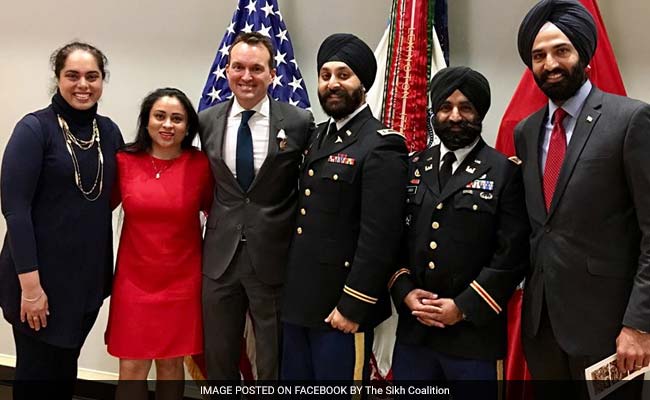
Having said that, I refer back to my comments in regard to "the issue of being able to wear a turban or having a right is not really clear." Even the branches of the military do not agree. OF NOTE, the U.S. Army does allow some members to wear turbans but upon the Army's approval. And the number of approvals will grow, which is why I say that the issue may never be solved constitutionally (in regard to military) because the parties may be satisfied through accommodation. OR NOT. That does not settle it for the private sector but as I said, the private sector has has to accept lots of changes it did not see coming.
What will be pivotal ultimately is what the employer includes under the definition of "business necessity." If for example a public schools says "we don;t want out teachers wearing turbans because they look funny, and parents complain, and it shows a religious affiliation" then I expect that will end out on shaky grounds. If on the other hand, the employer defines specific reasons why a turban cannot be worn because it interferes with the mission well that is another matter. example, a doctor wanting to wear a massive unsterilized turban in an operating room. But then the employer may still need to allow the doctor to wear it in just basic settings.
As I said, the times they iz a changin. Keep in mind that these are U.S. Army servicemen:
MORE TO COME: