
Supply & Demand + Price Action

@trend2009 My stop losses are usually below the demand zone and or above the supply zone.

The way I trade is very simple : each day I start the analysis with daily time frame to mark the daily zones and then go into the 4h to pay attention to price action ie. price momentum, market structure and liquidity areas - then I mark the right key levels (zones that was respected before) and then wait for Ny market to open - I only trade the NY market - more often times when market opens price tends to respect the nearby key level so I buy or sell from that key level (zones again) using price action.
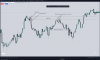
 
@traider real time market can be easy and tricky sometimes. The best trades are the ones that make it easy for you to spot these levels to trade from and there are days when you can't stop them so easily - avoid them. The reason hindsight analysis is something to pay attention to is to learn how market reacts to zones in all price action situations. The more you learn from backtesting this strategy the more you understand it - like its a science. Hindsight analysis is amazing for those who want to learn a lot from your favourite asset.
 

Attachments

  • Screenshot 2023-01-22 at 11.31.26.png
    Screenshot 2023-01-22 at 11.31.26.png
    786.6 KB · Views: 109
I'm in the camp described by @Bad_Badness.

My main "concern" is how can Supply and Demand be the basis of this strategy
without the use of Volume? As presented, the strategy is merely ANOTHER SUPPOSED support/resistance price level, determined AFTER one or more (time based) price bars has completely formed.

I've studied WyKoff, VSA, and other Supply/Demand strategies.
What is being shown/touted in this thread is pure HINDSIGHT.

Myself, I use volume extensively in my trading...
My bread and butter is trading US index futures during the RTH session, flat EOD.
 
I'm in the camp described by @Bad_Badness.

My main "concern" is how can Supply and Demand be the basis of this strategy
without the use of Volume? As presented, the strategy is merely ANOTHER SUPPOSED support/resistance price level, determined AFTER one or more (time based) price bars has completely formed.

I've studied WyKoff, VSA, and other Supply/Demand strategies.
What is being shown/touted in this thread is pure HINDSIGHT.

Myself, I use volume extensively in my trading...
My bread and butter is trading US index futures during the RTH session, flat EOD.
So you use VWAP and deviations for trading too as good volume indicator ?
 
Show an example chart of how?


I'm not a vendor, I am not a teacher, and I have zero interest in
explaining or persuading the merits, demerits, or usage of volume.
Volume is one of the 5 basic data points for many types of price charting... OHLCV

Price can go up, price can go down, volume can increase, volume can decrease.
The work is to study those possible combinations and see what works for YOUR personality and style of trading. No volume = no price discovery.
 
That is why those who have methods and who care to post up non-vague charts demonstrating their theory and ideas are appreciated. Traders can then research the methods to run stats and see if the method works in their hands. If you have zero interest in that, no harm no foul.

Price can go up, price can go down, volume can increase, volume can decrease.
sherlock.jpg
 
Last edited:
Below in red are areas that are problematic with this simple "strategy". Where are the "not the zones" or "not places to trade" is MORE important in this "example".

The Support-Resistance (supply-demand, by OP) does not take into account break outs, overshoots and multiple waves. Anyone who has traded ES, has tried this "method" and found it wanting for lack of details, too broad of strokes, low reliability and not integrated into order tactics.

The OP cherry picked zones AFTER THE FACT. That is trading course lesson 1A.
The OP does not know what "Action" is*. That is trading course 1B
The OP conflates signals and order placement. That is trading course lesson 1C.

If you actually try this with a tight stop, you would get chopped up. If you tried this with a wide stop, the losses would outweigh the gains, and you would miss enough profitable trades to make it a negative PL.

*Price Action, has "action", hence the name. How the bar fills is the action. This is historical price with NO action.

View attachment 304391


OP lacks life trading experience.

He needs to trade couple of years first before preaching.
 
OP lacks life trading experience.He needs to trade couple of years first before preaching.
He's posted a premis, a chart or two and stands by to answer questions. Preachin comin from the crowd, lol.

Is there anything specific in his cogent posts that you disagree with, max?
Let er rip, baby! lol

@trend2009 My stop losses are usually below the demand zone and or above the supply zone.

The way I trade is very simple : each day I start the analysis with daily time frame to mark the daily zones and then go into the 4h to pay attention to price action ie. price momentum, market structure and liquidity areas - then I mark the right key levels (zones that was respected before) and then wait for Ny market to open - I only trade the NY market - more often times when market opens price tends to respect the nearby key level so I buy or sell from that key level (zones again) using price action.


@traider real time market can be easy and tricky sometimes. The best trades are the ones that make it easy for you to spot these levels to trade from and there are days when you can't stop them so easily - avoid them. The reason hindsight analysis is something to pay attention to is to learn how market reacts to zones in all price action situations. The more you learn from backtesting this strategy the more you understand it - like its a science. Hindsight analysis is amazing for those who want to learn a lot from your favourite
 
Last edited:
Back
Top