
Yeah that makes a lot of sense. I think I'm gonna try 1.25% for awhile with my larger moves, and then more like 2% if I'm doing a smaller move on a more volatile stock. But I'll start comparing this to standard deviations and look into using ATR too, been meaning to work on that anyway, thanks for the suggestions!You want to follow the trend but not get stopped out by the noise.
It is common to use average true range or standard deviation of returns which are measures of market volatility to setup the initial stop.
Each asset has its own intrinsic level of volatility and it also changes with time so you don't want to use fixed dollar amount or 1% as a stop for all stocks you trade.
However at the beginning these rules of thumb are better then nothing.

You are using an out of date browser. It may not display this or other websites correctly.
You should upgrade or use an alternative browser.
You should upgrade or use an alternative browser.
Stop Losses 101
- Thread starter Dollardogs
- Start date

I am not sure you do "get it". No offense intended.I totally get the need to back test and to paper money for a good while, but I'm also more of a learn by doing person, and I'm also in my 40s, so charting for 20 years before I put any money on the line isn't doable for me. Anyway, I was still a good bit ahead until these past few weeks, these 3 blunders put me now a little under, hence my deciding I needed to rethink things and run some stop loss ideas by some more experienced people.
The point is not only do the amounts you set need to be tested for your tactics, the execution of the stop needs to be verified. Not all stops work the same way and the same under different instruments or conditions. This is the type of stuff Lind is referring to.
Try to use an adjustable trailing stop. How does it work during RTH. How about after hours. On a stock, or a future. Different routing? Native or simulated stops? How about a pegged trailing stop? What you read about and how it actually works are two different things. This is what paper is good for.
DDog, what did you do with this situation?Do you mean how many positions am I doing per day? Usually no more than 1 or 2. I watch about 12 companies premarket. I still really struggle to have a good sense of entry/exit points still, so I'm heavily reliant on EMA crossovers for that. Also still pretty hopeless at scanning for stocks, so I've been relying on a pretty good and cheap tip service I found to help with that.
Here's my war room: EMA crossovers, RSI, and bid vs ask volume, I slap the OBV on there too but it's more to try to learn it, also tried having other indicators but I couldn't process stuff anywhere near quick enough to even get to them (Momentum, MACD) so I'm streamlining things now.

What will you do assuming you met this situation next Wednesday?
Attachments
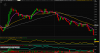
DDog, what did you do with this situation?
What will you do assuming you met this situation next Wednesday?
I didn't make any moves on that particular chart, but the way I'm reading that kind of situation at this point is wait for the 9EMA (purple) to bottom out and cross back over. Once it does, if the first two candles are bullish and the RSI isn't severely overbought and the volume isn't flagging, that would be a buy signal to me. It's been very reliable so far but I know there's a lot going on in those signals I don't grasp yet. One step at a time.
Last edited:
This chart initiates a move down on the left side of the chart.I didn't make any moves on that particular chart, but
In the luxury of hindsight, ...
DDog, what did you do with this situation?
What will you do assuming you met this situation next Wednesday?
Not sure I follow what you're hinting at, easymon?This chart initiates a move down on the left side of the chart.
In the luxury of hindsight, ...
Do you ever go short?Not sure I follow what you're hinting at, easymon?
How do I read the candles accurately if you flip the chart upside down? Three white soldiers trending downward on the left lol??
I did my very first short last week, pretty brutal debut, shorted NVDA based on what I thought I understood in the technicals when the news broke of the chip shortage. Not exactly a lucky day to try it out. That's one of the 3 clusters from last couple weeks I was referring to earlier. But I'm not averse to trying it again.Do you ever go short?
Part of my motivation here in asking about stop losses is not only knowing when to cut my losses but also knowing when to reverse a position from long to short or vice versa.