
You are using an out of date browser. It may not display this or other websites correctly.
You should upgrade or use an alternative browser.
You should upgrade or use an alternative browser.
SoftBank’s Bet on Tech Giants Fueled Powerful Market Rally
- Thread starter ajacobson
- Start date

LOL ultimate contrarian indicator. They get wrecked on every single move, don't they?!
he is one of the world's richest men so he didn't get wrecked on EVERY single move.

Markets
First Robinhood, Now Masa the Nasdaq Whale
Finally an explanation for Big Tech's rip-roaring rally: Japanese billionaire Masa Son and his hankering for stock options.
By
Tara Lachapelle
September 4, 2020, 2:30 PM CDT
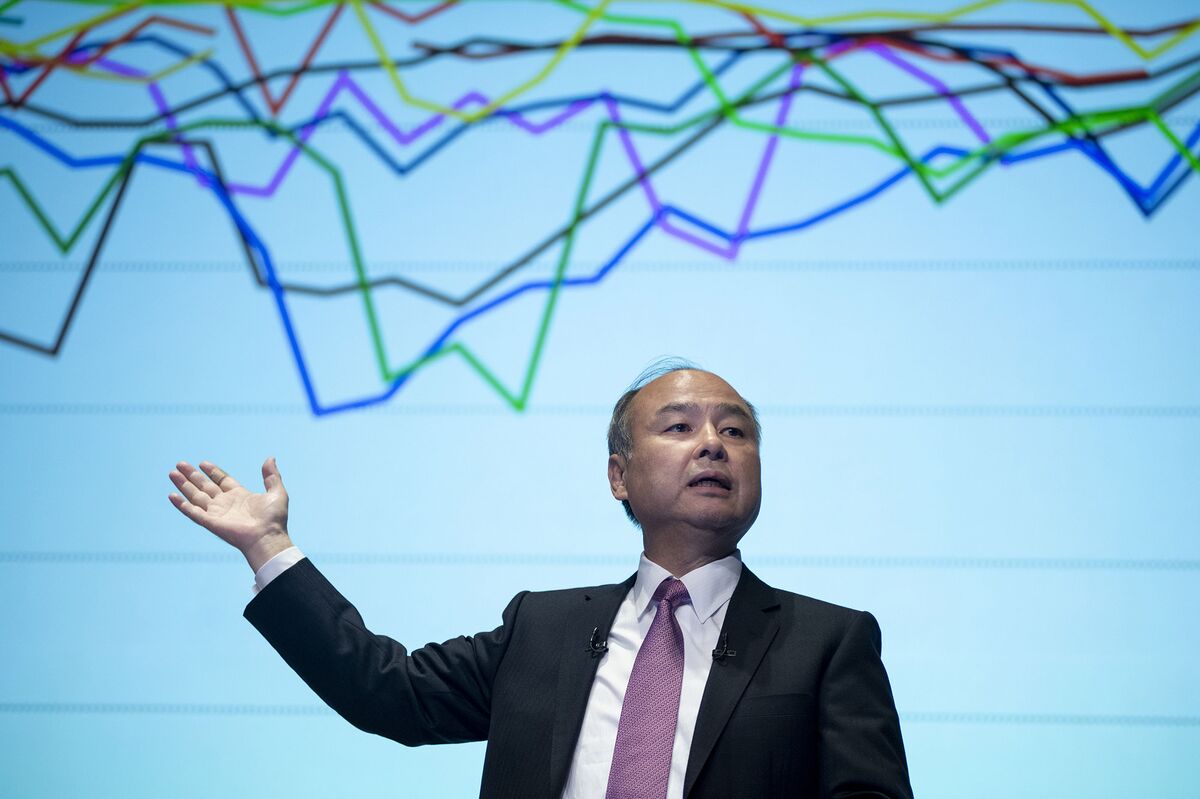
SoftBank’s Masa Son went all-in and more on Big Tech, goosing the latest surge in stocks. Photographer: NurPhoto/NurPhoto
Read more opinionFollow @taralach on Twitter
COMMENTS
LISTEN TO ARTICLE
4:06
SHARE THIS ARTICLE
Share
Tweet
Post
Email
In this article
9984
SOFTBANK GROUP C
6,334.00
JPY
-210.00-3.21%
WE
WE CO/THE
Private Company
AAPL
APPLE INC
120.96
USD
+0.08+0.07%
AMZN
AMAZON.COM INC
3,294.62
USD
-73.38-2.18%
UBER
UBER TECHNOLOGIE
33.24
USD
-0.17-0.51%
Masayoshi Son, at one time considered to be the Warren Buffett of Japan, has pretty much gone full Robinhood trader.
As it turns out, Son’s conglomerate, SoftBank Group Corp., may be behind the rip-roaring ride in large-cap U.S. technology stocks in recent weeks that lifted the broader market and, in effect, made investors nearly forget the Covid-19 crisis for a moment. The “Nasdaq whale,” the Financial Times calls him, referring to a monstrous options trade that the paper’s unidentified sources say was made by SoftBank. Here’s how the Wall Street Journal describes the curious move:
Investors watching the vertigo-inducing rise — and Thursday’s fall — of technology stocks are buzzing about a single trade, a giant but shadowy bet on Silicon Valley big enough to pull the market up with it. The investor behind that trade, according to people familiar with the matter, is Japan’s SoftBank Group Corp., which bought options tied to around $50 billion worth of individual tech stocks.
More from
What Do We Want? A Vaccine! When Do We Want It? It Depends!
Manufacturers Are Coming Home. Are U.S. Workers Ready?
Too Many Children Are Going Hungry Amid the Pandemic
Permanent Job Losses Pose Trouble for Economic Recovery
It’s a lot to take in. We’re talking about a period during which Apple Inc. became a $2 trillion company; Amazon.com Inc. added more to its market value in a month than it did in all of last year; and Telsa Inc. founder Elon Musk vaulted past Buffett in the ranking of the world’s wealthiest people. While all the tech giants have benefited in some way from societal shifts brought on by the pandemic — a surge in demand for everything from online shopping and streaming-video, to work-from-home software solutions — market observers have struggled to explain exactly why their share prices took an extra leg up over the summer. Bloomberg Opinion’s Nir Kaissar wrote this week about the conundrum that this has created for money managers: whether to stick with a responsibly diversified portfolio that’s destined to underperform, or chase the fad.
Big and Bigger Tech
This year's tech rally has spawned $1 trillion and $2 trillion companies
Source: Bloomberg
It’s unusual for options-buying tied to individual stocks to be so explosive that it could move markets in this way, but that’s now the prevailing theory. Equity derivatives have become a favorite trading toy for presumably bored retail investors — those who don’t manage money professionally — who have taken a liking to platforms such as Robinhood while being shut in during the Covid-19 crisis. It’s hard to know Son’s specific motivations for joining that camp, but it’s certainly not boredom.
300-year plan for SoftBank, but it soon became evident that he needed to concentrate on the present. Fraught investments in U.S. wireless carrier Sprint Corp. and office-rental company WeWork Cos. bruised his reputation. And after writing down the values of investments in WeWork and Uber Technologies Inc., SoftBank suffered a loss for the Japanese record books. Son was finally able to sell Sprint to T-Mobile US Inc. this year, ironically leaving the Japanese businessman as the biggest beneficiary of a deal pitched to regulators on American patriotism. As SoftBank laid plans to dump more than $40 billion of assets to shore up its balance sheet, Son was apparently left with funds to spend.
SoftBank, best known for its Vision Fund, also said last month that it will no longer report operating income. My Opinion colleague Tim Culpan wrote that the change makes sense given that SoftBank hasn’t “operated” anything for a long time; it functions more as a stock picker, investing in startups and publicly traded companies.
A bet on Big Tech is a risky one, though. Some have compared the industry’s outsize gains to the dot-com bubble that famously burst 20 years ago. Fellow Opinion columnist John Authers got it right when he wrote Friday: “If there is a bubble in the biggest tech companies, it is arguably in their profits, and how they have been allowed to build up monopolistic market power, rather than in their valuations.” A monopoly bubble is a lot harder to pop, but Democrats are trying. What stands in their way are 100-year-old antitrust laws that don’t make a single mention of the word at the root of Big Tech’s power and overreach — its exclusive hold on reams and reams of valuable data.
Still, the bubble began to seep this week, and news of Son’s almost single-handed influence won’t help matters. But the only thing that will truly rein in Big Tech is an administration that wants to.
First Robinhood, Now Masa the Nasdaq Whale
Finally an explanation for Big Tech's rip-roaring rally: Japanese billionaire Masa Son and his hankering for stock options.
By
Tara Lachapelle
September 4, 2020, 2:30 PM CDT
SoftBank’s Masa Son went all-in and more on Big Tech, goosing the latest surge in stocks. Photographer: NurPhoto/NurPhoto
Read more opinionFollow @taralach on Twitter
COMMENTS
LISTEN TO ARTICLE
4:06
SHARE THIS ARTICLE
Share
Tweet
Post
In this article
9984
SOFTBANK GROUP C
6,334.00
JPY
-210.00-3.21%
WE
WE CO/THE
Private Company
AAPL
APPLE INC
120.96
USD
+0.08+0.07%
AMZN
AMAZON.COM INC
3,294.62
USD
-73.38-2.18%
UBER
UBER TECHNOLOGIE
33.24
USD
-0.17-0.51%
Masayoshi Son, at one time considered to be the Warren Buffett of Japan, has pretty much gone full Robinhood trader.
As it turns out, Son’s conglomerate, SoftBank Group Corp., may be behind the rip-roaring ride in large-cap U.S. technology stocks in recent weeks that lifted the broader market and, in effect, made investors nearly forget the Covid-19 crisis for a moment. The “Nasdaq whale,” the Financial Times calls him, referring to a monstrous options trade that the paper’s unidentified sources say was made by SoftBank. Here’s how the Wall Street Journal describes the curious move:
Investors watching the vertigo-inducing rise — and Thursday’s fall — of technology stocks are buzzing about a single trade, a giant but shadowy bet on Silicon Valley big enough to pull the market up with it. The investor behind that trade, according to people familiar with the matter, is Japan’s SoftBank Group Corp., which bought options tied to around $50 billion worth of individual tech stocks.
More from
What Do We Want? A Vaccine! When Do We Want It? It Depends!
Manufacturers Are Coming Home. Are U.S. Workers Ready?
Too Many Children Are Going Hungry Amid the Pandemic
Permanent Job Losses Pose Trouble for Economic Recovery
It’s a lot to take in. We’re talking about a period during which Apple Inc. became a $2 trillion company; Amazon.com Inc. added more to its market value in a month than it did in all of last year; and Telsa Inc. founder Elon Musk vaulted past Buffett in the ranking of the world’s wealthiest people. While all the tech giants have benefited in some way from societal shifts brought on by the pandemic — a surge in demand for everything from online shopping and streaming-video, to work-from-home software solutions — market observers have struggled to explain exactly why their share prices took an extra leg up over the summer. Bloomberg Opinion’s Nir Kaissar wrote this week about the conundrum that this has created for money managers: whether to stick with a responsibly diversified portfolio that’s destined to underperform, or chase the fad.
Big and Bigger Tech
This year's tech rally has spawned $1 trillion and $2 trillion companies
Source: Bloomberg
It’s unusual for options-buying tied to individual stocks to be so explosive that it could move markets in this way, but that’s now the prevailing theory. Equity derivatives have become a favorite trading toy for presumably bored retail investors — those who don’t manage money professionally — who have taken a liking to platforms such as Robinhood while being shut in during the Covid-19 crisis. It’s hard to know Son’s specific motivations for joining that camp, but it’s certainly not boredom.
300-year plan for SoftBank, but it soon became evident that he needed to concentrate on the present. Fraught investments in U.S. wireless carrier Sprint Corp. and office-rental company WeWork Cos. bruised his reputation. And after writing down the values of investments in WeWork and Uber Technologies Inc., SoftBank suffered a loss for the Japanese record books. Son was finally able to sell Sprint to T-Mobile US Inc. this year, ironically leaving the Japanese businessman as the biggest beneficiary of a deal pitched to regulators on American patriotism. As SoftBank laid plans to dump more than $40 billion of assets to shore up its balance sheet, Son was apparently left with funds to spend.
SoftBank, best known for its Vision Fund, also said last month that it will no longer report operating income. My Opinion colleague Tim Culpan wrote that the change makes sense given that SoftBank hasn’t “operated” anything for a long time; it functions more as a stock picker, investing in startups and publicly traded companies.
A bet on Big Tech is a risky one, though. Some have compared the industry’s outsize gains to the dot-com bubble that famously burst 20 years ago. Fellow Opinion columnist John Authers got it right when he wrote Friday: “If there is a bubble in the biggest tech companies, it is arguably in their profits, and how they have been allowed to build up monopolistic market power, rather than in their valuations.” A monopoly bubble is a lot harder to pop, but Democrats are trying. What stands in their way are 100-year-old antitrust laws that don’t make a single mention of the word at the root of Big Tech’s power and overreach — its exclusive hold on reams and reams of valuable data.
Still, the bubble began to seep this week, and news of Son’s almost single-handed influence won’t help matters. But the only thing that will truly rein in Big Tech is an administration that wants to.
Warren Buffet just last month invested in several Japan trading houses. I wonder if he is partnering with Softbank on this casino trip?
Wondering about the same thing myself. But then again if Buffet is partnering with Softbank to invest in these tech companies, why doesn't Buffet just do it himself? Why partner with others to get only half of the profit when he can just invest in those tech companies and keep all of the profit to himself?
I think Buffet does not want to show BRK doing this, so he has to pump money in 5 biggets trading houses in Japan (6 billion total) and let somebody (Softbank) be blamed for this. He sits on a lot of cash (over 100b) and still has not do anything with themWondering about the same thing myself. But then again if Buffet is partnering with Softbank to invest in these tech companies, why doesn't Buffet just do it himself? Why partner with others to get only half of the profit when he can just invest in those tech companies and keep all of the profit to himself?

Looks like they are going to get murdered this week on those Texas-hedged TSLA calls.
Who are “they”? And what do you mean Texas hedge call?Looks like they are going to get murdered this week on those Texas-hedged TSLA calls.