
You are using an out of date browser. It may not display this or other websites correctly.
You should upgrade or use an alternative browser.
You should upgrade or use an alternative browser.
Skilled futures trader with history of discipline issues resolves issues and finally succeeds over t
- Thread starter mercurial
- Start date
Testing ideas is of no real value unless it is live trading with low risk.
Back testing and curve fitting is only a fools game.
Full automation is also a mugs game.
Those with access to money are not using their own, and still draw huge income regardless of results.
You can not fully automate and expect consistent profits, as there are far too many variables to programme, and, software will never match the human brain, no matter how fast they will get 1's and 0's to travel.
"There can be as much value in the blink of an eye, as in months of rational analysis"
Back testing and curve fitting is only a fools game.
Full automation is also a mugs game.
Those with access to money are not using their own, and still draw huge income regardless of results.
You can not fully automate and expect consistent profits, as there are far too many variables to programme, and, software will never match the human brain, no matter how fast they will get 1's and 0's to travel.
"There can be as much value in the blink of an eye, as in months of rational analysis"
Testing ideas is of no real value unless it is live trading with low risk.
----
You can not fully automate and expect consistent profits, as there are far too many variables to programme...
"There can be as much value in the blink of an eye, as in months of rational analysis"
I agree with the above segments of what you have said.
My 8 step process is:
------------------------
1 Look at charts/place trades
2 Come up with an idea/recognize a pattern
3 Codify the pattern
4 Run a crude test to see if it does better than random
5 Test different types of entry/exit
6 Test context (is an inside day, is above prior day VWAP etc)
7 Backtest
Backtest notes:
I penalize the test fills:
a. Excessive slippage for market/stop orders in backtest
b. Only count limits as filled if the limit is traded through in backtest
Both of these trash most results.
I don't optimize but I will check parameter sensitivity after the initial tests to see if it is a curve fit.If something stands out I try to figure out why.
8. Run it with small size to see what happens.
--------------------
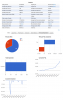
When I'm actively doing this, I find that I have better market feel because I am anticipating what will happen with the systems. I trade along side or even against them in ways that are too challenging to articulate clearly let alone code.
The last time I was doing this actively was in 2014 and the results of the discretionary trading Idid along side were good.
Attachments
Last edited:
TLDR:
Before I backtested I had really terrible market feel.
I think it boils down to having a way to get a feel for what's working now, what's been working recently and what has worked (or not) in the past.
Again, I agree with MrScalp that the human mind is good at recognizing complex patterns and detecting shifts as they are happening. I have not come up with a way to code the shift detection that is part of gut feel that comes with screen time, I don't expect to either. Luckily it's not necessary.
Before I backtested I had really terrible market feel.
I think it boils down to having a way to get a feel for what's working now, what's been working recently and what has worked (or not) in the past.
Again, I agree with MrScalp that the human mind is good at recognizing complex patterns and detecting shifts as they are happening. I have not come up with a way to code the shift detection that is part of gut feel that comes with screen time, I don't expect to either. Luckily it's not necessary.
I'm definitely not convinced that posting here is a good use of time which is why I have posted so infrequently since 2002.
Backtesting and researching tendencies has made me money as a discretionary trader. If I felt that it was not part of a profitable approach, I would not do it.
It is all relative.
Put it this way.
If, after many years of trading, you can not make 1% per day on a "normal account value", then you really are just wasting your time and money.
If you can make 1% per day, every day, then keep doing what you are doing, and ignore what any person may say or do!
If you are experiencing large draw-downs at times, then you still do not know how to trade correctly, no matter what you think otherwise.
Consistent profits come from consistency.
It is not market consistency that makes you money!
I agree. All of my large drawdowns have had nothing to do with the markets and 100% to do with me.
Thank you for the feedback and for pointing out that consistent profits come from consistency.
By that I think you mean:
Consistent profits come from consistency ( consistent discipline, consistent risk management, consistent participation etc.)
Thank you for the feedback and for pointing out that consistent profits come from consistency.
By that I think you mean:
Consistent profits come from consistency ( consistent discipline, consistent risk management, consistent participation etc.)
I agree. All of my large drawdowns have had nothing to do with the markets and 100% to do with me.
Thank you for the feedback and for pointing out that consistent profits come from consistency.
By that I think you mean:
Consistent profits come from consistency ( consistent discipline, consistent risk management, consistent participation etc.)
You must become consistent at making money, as in each and every day.
Otherwise you are not trading correctly - short term trading of course!
Consistent discipline, risk management, participation, are all to no avail unless money is made each and every day.
In other words, when you know what you are doing, and can do it without fail, then, and only then, will consistent trading profits be a reality!