What attracted you to trading options? I'm asking as an options newbie. For me, the attraction is leverage and also the ability to profit when you don't get direction 100% right.I've recently subscribed to elitetrader and I've just read this thread. I am very much a newbie Options Trader. After ~ 18mths I categorise myself as consciously incompetent.
We are fairly restricted in Australia. We can trade options with a local broker on the local market and pay ~ USD17 per leg. The liquidity is low on the ASX and the underlying prices are also low - our largest bank trades for around USD54. I've chosen IB and to trade Options on the US market. In our winter the NYSE closes at 6am our time. (Our summer is better when the NYSE closes at 8am our time).
The main theme of this Thread is called the Wheel Strategy on r/options. I've been trading the Wheel for just over six months. I like this strategy:
I don't trade on margin. I trade CSPs and CCs - mostly. Sometimes I get carried away watching TastyTrade and I will try a complex trade but I find them more difficult to manage.
- It's easy to understand and to manage.
- It can be classified as a system (someone referred to Deming in a previous post).
- Apart from unforeseen catastrophes in the market, the risk is easy to determine and manage. If a company like MSFT went belly-up the world economy would be wrecked so I don't worry about a stock going to zero.
- The Wheel strategy is well documented.
- So far I'm doing OK.
I'm now working on becoming Consciously Competent so I'm building a Trading Journal using Filemaker Pro (I'm a Mac user) and the IB API. At the moment I'm concerned about being over-exposed so I need to bring that under control.
An aspect that is not often mentioned is becoming competent in 'your' trading platform. For example, there are still many aspects of the IB platform that I don't use/know about/understand.
Finally, are there any other 'systematic' approaches to option trading that are worth looking into?

You are using an out of date browser. It may not display this or other websites correctly.
You should upgrade or use an alternative browser.
You should upgrade or use an alternative browser.
Selling Premium - Strategy Never Discussed
- Thread starter robertSt
- Start date

It happens. Below are the 60day ivol spread and the 60day hvol spread between the 2.Great example, but could you pls elaborate more on "buying cheaper vol somewhere else, or hedge with the underlying" as the divergence between SPY and QQQ won't happen quite often, will they? Thanks

It happens. Below are the 60day ivol spread and the 60day hvol spread between the 2.
OK, it's clear, thank you. But, are there any other ways to hedge? That's my question actually.
I might be oversimplifying a bit here, but all these strategies are essentially variations of buy and hold SPX. Might as well just buy and hold with your preferred level of leverage rather than go through all the trouble.
I might be oversimplifying a bit here, but all these strategies are essentially variations of buy and hold SPX. Might as well just buy and hold with your preferred level of leverage rather than go through all the trouble.
I'm not so sure how simple it is to get a non compounded top line like this chart.
 Lotta people not getting 500% non compounded over that time.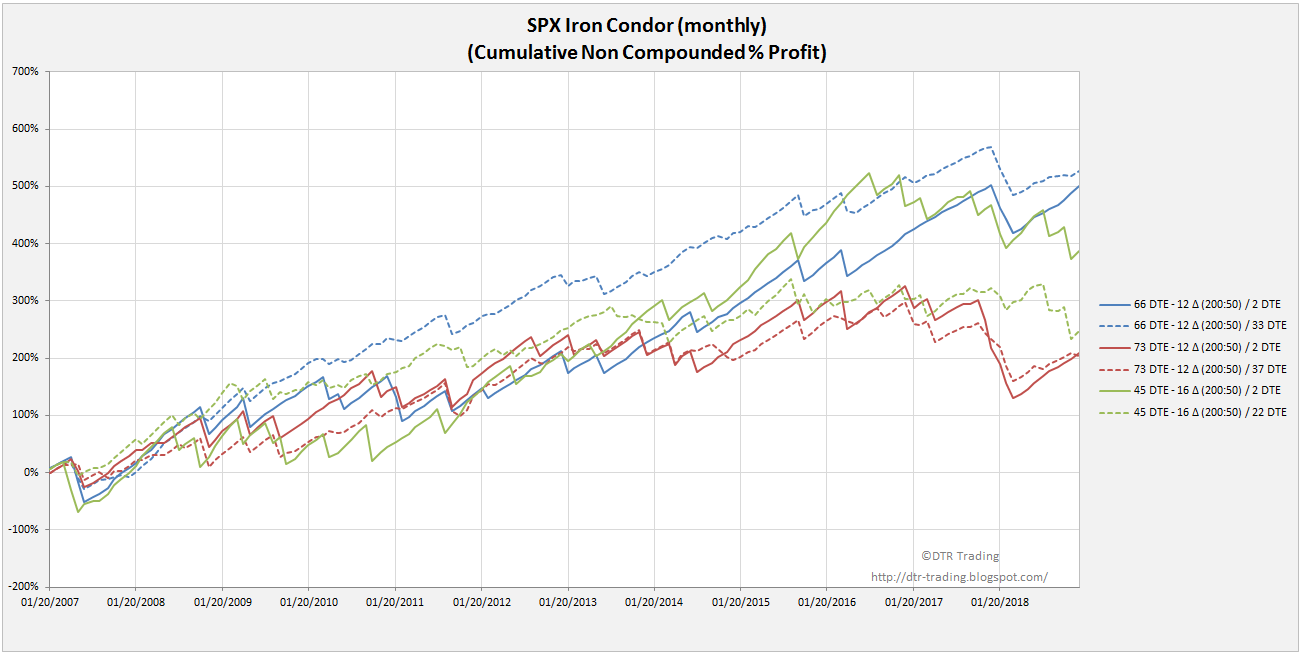
https://investmentu.com/options-trading-myths-realities/
Options Trading with Vic Sperandeo: Myths and Realities
Options Trading with Vic Sperandeo: Myths and Realities
Hi robertSt. Couple of questions:
(1) When do you adjust (i.e. roll down to a lower strike below the stock price), do you wait until end of the day (just in case the stock rallies) or adjust as soon as you notice the stock price has fallen below the put strike?
(2) What do you do if you are assigned a stock?
Many thanks
(1) When do you adjust (i.e. roll down to a lower strike below the stock price), do you wait until end of the day (just in case the stock rallies) or adjust as soon as you notice the stock price has fallen below the put strike?
(2) What do you do if you are assigned a stock?
Many thanks
I might be oversimplifying a bit here, but all these strategies are essentially variations of buy and hold SPX. Might as well just buy and hold with your preferred level of leverage rather than go through all the trouble.
With a margin account you can be 100% long stock and sell options as an additional strategy and then invest the profits compounding the account balance or take income. In an IB account you can be 100% long stock and sell options on futures. Berkshire Hathaway is an insurance holding company that invests the float and profits into additional stock positions and private businesses.
I don’t like being long stock on margin.
That sounds suspicious like a martingale strategy.
It's precisely what it is. OP will end up in an all-or-nothing position just like playing martingale in the casinos. He's not factoring in the leveraging effect though, that if he's reasonably far out of the money and the option gets within 1 point of his position the IV has likely spiked way beyond the model he has (if he has any) and is likely bleeding out.
Karen the Supertrader
Karen the SuperFraud's strategy relied on fraud. Then volatility striked and wiped out 100 million in paper. For reference she basically followed this exact strategy, fraudulently rolling losses to the next month on the HOPE that they'll improve next month. OP is not a fraud (most likely) but is making the same fundamental mistake.
Selling premium in this way is just deferring a bad trade over and over. Sometimes it'll work, sometime's you'll be remortgaging your house. OP is far too confident.