My background is in Macroeconomics, mostly from a Post-Keynesian perspective, which I use to trade my personal account. My goal is
1. to outperform a balanced portfolio of global stocks, bonds, and global real estate: 33% ACWI, 33% BND, 33% RWO.
2. Keep drawdowns to a minimum. This was my failure for 2018 (had a double digit 4Q drawdown due to my greed and lack of discipline) and this is what I am trying to fix this year.
I trade leveraged etf's, currently UPRO. At all times, I am targeting a certain exposure to an index, typically the SP500. The target exposure (TE) is not strict, but rather a goal to accumulate towards/distribute from slowly. For example, currently I am ~1200 shares under the target and tomorrow I will sell at least 3 ATM puts expiring this Friday.
Even though I'm below my TE, I will continue to sell ATM calls if the markets continue to rally. This is simply because I am willing to give up some upside for steady gains. If I ever find myself short if my calls are assigned, I will simply buy shares instead of further selling puts. I get this may seem a convoluted way to do things as CSP and covered calls are the same thing, but IB do not charge for assignment and I find it a logical way to think through my portfolio.
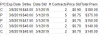
My current portfolio:
Long Equity
400 UPRO @ 46.84
Short Options

My short term outlook (1-2 weeks) is neutral to bearish. Put-call ratio is near its lower bound and the China - US Trade Deal seems like a perfect sell the news event. However, because I am so far below my TE, I don't mind selling some puts here. My exposure level also increases as the S&P goes lower (currently 48% of SPX), assuming my long term fundamentals don't change so we have plenty of liquidity to work with.
My longer term (3-6 months) outlook is neutral. Worst case scenario, we roundtrip to Dec/Jan lows, in which my TE would increase to ~85% of SPX. Assuming the fundamentals stay the same--no recession, mild slowdown at worst--I would be well positioned with enough cash to accumulate all the way down.
Once my trades close, I will add them as a running tally to subsequent posts.
1. to outperform a balanced portfolio of global stocks, bonds, and global real estate: 33% ACWI, 33% BND, 33% RWO.
2. Keep drawdowns to a minimum. This was my failure for 2018 (had a double digit 4Q drawdown due to my greed and lack of discipline) and this is what I am trying to fix this year.
I trade leveraged etf's, currently UPRO. At all times, I am targeting a certain exposure to an index, typically the SP500. The target exposure (TE) is not strict, but rather a goal to accumulate towards/distribute from slowly. For example, currently I am ~1200 shares under the target and tomorrow I will sell at least 3 ATM puts expiring this Friday.
Even though I'm below my TE, I will continue to sell ATM calls if the markets continue to rally. This is simply because I am willing to give up some upside for steady gains. If I ever find myself short if my calls are assigned, I will simply buy shares instead of further selling puts. I get this may seem a convoluted way to do things as CSP and covered calls are the same thing, but IB do not charge for assignment and I find it a logical way to think through my portfolio.
My current portfolio:
Long Equity
400 UPRO @ 46.84
Short Options
My short term outlook (1-2 weeks) is neutral to bearish. Put-call ratio is near its lower bound and the China - US Trade Deal seems like a perfect sell the news event. However, because I am so far below my TE, I don't mind selling some puts here. My exposure level also increases as the S&P goes lower (currently 48% of SPX), assuming my long term fundamentals don't change so we have plenty of liquidity to work with.
My longer term (3-6 months) outlook is neutral. Worst case scenario, we roundtrip to Dec/Jan lows, in which my TE would increase to ~85% of SPX. Assuming the fundamentals stay the same--no recession, mild slowdown at worst--I would be well positioned with enough cash to accumulate all the way down.
Once my trades close, I will add them as a running tally to subsequent posts.