
You are using an out of date browser. It may not display this or other websites correctly.
You should upgrade or use an alternative browser.
You should upgrade or use an alternative browser.
Sekiyo’s journal
- Thread starter Sekiyo
- Start date


From Trades, Quotes and Prices
The liquidity game
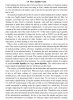
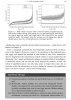
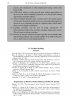
Who’s willing to buy 1% of the ES ?
Might as well trade equities...
Also ...
The liquidity game
Who’s willing to buy 1% of the ES ?
Might as well trade equities...
Also ...
Models whose assumptions are at odds with real markets are likely to produce poor output.
Also, because so much of the modern financial world relies on such models so heavily, widespread application of unsuitable models can create unstable feedback loops and lead to the emergence of system-wide instabilities. For example, the severe market crash in 1987 is often attributed to the prevalence of models that assumed independent Gaussian price returns, and thereby severely underestimated the probability of large price changes.
Bizarrely, financial crises can be induced by the very models designed to prevent them.
Market crashes serve as a wake-up call to reject idealistic simplifications and to move towards a more realistic framework that encompasses the real statistical properties of price changes observable in empirical data. Despite considerable recent effort in this direction, this goal remains elusive, due partly to the fact that many of the statistical properties of real price series are highly non-trivial and sometimes counter-intuitive.
Last edited:

What happened to No Doji, they were always kind.I could stare at the screen an entire day.
Quarantine doesn't help. I did burn out on thursday.
That's why I've not traded much on Friday. Got outside.
Seriously, I am not here for ticks.
Ideally I am trying to capture swings.
But lately I am unable to hold onto winners.
I end up swinging my losses and scalping my profits.
Plan isn't written down.
Thought about programming signals,
But there are some gray areas that I couldn't logically describe.
For exemple, I couldn't logically define a "Leg" but ZigZag does help here.
Might reverse engineer it and find my way to put it down logically, algorithmically.
Problem is opportunities aren't always within 1st three hours RTH session.
But it's sound advice anyway. Often I find the best opportunity at the close.
Anyway ... If I had to trade only 3 hours I'd definitely choose this very schedule.
Same for goals ...
Ideally I don't want to set goals.
I'd like to be more process oriented.
Be positionned for the next opportunity.
Instead of points I might set lazer focus hours.
I don't do backtest but trade real time.
Sometimes I might simulate a position in my head.
A dozen times maybe then I'd scroll backward and trade real money.
I am breathing trading anyway.
Everything I consume is trading related.
Books, movies, social medias... I think about it.
Know it's not rigorous analysis to only think about it.
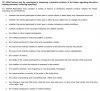
"What is required for you to enter the market? Do you plan the trade? Do you use indicators? What defines your signals? Are they back-tested? Do you have statistics for how often they work and how often they don't? Or how price normally should react when a signal is successful and how price normally should react if not?"
This is serious business.
And all these questions don't have crystal clear answer.
Maybe the most important questions one has to ask himself.
I'll check NoDoji's advices.
Thank you very much for asking the right questions.
A trader shouldn't shy away from these.
Let me think about it.
Thank you !
What happened to No Doji, they were always kind.
IDK