I do market sentiment as a geomtery exercise..
Trends best fit into the mathematics of paradigm theory and the "PARA" concept prevails in the intellectual property created.
For generating emotions of comfort, support and confidence is is best to orient strictly to making money via logic. You do not look at you account status as either profit or loss BUT instead you look at logic and the price data that relates to making money.
So the extreme of a trend is important.
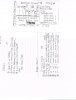
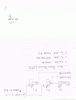
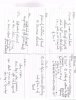
the PINK card defines this zone of extreme forward progress. I the forming bar it is the area within three ticks of the forming forwarding extreme. The price can move forward or away form this extreme area.
If you are doing trading you stay in this area for making money. When price leaves this area you leave the market.
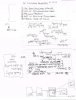
The gold card is what defines a trend. trends are defined by the H and L of two relative bars. A gold ray from the former bar goes forward to show the forming bar is defining the continuation of the forming bar to trend in the trend which is making money. Bar 2 is the forming bar.
As previously explained the leg 2 of anybar is the dominant leg and is the same sentiment as the trend sentiment AS A TREND CONTINUES. THe doji context of a bar is vital and crucial because as price passes the open, it changes the sentiment of a bar. So the doji context is watched to be alert to sentiment change.
The pink and gold mark forward progress. The doji shows dominant continuation and if failure could occur the passing through the dofi put the trader on high alert.
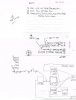
Trends always fail. since they do it is always good to know exactly when this happens. Labelling with ftt on the 30 min serves this purpose. ftt stands for the failure geometric mechanism. Inventing it was an important step. "failure to traverse" going from right to left in the dominant direction of sentiment is a cardinal thing.
So there is an ftt card.
The geometric cards show trend forwarding, trends coming to an end, the most money being made and one other thing.
It is very important to know if, after a trend ends through failure, if the next new trend is going to succeed in ending the overlap context in which it began.
First of all a person has to KNOW that trends overlap. The overlap period is from ftt to the BO of the prior RTL. So to deal with trending we have to have a container for the trend to move forward. Para means in an unchanging context. The unchanging context is the CONSTANT VOLATILITY OF THE WHOLE TREND. WE ALL TREAT THIS AS A PROCESS OF DIFFERENTIAL ANALYSIS, OF COURSE.
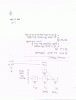
So on the parallelogram card you see where the two sides are placed and what the rule must be to properly place the LTL based upon the gold ray aspect of the definition of a trend. This is also what initiated when permission to measure the independent variable originated.
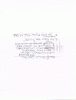
The FBO card is somewhat obtuse to most. But it is there to notify you in a simple manner just when a new trend did not succeed in emerging and THUS the old trend is RESUMING by default.
Have fun. Also keep in mind that most other approaches can be shown to be incomplete (and thus not usable) by the use of these geometric cards.