
You are using an out of date browser. It may not display this or other websites correctly.
You should upgrade or use an alternative browser.
You should upgrade or use an alternative browser.
SCTlearning from scratch
- Thread starter jack hershey
- Start date
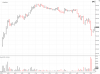

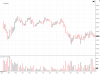

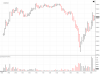
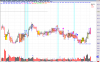
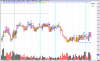
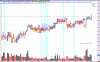
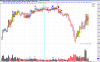
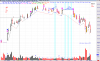
Here are last weeks blank charts with volume. 2-24-14 to 2-28-14 if you want to use them. I will post the next set of drills shortly. Thank you!
thank you for your charts.
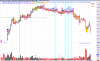
Here is a set as well. your set is clean and has no hilighting of price cases.
My set has all highlights for price cases and count the bars in any lateral.
also notice the vender short coming in that bar to bar there degapping is missing. All highlights are done as if the vendor's promise to degap bar to bar has been completed.
Last edited by a moderator:
This is the first post quoted below.
I am adding some text to let you know of our progress. I will use different colors in a consistent way to be able to keep all the principles in assigned color sets for clarity.
I am adding some text to let you know of our progress. I will use different colors in a consistent way to be able to keep all the principles in assigned color sets for clarity.
This is a journal for learning.
Learning occurs when long term memory (LTM) acquires knowledge and skills. A process is occuring whereby work is done to learn.
As a child goes through the educational processes usually learning is done by rote.
Two things areat play: how learning occurs and how the brain is working.
In a nutshell any learning suject area is learned by doing repetition of topics.
The scope od SCT is simpler that reading and simpler than learning Arithmetic
For simplicity, I will divied the learn topics into groups; the gruops are:
Group I RDBMS
1. We have learned that adjacent bars are used to measure the market.
2. We have learned there are only a few finite cases for any set of measurements.
3. For mind building we name each unique element and specifically define it in the specific mathematics the market dictates.
4. The market dictated an Algebra is required to define the system of operation of the markets. The specific Algebra comes from the flow of intellectuals who all contributed to the system of operation of the markets.
a. Granularity from market owners and operators.
b. Systems from Keynes who defined "completeness" and "in kind" nature of completeness.
c. All elements in the market are unique and all are required for completeness. Carnap defined how to do the definitions by using the logic found in the Algebra.
d. The definitions of element uniqueness are in terms of a set of operators found in logic. All forms of Algebra originate by the determination of the base of the system of numeration of the system. All expressions fit into a numeration base of two. Base two Algebra was named in 1840 by George Boole as Boolean algebra. This could be taught in parallel with Montessori Aritnmatic as we all know.
e. The trading observations can be done at any trading cycle frequency. The different frequencies are interlocking in a minumum multiple pf three (See current drill four.)
F. in modern code writing a kind ofcode has been defined for this system. It is RDBMS.
Group II the dependent variable.
1. The system's dependent variable is Price.
2. price is granular and has a two level system of units: ticks and points. Four ticks make a point.
3. Market systems only work when there is sufficient liquidity. There are about 85 markets where the system has sufficient liquidiy.
4. We have defined all of the RDBMS price elements. There are 10.
5, Only two of the 10 are used to make money.
6. 8 of the ten occur when no money may be made.
7. we are currently doing drills to gain metal facility in "knowing the we know" all of the time how the market sentiment is in a context with total certainty. This is a major advantage for "staying on the correct side of the market".
8 being on the correct side of the market makes making money effective and efficient.
9. we will be learnING a fact soon. The fact is: A MEASUREMENT OF THE INDEPENDENT VARIABLE CANNOT BE TAKEN IF AND WHEN THERE IS NO SIGNIFICANT PRICE MOVEMENT FORWARD IN THE ORDER OF EVENTS IN A PROFIT SEGMENT.
10. Price bars have been xamined completely. We deduce:
a. three legs are possible for any price bar.
b. leg 2 is always present.
c. for certain leg 2 tells the dominant sentiment at the time of the bar's formation.
d. legs 1 and three may be missing on a bars.
e. A matrix whose size is N+1 determines the number of combinations possible for any pare volatility as determined by N, the number of ticks (minimum granularity) of the bar. for four ticks (a point) we learned to do a 5x5 matrix from several participants.
f. how a person does a matrix determined his/her mental operator snesing orientation for the three principle operators of visual sensing.
g A trader must adopt a horizontal orientation for using the system of operation of the market. ( All CW trading orientations are vertical, unfortunately.)
Group III the independent variable
1. We know volume is the independent varible.
2. drill three is underway. we will discover the number and names of the foundational building blocks of the independent variable in a few hours.
3 We know measuring volume to get trend context is dependent upon having permission to measue from the system of operation of the markets.
Group IV MADA
1, We know know the market is in charge of our partnership.
2. we now know there is a repeated routine to follow the markets.
3. we know we can anticipate some aspects of the market since the sub systems are orderly
4. we can build a complete system using systems analysis techniques
Group V trading to make money
1. We have begun to consider the effectiveness and efficiency of trading.
2. the full offer of the market is the comparison standard.
3. trading costs compared to the sum of the profit segments are neglible
I feel that fifth graders on up can do the work. It is on the level of Sister Montessori's work to learn Arithmetic.
I will jump around a little to be sure the Building of the Mind is being fast tracked.
Participation here is the member's decision. Consider your ability to work
You may not have this ability.
Next conside the commitment to learning a system all based upon the system of market operation. If you cannot work systemically, you will be in the largest class of potential traders (failing traders)
To juge if this is worthwhile compare it to your present performanc, effectiveness, efficiency and knowledge and skills.
The best place to begin is when you have zero trading experience.
If you have a lot of expereince and the ensuing belief system, you may not be able to learn this systems simply because your mind is filled with contrary things that cannot be bypassed. In otherwords you may have made decisions in the past where their consequences preclude learnin SCT from scratch .
with the risk of completely being off, here is my drill 3.
the first part is just the case names as instructed.
in the second part i tried to make all internals into one bar, so i was left with just translations. i then colored(or tried to) all the leg 2 either red or black.
i then did a zig zag line to connect all of them.
this is only for 2/24, i'll be happy to do the rest if i'm in the right direction

the first part is just the case names as instructed.
in the second part i tried to make all internals into one bar, so i was left with just translations. i then colored(or tried to) all the leg 2 either red or black.
i then did a zig zag line to connect all of them.
this is only for 2/24, i'll be happy to do the rest if i'm in the right direction
Last edited by a moderator:
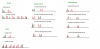
Here are my charts for drill 3, filled out. I didn't catch the post about the two-legged bars "missing a leg"... so some internals are marked wrong, but I understand now.
I had a bit of trouble trying to decide which direction to make some of the internals, but I realized I was over-complicating it--if it opened high and closed lower, it should be a down trend. The same reasoning can be applied to the two-legged bars.
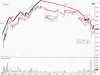
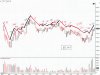
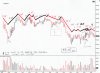
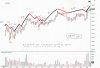
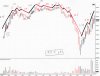
I had a bit of trouble trying to decide which direction to make some of the internals, but I realized I was over-complicating it--if it opened high and closed lower, it should be a down trend. The same reasoning can be applied to the two-legged bars.
Last edited by a moderator:
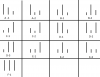
Here is Drill 4. I didn't differentiate color combination of the bars, as I likened this drill to the price bar relationships. I can redo if necessary.
I included equal price bars despite them being extremely rare, as they are a technical possibility.
The names:
A - first bar high combos, B - second bar high combos, C-third bar high combos, D - two equal bars high combos, E - two equal bars low combos, F - All bars equal
I included equal price bars despite them being extremely rare, as they are a technical possibility.
The names:
A - first bar high combos, B - second bar high combos, C-third bar high combos, D - two equal bars high combos, E - two equal bars low combos, F - All bars equal
Last edited by a moderator:
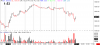
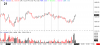
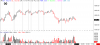
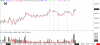
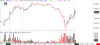
2-24-14 thru 2-28-14 every bar(EB) degapped.
Last edited by a moderator:
![[3-3] Drill 4 Example.png](https://test.elitetrader.com/et/data/attachments/128/128677-2905e7b491d665bb75ba18991ea5ea29.jpg?hash=KQXntJHWZb "[3-3] Drill 4 Example.png")
I poste drill 2 to be making a chart of the ten cases of the pairs of the price bars.
be sure to do it your self.
the cease have names and expressions in Boolean Algebra that uniquely define the cases. They have been posted.
These drills are for the dependent variable called Price.
The two cases that make money are the translation cases.
To see bar by bar translation in a trend we do something to the other 8 cases.
Drill 3 :
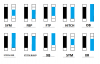
give names to the 10 cases. as follows:
write XB to label the translation long on your work sheet
XR is the short transaltion
SYM is the internal where the second bar is inside the first bar
Flat tops and flat biootms are smple to find and name
A hitch is equal volatility sids by sids bars
This is how i named price cases
Last edited by a moderator: