
You are using an out of date browser. It may not display this or other websites correctly.
You should upgrade or use an alternative browser.
You should upgrade or use an alternative browser.
Russia & Ukraine
- Thread starter UsualName
- Start date

guise, look! a tweet from some rando about a street rando

This is how it starts?
There are some interesting and complicated politics at play between the two countries. Kazakhstan has nominally been a sovereign nation since 1991, but in the last three decades, it has maintained close ties to Russia and lies well within the Russo-political sphere.
Russian politics
However, Russia's invasion of Ukraine appears to have changed the calculus of this relationship. Namely, Kazakhstan's president, Kassym-Jomart Tokayev, apparently sees Russia's preoccupation with Ukraine as a window of opportunity to assert greater autonomy for Kazakhstan.
Kazakhstan’s seizure of Russian space assets threatens the Soyuz-5 rocket
Russia has spent nearly $1 billion on the development of the new Soyuz-5 rocket.
ERIC BERGER - 3/21/2023, 8:02 AM
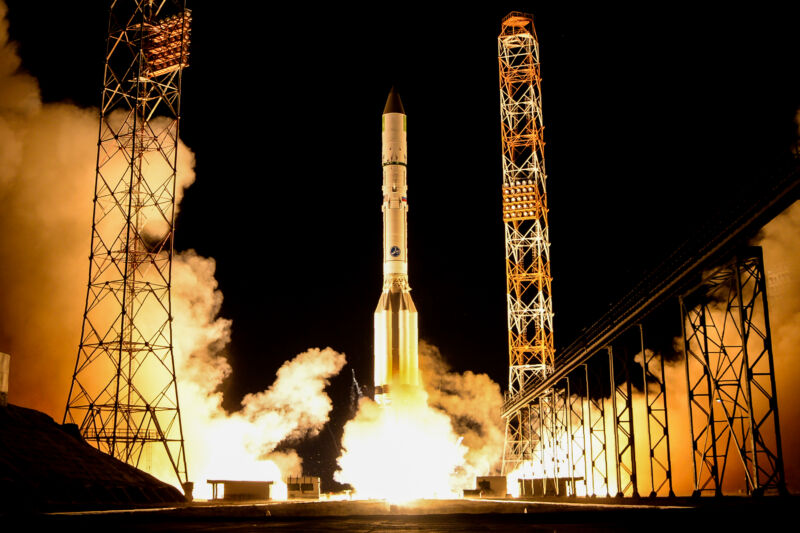
Enlarge / A Russian Proton-M rocket carrying Spain's satellite Amazonas-5 blasts off from the launch pad at the Russian-leased Baikonur cosmodrome in Kazakhstan in 2017.
KIRILL KUDRYAVTSEV/AFP via Getty Images
The Soviet Union created the Baikonur Cosmodrome in 1955 to serve as a test site for intercontinental ballistic missiles. A few years later it became the world's first spaceport with the launch of the historic Sputnik 1 and Vostok 1 missions. The sprawling cosmodrome was a mainstay of the Soviet space program.
After the breakup of the Soviet Union, Russia leased the spaceport from the government of Kazakhstan and currently has an agreement to use the facilities through the year 2050. Russia pays an annual lease fee of about $100 million. Neither country is particularly happy with the relationship; the Kazakh government feels like it is under-compensated, and the Russian government would like it to be in its own country, which is why it has moved in recent years to build a new launch site for most of its rockets in the Far East of Russia, at Vostochny.
Despite some of this uneasiness, however, the two governments have been working together on future space projects. For example, the main Russian space corporation, Roscosmos, has been developing a new medium-lift rocket that it anticipates launching from Baikonur. This is the Soyuz-5 vehicle, a three-stage rocket powered by RD-171 engines that will burn kerosene fuel. Russia is counting on this vehicle to replace its aging Proton-M rocket and be more cost-competitive with commercial rockets such as SpaceX's Falcon 9 booster.
Russia plans to launch the Soyuz-5 rocket from the "Baiterek" launch pad at Baikonur and intended to initiate preliminary construction work on the site in 2022. But those plans now face significant uncertainty.
Arresting assets
Earlier this month, a Kazakh news site, KZ24, reported that the Republic of Kazakhstan had seized the property of TsENKI, the Center for Utilization of Ground-based Space Infrastructure, in Kazakhstan. This firm, which is a subsidiary of Roscosmos, is responsible for launch pads and ground support equipment for the Russian space corporation. According to the report, which was translated for Ars by Rob Mitchell, TsENKI is barred from removing any assets or materials from Kazakhstan.
Ars wrote about the rocket's development in 2017, it was slated to debut in 2021. Now it is unlikely to debut before at least 2024—and given the current dispute with Kazakhstan, it likely will be delayed much longer into the future.
There are some interesting and complicated politics at play between the two countries. Kazakhstan has nominally been a sovereign nation since 1991, but in the last three decades, it has maintained close ties to Russia and lies well within the Russo-political sphere.
Russian politics
However, Russia's invasion of Ukraine appears to have changed the calculus of this relationship. Namely, Kazakhstan's president, Kassym-Jomart Tokayev, apparently sees Russia's preoccupation with Ukraine as a window of opportunity to assert greater autonomy for Kazakhstan.
FURTHER READING
Russia has a plan to compete with SpaceX—but it has a flaw
Russia, for its part, has pushed back on further autonomy for Kazakhstan. Weakening ties with the large country to its south could lead to a further crumbling of the Russian Federation. At times, the rhetoric has grown heated. For example, former Russian President Dmitriy Medvedev has called Kazakhstan an "artificial state" and, on the Russian social media site VKontakte, accused the neighboring country of planning genocide against ethnic Russians in Kazakhstan.
It appears to be good politics for Kazakh officials to stand up to this kind of bluster. The dispute over TsENKI's assets in Kazakhstan has been spearheaded by Kazakh Communications Minister Bagdat Musin, who sees political value in asserting this independence from Russia. Musin has said his government needed to seize the assets, in part, because of a lack of communication with the chief of Roscosmos, Yuri Borisov.
Borisov, who prefers to keep a low profile, and at least in his public dealings with NASA has struck an apolitical posture, has so far not commented on the dispute. Nor has Roscosmos said anything on its Telegram channel, which now effectively acts as its primary public outreach tool.
https://arstechnica.com/science/202...an-space-assets-threatens-the-soyuz-5-rocket/
There are some interesting and complicated politics at play between the two countries. Kazakhstan has nominally been a sovereign nation since 1991, but in the last three decades, it has maintained close ties to Russia and lies well within the Russo-political sphere.
Russian politics
However, Russia's invasion of Ukraine appears to have changed the calculus of this relationship. Namely, Kazakhstan's president, Kassym-Jomart Tokayev, apparently sees Russia's preoccupation with Ukraine as a window of opportunity to assert greater autonomy for Kazakhstan.
Kazakhstan’s seizure of Russian space assets threatens the Soyuz-5 rocket
Russia has spent nearly $1 billion on the development of the new Soyuz-5 rocket.
ERIC BERGER - 3/21/2023, 8:02 AM
Enlarge / A Russian Proton-M rocket carrying Spain's satellite Amazonas-5 blasts off from the launch pad at the Russian-leased Baikonur cosmodrome in Kazakhstan in 2017.
KIRILL KUDRYAVTSEV/AFP via Getty Images
The Soviet Union created the Baikonur Cosmodrome in 1955 to serve as a test site for intercontinental ballistic missiles. A few years later it became the world's first spaceport with the launch of the historic Sputnik 1 and Vostok 1 missions. The sprawling cosmodrome was a mainstay of the Soviet space program.
After the breakup of the Soviet Union, Russia leased the spaceport from the government of Kazakhstan and currently has an agreement to use the facilities through the year 2050. Russia pays an annual lease fee of about $100 million. Neither country is particularly happy with the relationship; the Kazakh government feels like it is under-compensated, and the Russian government would like it to be in its own country, which is why it has moved in recent years to build a new launch site for most of its rockets in the Far East of Russia, at Vostochny.
Despite some of this uneasiness, however, the two governments have been working together on future space projects. For example, the main Russian space corporation, Roscosmos, has been developing a new medium-lift rocket that it anticipates launching from Baikonur. This is the Soyuz-5 vehicle, a three-stage rocket powered by RD-171 engines that will burn kerosene fuel. Russia is counting on this vehicle to replace its aging Proton-M rocket and be more cost-competitive with commercial rockets such as SpaceX's Falcon 9 booster.
Russia plans to launch the Soyuz-5 rocket from the "Baiterek" launch pad at Baikonur and intended to initiate preliminary construction work on the site in 2022. But those plans now face significant uncertainty.
Arresting assets
Earlier this month, a Kazakh news site, KZ24, reported that the Republic of Kazakhstan had seized the property of TsENKI, the Center for Utilization of Ground-based Space Infrastructure, in Kazakhstan. This firm, which is a subsidiary of Roscosmos, is responsible for launch pads and ground support equipment for the Russian space corporation. According to the report, which was translated for Ars by Rob Mitchell, TsENKI is barred from removing any assets or materials from Kazakhstan.
Ars wrote about the rocket's development in 2017, it was slated to debut in 2021. Now it is unlikely to debut before at least 2024—and given the current dispute with Kazakhstan, it likely will be delayed much longer into the future.
There are some interesting and complicated politics at play between the two countries. Kazakhstan has nominally been a sovereign nation since 1991, but in the last three decades, it has maintained close ties to Russia and lies well within the Russo-political sphere.
Russian politics
However, Russia's invasion of Ukraine appears to have changed the calculus of this relationship. Namely, Kazakhstan's president, Kassym-Jomart Tokayev, apparently sees Russia's preoccupation with Ukraine as a window of opportunity to assert greater autonomy for Kazakhstan.
FURTHER READING
Russia has a plan to compete with SpaceX—but it has a flaw
Russia, for its part, has pushed back on further autonomy for Kazakhstan. Weakening ties with the large country to its south could lead to a further crumbling of the Russian Federation. At times, the rhetoric has grown heated. For example, former Russian President Dmitriy Medvedev has called Kazakhstan an "artificial state" and, on the Russian social media site VKontakte, accused the neighboring country of planning genocide against ethnic Russians in Kazakhstan.
It appears to be good politics for Kazakh officials to stand up to this kind of bluster. The dispute over TsENKI's assets in Kazakhstan has been spearheaded by Kazakh Communications Minister Bagdat Musin, who sees political value in asserting this independence from Russia. Musin has said his government needed to seize the assets, in part, because of a lack of communication with the chief of Roscosmos, Yuri Borisov.
Borisov, who prefers to keep a low profile, and at least in his public dealings with NASA has struck an apolitical posture, has so far not commented on the dispute. Nor has Roscosmos said anything on its Telegram channel, which now effectively acts as its primary public outreach tool.
https://arstechnica.com/science/202...an-space-assets-threatens-the-soyuz-5-rocket/

https://edition.cnn.com/2023/03/21/...ps-training-patriot-missile-system/index.html
Ukrainian troops impress US trainers as they rapidly get up to speed on Patriot missile system
By Natasha Bertrand and Aileen Graef, CNN
Updated 2:43 AM EDT, Wed March 22, 2023
Fort Sill, Oklahoma CNN —
The Ukrainian soldiers waved and honked their horns as they drove along a dirt road at Fort Sill, Oklahoma, moving their vehicles into position to defend against a hypothetical Russian missile barrage.
These were not ordinary trucks, however. The Ukrainians were manning a US Patriot air defense system, which 65 Ukrainian soldiers have been training on intensively for 10 weeks, instructed by US Army trainers at the base.
CNN was invited to witness the training on Tuesday, just days ahead of the Ukrainians’ expected graduation from the expedited course. The training at Fort Sill is the only location on US soil where the US is instructing the Ukrainians on US weapons systems. But video and photographs of the training were prohibited, to protect the identities of the Ukrainians who will be heading home to defend their country against Russian forces within the next month.
The Ukrainians have excelled, officials said. They learned the basics of the Patriot system so quickly that they were given extra, intensive training rarely afforded to their American counterparts completing the same course, the officials added.
“Our assessment is that the Ukrainian soldiers are impressive, and absolutely a quick study due to their extensive air defense knowledge and experience in a combat zone,” said Brig. Gen. Shane Morgan, acting Fort Sill and Fires Center of Excellence commanding general.
“It was easier, though never easy, for them to grasp the pace and maintenance,” he said. “They are the best of the best in what they do in air defense for Ukraine.”
The system is now set to be deployed in Ukraine in the coming weeks – much sooner than anticipated – giving the country some extra protection against Russian missiles that has been requested since the outset of the war just over a year ago.
On Tuesday, US officials also said Abrams tanks would be deployed quicker than expected, though Ukrainian officials say much more sophisticated weaponry, and lots of it, is needed to force back Russia’s offensive in a meaningful way.
And the US and its allies know that the two Patriot systems going to Ukraine – one provided by the US, the other jointly by Germany and the Netherlands – will not be enough to defend whole Ukrainian cities from complex Russian missile attacks.
“A Patriot is not going to be able to defend the entire city” of Kyiv, for example, one senior defense official said.
But it will be better than the air defense systems that the Ukrainians are currently using, which can’t defend against Russian ballistic missile attacks.
Intensive training
The Ukrainian men and women, ranging in age from 19 to 67, have trained from 7 a.m. to 6 p.m., six days per week, for 10 weeks, officials said. Many were skilled engineers before the war and several have multiple degrees, and all were hand-picked by Ukrainian military leaders to train in the US.
“I think just because of their combat experience back home, they were able to pick up on things really easily – the best I’ve seen so far, and I’ve trained numerous countries,” one US trainer told CNN. “These guys smoke them.”
Underscoring how experienced the Ukrainians already were in air defense when they arrived at Fort Sill, a senior US defense official said that the Ukrainians’ battalion commander had already conducted multiple intercepts of Russian missiles over the course of the war. The US battalion commander, by contrast, has never conducted a real-world missile intercept, the official said.
The Ukrainians also settled in well to life at Fort Sill, which incorporated lots of soups – a Ukrainian staple – into meal plans alongside American cuisine: burgers, BBQ and grilled steaks. One US trainer told CNN that many of them had not had burgers before. They were a crowd favorite.
But the intense, real-world combat awaiting them in Ukraine was constantly top of mind. One Ukrainian soldier was in the middle of a training session when she received a phone call informing her that her husband had been killed in combat. Several of the 18 US military interpreters called in to help translate were born in Ukraine, and deeply impacted by the soldiers’ experiences, officials said.
“It’s been a true honor to meet these warriors,” a senior Fort Sill official said. “Their stories had both been horrific and amazing at the same time. And I think we have learned as much from them as what we have taught them.”
The US trainers worked to incorporate into training the realistic threats and conditions that the Ukrainian troops will face when they get home, that official said. But often the Ukrainians would essentially take over the training themselves, tailoring it to the most realistic types of threats they may face at home.
“Normally we don’t do that,” the trainer said. “But based on what these Ukrainian members are going to do, it was very important that we were able to have that dialogue and incorporate some of those realistic threats.”
“Once in Ukraine, the soldiers will integrate these new systems into their layered air defenses, for one reason and one reason only – to help shield Ukraine from Russia’s wanton attacks on civilian infrastructure in densely populated urban areas,” US Army spokesperson Martin O’Donnell said. “Fort Sill and the Fire Center of Excellence are enabling such protection. I’m certain their actions these past months will save lives.”
Ukrainian troops impress US trainers as they rapidly get up to speed on Patriot missile system
By Natasha Bertrand and Aileen Graef, CNN
Updated 2:43 AM EDT, Wed March 22, 2023
Fort Sill, Oklahoma CNN —
The Ukrainian soldiers waved and honked their horns as they drove along a dirt road at Fort Sill, Oklahoma, moving their vehicles into position to defend against a hypothetical Russian missile barrage.
These were not ordinary trucks, however. The Ukrainians were manning a US Patriot air defense system, which 65 Ukrainian soldiers have been training on intensively for 10 weeks, instructed by US Army trainers at the base.
CNN was invited to witness the training on Tuesday, just days ahead of the Ukrainians’ expected graduation from the expedited course. The training at Fort Sill is the only location on US soil where the US is instructing the Ukrainians on US weapons systems. But video and photographs of the training were prohibited, to protect the identities of the Ukrainians who will be heading home to defend their country against Russian forces within the next month.
The Ukrainians have excelled, officials said. They learned the basics of the Patriot system so quickly that they were given extra, intensive training rarely afforded to their American counterparts completing the same course, the officials added.
“Our assessment is that the Ukrainian soldiers are impressive, and absolutely a quick study due to their extensive air defense knowledge and experience in a combat zone,” said Brig. Gen. Shane Morgan, acting Fort Sill and Fires Center of Excellence commanding general.
“It was easier, though never easy, for them to grasp the pace and maintenance,” he said. “They are the best of the best in what they do in air defense for Ukraine.”
The system is now set to be deployed in Ukraine in the coming weeks – much sooner than anticipated – giving the country some extra protection against Russian missiles that has been requested since the outset of the war just over a year ago.
On Tuesday, US officials also said Abrams tanks would be deployed quicker than expected, though Ukrainian officials say much more sophisticated weaponry, and lots of it, is needed to force back Russia’s offensive in a meaningful way.
And the US and its allies know that the two Patriot systems going to Ukraine – one provided by the US, the other jointly by Germany and the Netherlands – will not be enough to defend whole Ukrainian cities from complex Russian missile attacks.
“A Patriot is not going to be able to defend the entire city” of Kyiv, for example, one senior defense official said.
But it will be better than the air defense systems that the Ukrainians are currently using, which can’t defend against Russian ballistic missile attacks.
Intensive training
The Ukrainian men and women, ranging in age from 19 to 67, have trained from 7 a.m. to 6 p.m., six days per week, for 10 weeks, officials said. Many were skilled engineers before the war and several have multiple degrees, and all were hand-picked by Ukrainian military leaders to train in the US.
“I think just because of their combat experience back home, they were able to pick up on things really easily – the best I’ve seen so far, and I’ve trained numerous countries,” one US trainer told CNN. “These guys smoke them.”
Underscoring how experienced the Ukrainians already were in air defense when they arrived at Fort Sill, a senior US defense official said that the Ukrainians’ battalion commander had already conducted multiple intercepts of Russian missiles over the course of the war. The US battalion commander, by contrast, has never conducted a real-world missile intercept, the official said.
The Ukrainians also settled in well to life at Fort Sill, which incorporated lots of soups – a Ukrainian staple – into meal plans alongside American cuisine: burgers, BBQ and grilled steaks. One US trainer told CNN that many of them had not had burgers before. They were a crowd favorite.
But the intense, real-world combat awaiting them in Ukraine was constantly top of mind. One Ukrainian soldier was in the middle of a training session when she received a phone call informing her that her husband had been killed in combat. Several of the 18 US military interpreters called in to help translate were born in Ukraine, and deeply impacted by the soldiers’ experiences, officials said.
“It’s been a true honor to meet these warriors,” a senior Fort Sill official said. “Their stories had both been horrific and amazing at the same time. And I think we have learned as much from them as what we have taught them.”
The US trainers worked to incorporate into training the realistic threats and conditions that the Ukrainian troops will face when they get home, that official said. But often the Ukrainians would essentially take over the training themselves, tailoring it to the most realistic types of threats they may face at home.
“Normally we don’t do that,” the trainer said. “But based on what these Ukrainian members are going to do, it was very important that we were able to have that dialogue and incorporate some of those realistic threats.”
“Once in Ukraine, the soldiers will integrate these new systems into their layered air defenses, for one reason and one reason only – to help shield Ukraine from Russia’s wanton attacks on civilian infrastructure in densely populated urban areas,” US Army spokesperson Martin O’Donnell said. “Fort Sill and the Fire Center of Excellence are enabling such protection. I’m certain their actions these past months will save lives.”
I'm not sure what's going on here. Riverdunce?

Oops, prior pic in the wrong thread. Still, reminds me that Putin is draining the reservoir so southern Ukraine agriculture is in trouble this summer. More crimes.

Crowd was American, wtf dude?