Russia & Ukraine

In general. It seems you are over emphasizing a point that is still reasonably debatable.


Ukraine having the second most powerful military force on the European continent is not debatable.The fact that you keep arguing that its debatable is why I'm over emphasizing it


Happy debating with you.

Good night.
 
European countries close their skies to Russian planes

European nations and Canada moved to shut their airspace to Russian aircraft on Monday AEDT, an unprecedented step aimed at pressuring President Vladimir Putin to end his invasion of Ukraine, the biggest attack on a European state since World War II.

The ban on Russian jets comes as the airline industry continues to grapple with the effects of the global pandemic that is still straining demand for travel.

Germany and France joined Britain, the Nordics and Baltic states in announcing bans on Russian use of their airspace, a major escalation in a tactic by mostly NATO allies to wage economic war against Putin in retaliation for the invasion.

The West, led by the United States, also unveiled severe financial sanctions against Russia, which has called its assault on Ukraine a “special operation” to dismantle Kyiv “junta”, capture dangerous nationalists and destroy Ukraine’s military.

Russia is now widely expected to further retaliate against the air blockades and other sanctions. It has already responded to the earliest European airspace bans with its own edicts barring airlines from Britain, Bulgaria and Poland.

Russian airline Aeroflot said it would cancel all flights to European destinations until further notice after the decision by many countries to close their airspace.

Reuters
 
Fact checking nonsense created by the same people who promote Covid misinformation...

Claims: Russia is targeting U.S. biological weapons labs in Ukraine invasion.


There are no US-run biolabs in Ukraine, contrary to social media posts
https://www.politifact.com/factchec...are-no-us-run-biolabs-ukraine-contrary-socia/
  • There are no U.S.-run biological weapons labs operating in Ukraine.
  • The U.S. Defense Department and the Ukraine Ministry of Health have had a partnership since 2005 to improve public health laboratories and prevent the threat of outbreaks of infectious diseases.
  • That effort is part of the Cooperative Threat Reduction Program, which began in 1991 to reduce the threat of existing weapons of mass destruction programs in former Soviet Republics.
Russia’s invasion of Ukraine has brought false claims on social media that Russian President Vladimir Putin is targeting U.S.-run biological weapons labs in his neighboring country.

False claims from Russia alleging bioweapon use by the U.S. aren’t new, and allegations of a network of such labs along Russia’s border were shared in state-run media in the weeks before the invasion.

A Twitter user by the handle @WarClandestine spread a story on Feb. 24 that Russia was targeting the sites of U.S.-run biolabs when it began invading Ukraine. That account was quickly suspended by Twitter, but others shared the post and began using the hashtag #USbiolabs to spread the false claim.

There are no U.S. military-run labs in Ukraine, said Andy Weber, a member of the Arms Control Association Board of Directors and a former assistant secretary of defense for nuclear, chemical, and biological defense programs.

"Rather, the U.S. Department of Defense Cooperative Threat Reduction Program has provided technical support to the Ukrainian Ministry of Health since 2005 to improve public health laboratories, whose mission is analogous to the U.S. Centers for Disease Control and Prevention," Weber told PolitiFact.

"These laboratories have recently played an important role in stopping the spread of COVID-19," he added.

The Cooperative Threat Reduction Program began after the fall of the Soviet Union in 1991 to reduce the threat of existing weapons of mass destruction. It is also known as the Nunn-Lugar Program (named after the senators who passed the Soviet Threat Reduction Act) and is housed within the Defense Department’s Defense Threat Reduction Agency, according to the Center for Arms Control and Non-proliferation.

False allegations about biolabs, though, are so prevalent that the Defense Threat Reduction Agency released a video on Jan. 11 to counter them and explain what the Cooperative Threat Reduction Program does. In it, Chris Park, a State Department official, spoke at the United Nations to respond to allegations from China and Russia about "suspicious activity" at laboratories in the region. He called the claims "pure disinformation."

Park said the program "works to build capacity around the world to detect, prevent and mitigate infectious disease."

The Biological Threat Reduction Program, according to the U.S. Embassy in Ukraine, "works with partner countries to counter the threat of outbreaks (intentional, accidental or natural) of the world's most dangerous infectious diseases."

According to the Atlantic Council, a think tank, Russian propagandists have long spread propaganda in Ukraine, including claims that these labs are experimenting on unsuspecting citizens.

Snopes fact-checkers reported that this most recent claim is false.

Similar claims were made against Georgia’s Lugar Center for Public Health Research in 2018, according to the Bulletin of Atomic Scientists. Last year, Russia and China began spreading the false claim that the U.S. has biolabs along each of their borders, insinuating that America is responsible for unleashing COVID-19, the Daily Beast reported.

"There has been a Soviet-style disinformation campaign promoting such lies for over a decade," Weber said. "It harkens back to the Soviet KGB ‘Operation Infection’ disinformation campaign to spread the total fabrication that HIV/AIDS originated in a U.S. military lab."


Our ruling

A social media user tweeted that Russia was targeting U.S.-run biolabs in its invasion of Ukraine. That account was soon suspended by Twitter.

There are no U.S.-run biolabs in Ukraine. The country is one of many former Soviet Union republics, and other countries, partnering with the Defense Department as part of the Cooperative Threat Reduction Program. It’s the latest claim in a series of disinformation efforts by the Russians, an expert told PolitiFact.

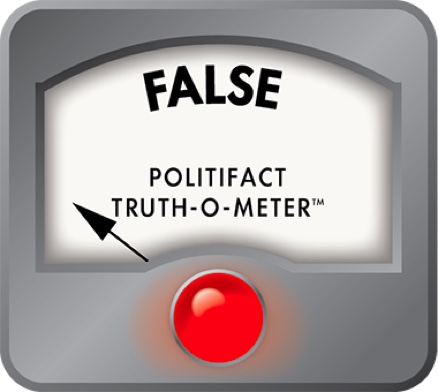
While the U.S. may provide funding to upgrade or build labs in other countries, the labs are run by the partnering nations and the program’s goal is to prevent biological threats, not create them. We rate this claim False.

meter-false.jpg
 
So much misinformation on Russia-Ukraine, too little time to correct. Too bad too few seem willing to think for themselves. There is a wealth of gleanable information from recent pictures and news videos that a critical eye should be able to pick up. Bugenhagen, you game?

Anyway, I’ll concentrate on a few points. Within 24 hours of the invasion, Russia had Ukraine almost in a totally defensive position. Ukraine was considered to have the second most powerful military force on the European continent, behind Russia, of course. Further, it appears the Russians did not use their full complement electronic warfare against Ukraine, presumably to prevent the US from learning too much of their capabilities in that area. In addition, Russia has seemingly not specifically targeted communications either directly or by jamming, a fundamental component of battle, to their detriment in perhaps an attempt to maintain transparency. Russia’s progress through urban areas is not actually slow. Think of it: Total Russian manpower is under 200,000 to clear multiple cities, with several of these cities having populations in the millions. Also, Russia appears to be attempting to minimize civilian casualties while still allowing civilians to travel. I don’t wish to sound like a Putin apologist, but we need to see things as they are for effective policy and military doctrine.

Speaking of doctrine, based on this week’s events, some changes seem necessary for Nato. These changes involve updating definitions of acts of war and decisively acting when such definitions are met. This is of course, escalatory. In fact, the proper responses from a practical tactical and near strategic standpoint inherently compels the other side to escalate to reestablish their original advantage for a perceived critical objective. This is at risk of a strategic response by the other side. Russia says they “Need” Ukraine for their security. However, that point is lost if Nato becomes armed to the teeth and Russia’s economy is in shambles. Japan has just suggested that nuclear weapons become more available to threatened countries, for example. China can only buy so much Russian resources, especially as China seeks greater global influence. Worse yet, how useful is security for Russia if the result is a sunk navy and potentially smoldering cities?

Putin might have been able or might still be able to get away with acquiring the two rebel influenced areas of Ukraine, but trying to retain whole of Ukraine will likely be a thorn in Putins side for the remainder of his tenure, how ever long that may be.

Social media, swarms of civilian communications satellites, and progression of human’s sense of values are increasingly making weakly justified wars obsolete. In other words, the “Pen… as in communication… may indeed be mightier than the sword”.

From a military standpoint, Putin’s invasion is a masterpiece. From a political, diplomatic, and humanitarian standpoint, few disasters are greater. After all, what is the long term outlook for a country that is isolated from most world markets? Especially if Europeans finally decide to make energy security a priority? Putin’s planning missed the meta verse response of world opinion and now finds himself with a bad hand. Question is, will Putin throw it away or go all in instead?
Hard to believe I'm the only person that would give a "like" to such a well written post.
The only part that might be arguable is the "masterpiece" part.
 
Russian police arrest 2,667 protesters during anti-war demonstrations according to a human rights group
Posted 1h ago https://www.abc.net.au/news/2022-02...-protesters-anti-war-demonstrations/100866734
0484dc560f92787435e94c7ae8c25920

Anti-war demonstrations have been staged in 67 cites across Russia since the invasion of Ukraine. (AP: Dmitri Lovetsky)

Police detained more than 2,000 people at anti-war demonstrations held in cities across Russia on Sunday a protest monitoring group said, as people defied the authorities to show their anger over Russia's invasion of Ukraine.

Key points:
  • Anti-war protests have been held in cities across the country since Thursday
  • Australians in Russia have been warned to avoid demonstrations and to consider leaving the country
  • Long queues have been forming at Russian ATMs amid reports non-Russian cards are being declined
More than 5,800 people have been detained at various anti-war protests since the invasion began on Thursday according to the OVD-Info monitor, which has documented crackdowns on Russia's opposition for years.

On Sunday evening local time, OVD-Info said at least 2,667 people had been arrested in the day's protests in 67 cities.

In Moscow, riot police often outnumbered protesters, some of whom carried hand-written placards with peace signs and anti-war slogans in Russian and Ukrainian.

Some wore masks with the word "Enough" emblazoned in the front.

6e3071ab4a8ea4b3ac1c859259eced3d

Protests have been staged across the country, with more than 5,800 demonstrators arrested since Thursday.(AP: Dmitri Lovetsky)
A reporter for the independent television channel Dozhd was arrested during the protests despite showing his accreditation to the police and wearing a press vest.

Outside the upmarket Gostiny Dvor department store in downtown St Petersburg, hundreds of anti-war protesters stood together, linking arms and chanting.
 
Back
Top