
You are using an out of date browser. It may not display this or other websites correctly.
You should upgrade or use an alternative browser.
You should upgrade or use an alternative browser.
Risk Management is the answer
- Thread starter Wide Tailz
- Start date
Averaging down is making the average entry price go down. But the price, actual traded price, (which is more important than average price of entry) is going doooooooown not up why add?
Because it might turn around?
If you add while prices go down, your average price gets lower. You can do this if you are convinced that prices will go up again later. If that's the case, averaging down improves your profits. If prices don't go up later, you made your losses bigger.
If you are not convinced you just get out.

I'm no expert with sizing algos, but here are the obvious levels in a trend following equity curve where leverage could be added and pyramiding could take place with little added risk. You could also "average down" the equity curve in the range bound regions, but I never tested this.....
Attachments
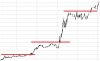
I'm no expert with sizing algos, but here are the obvious levels in a trend following equity curve where leverage could be added and pyramiding could take place with little added risk. You could also "average down" the equity curve in the range bound regions, but I never tested this.....
So... you know what to do.
Let us know the result after you finished the job.
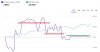
Yes, of course. I was on Tradestaton 9.0, back on the day, when I developed a few trend algos but never could figure out how to program a function to buy / sell based on an additional chart, or the equity curve. I had so much more fun with rules based discretionary trading anyways that I gave up on automation. However, I'd be retired by now if I had just kept at it. The current equity curve is crossing the line and I'm adding size, in the spirit of "trend following" the "fund" I'm managing. Never mind the wild ride earlier this year. I've had to keep learning the same lezzon over and over, it seems..... Red lines are where size should have been cut, and I did scale back bigly after that second red line.
Attachments
I heard of this thing, but when you're doing scalping then this averaging seems a little bit off as positions are for very short term and usually closed before opening other. Right?If you add while prices go down, your average price gets lower. You can do this if you are convinced that prices will go up again later. If that's the case, averaging down improves your profits. If prices don't go up later, you made your losses bigger.
If you are not convinced you just get out.
I heard of this thing, but when you're doing scalping then this averaging seems a little bit off as positions are for very short term and usually closed before opening other. Right?
I daytrade but keep positions sometimes even hours, so I don't use this technique.
The only thing I sometimes do is double my position when the first position is profitable.
I only double if I have a clear signal of a retracement. These signals have a +90% success rate but are rare. The profit of this second position is of course smaller as the entry is worse than the first entry. But these additonal profits can add up quickly if compounding is used.
Essential systems are usually automatic, on any machine where life (or life savings) are on the line.
Airplanes have stall horns and a Christmas tree of lights on the panel that will warn the pilot when the health of the machine is in danger.
Rock climbers have ropes, ultralights have BRS parachutes, fighter pilots have ejection seats, and we have one of the most hated safety features of all - the stop loss.
However, as you can tell by my avatar, when my tail gets wide is not the time to have to think about putting in orderz on my screen, that is when I need to get out!
The automatic stop exit takes the psychological weakness out of the most essential order you will ever enter.
Speaking only for myself, if a few large losses had been eliminated in my entire trading history over the years, my net performance would have gone up by yuuuuge amounts!
It's OK to get stopped out. You will still have altitude when that parachute opens.....
Airplanes have stall horns and a Christmas tree of lights on the panel that will warn the pilot when the health of the machine is in danger.
Rock climbers have ropes, ultralights have BRS parachutes, fighter pilots have ejection seats, and we have one of the most hated safety features of all - the stop loss.
However, as you can tell by my avatar, when my tail gets wide is not the time to have to think about putting in orderz on my screen, that is when I need to get out!
The automatic stop exit takes the psychological weakness out of the most essential order you will ever enter.
Speaking only for myself, if a few large losses had been eliminated in my entire trading history over the years, my net performance would have gone up by yuuuuge amounts!
It's OK to get stopped out. You will still have altitude when that parachute opens.....
I daytrade but keep positions sometimes even hours, so I don't use this technique.
The only thing I sometimes do is double my position when the first position is profitable.
I only double if I have a clear signal of a retracement. These signals have a +90% success rate but are rare. The profit of this second position is of course smaller as the entry is worse than the first entry. But these additonal profits can add up quickly if compounding is used.
That's pretty much creative.

Exact same experience.I traded far better in my first month in the market before learning anything, because I had a true fear of the unknown, knew I couldn't calculate the future.
Later I read some books and thought I could see the order of the markets, and even the universe, according to the wave theorists who use fibonacci numbers. I wasted years looking for accuracy in the entry.