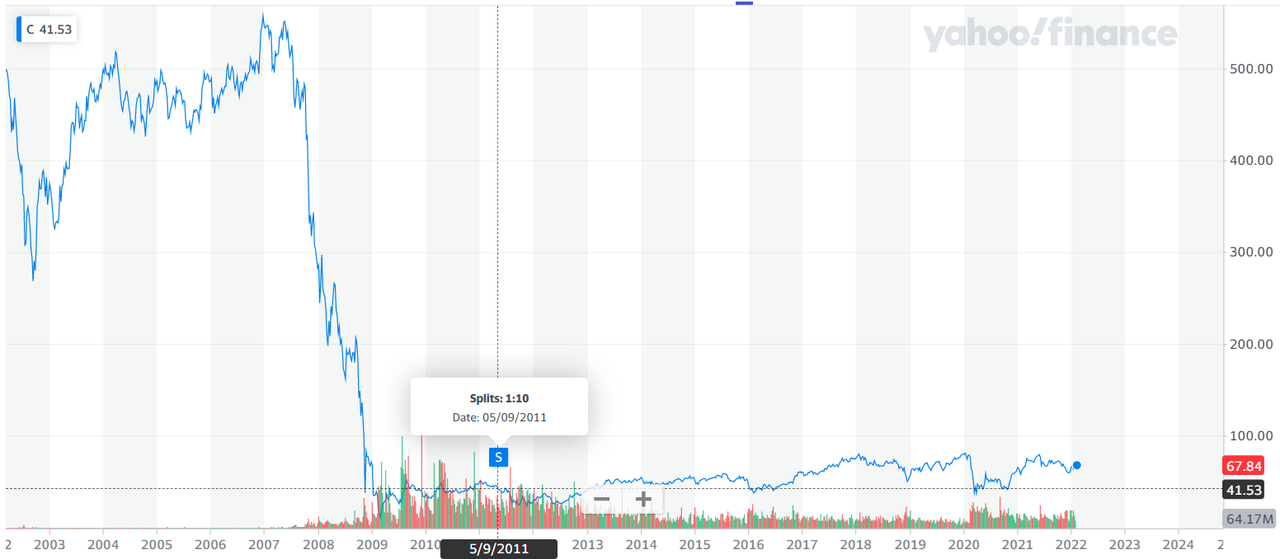
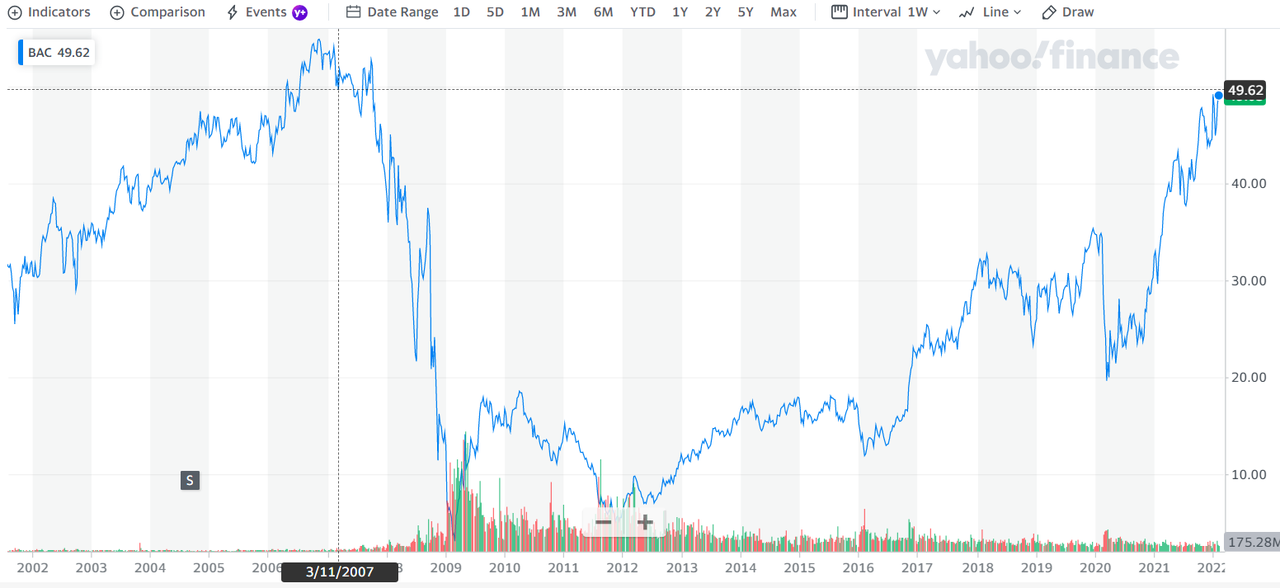
LOL split or reverse splits mean nothing to the valuation of someone who owned prior to either situation.
Own 1000 shares @ $50 = $50,000
then after a 1/10 reverse split
Own 100 shares @ $500 = $50,000
that is on paper, but in reality Citi is currently traded at $62, not at $500/share as you stated. It might bounce back up to $500 in the future. probably, when the DJI would be traded at 100,000.... If you do the math, the loss would come at about 90% loss on the C investment.
or
if you talked about those investors who bought Citi bank shares in the 2009 onward (after the correction), then they'd come out ok.
I talked about those long-term investors who bought Citi bank stocks in the 2005-2007 timeframe when Greenspan was blowing up the idea of ownership society aka the sub-prime bubble. They thought they bought blue chip company (member DOW30), and held it for long term. Then Citibank came around to reverse split on them, cut their holdings to 1/10th, it means it'd take virtually "forever" for a bank stock like Citi to bounce back up to $500/share, so they'd break even in their investment.
on the other hand, Bank of America didn't reverse-slit its stocks, so if an investor who happened to buy BAC at $50/ in 2005-2007 timeframe, and held it for these 10 years, he'd come out breakeven by now

(plus dividend payments).
I think reverse stock split is bad for the bag holders aka long term investors. SEC and FINRA should ban it for some companies ... I think the market makers would be beneficial in the case of reverse stock split (if they unloaded all their holding to Mr. Magoo Joe Public before the reverse split). it means market makers wouldn't have to cough up a lot of dough when buying the shares back (1/10th of number of shares in case of Citibank) when Joe Public sells them back to the market makers at the old high.