Good morning, all!
There is some confusion about what the OP requested/stated, in evidence by the responses. So, a general clarifier:
Linearity: VERY LITTLE in life is linear in toto. And this is *especially* true in anything connected to a Normal/logNormal distribution, as with markets/options.
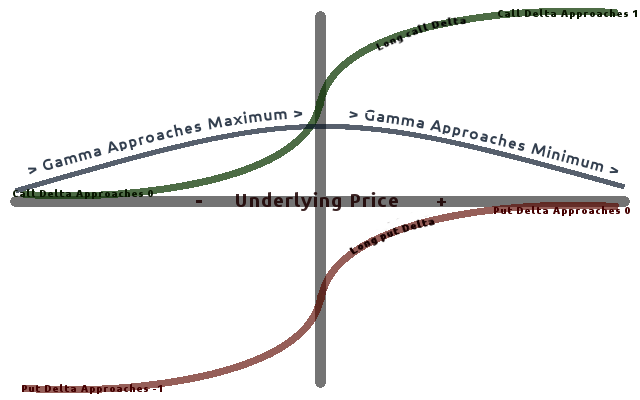
However, what the OP asked was whether it reasonable to assume as a starting point, that a shift in a market price would produce a like shift in the associated option strike P(ITM)s. And the answer is yes. Why? The P(ITM) [or the associated deltas, for those using that proxy] is about distance from the underlying, not the starting point. A linear adjustment does not change the distance. It just shifts the distribution up or down.
Market, Time, Vol: These are the big three of those things that will affect option prices, to wit: delta, theta, and vega. And as the OP surmised, any circumstance sufficient to produce a $5 shift in a $100 stock is likely to produce a shift in IV as well -- whether an increase of fear, or a decrease from fears-allayed. And as the OP's question was kind-of snapshot oriented, it is fair to include theta-risk in there, too, to complete the picture: theta's bleed-out of value ticks on with every tick-of-the-clock, regardless of the market move towards/against our position. In a snapshot, it's commonly negligible, but for those watching today's expiring options from 1400hrs through market close, Mistress Theta (with whip in hand) will stomp all through their inventory -- and there will certainly be option values decreasing from theta-burn even as the market approaches them.
So, "linearity" of a shift? Yes. Great starting point. But vol shifts may counter or conjoin, dependent on the stimulus, and time (as time grows short) may work a hand in there, too.