I was envisioning a market that you would access through your broker in the same manner as you access the stock/option market now.In economic terms, "transaction costs."
All that paperwork (if digitized in 2018) that we sign in getting set-up with our brokers (whether introducing or DMA) includes an ability to make a stock-lending operation work, with little more than a check-box. Thus, we all hang out under the initial broker-client umbrella. To do this for individual transactions would involve a *blizzard* of new paperwork/record-keeping/liability/exposure, etc etc etc.
So, what's to stop some well-capitalized firm from setting up a separate, "Stock-Lending" window, where that special-purpose skill/market could garner repetitive business, making the thing worthwhile for customers and suppliers alike? "Hmmmmm!"
I'll bet you that the numbers have been run, and that they get revisited every 6 months or so... Like 'fracking' -- the technology is there, it's just a matter of deciding when the development costs have inched sufficiently below the potential revenues.....

You are using an out of date browser. It may not display this or other websites correctly.
You should upgrade or use an alternative browser.
You should upgrade or use an alternative browser.
Pricing leveraged-ETF options
- Thread starter cttfs
- Start date

I getcha. {head nodding...} But the immediate broker would always have the advantage of having already undertaken 99%-100% of the necessary paperwork "transaction costs"... And in the end, those costs would be paid twice, essentially -- eating into user benefits and into provider costs. ("Provider" being the new guy, not your existing broker, who has to undertake those costs regardless.)I was envisioning a market that you would access through your broker in the same manner as you access the stock/option market now.
I dunno. It remains an interesting question, I guess.
Yes. The easiest approach is to simply multiply the implied variance by the leverage factor and use that in your model. There is also a matter of adjusting the forward since the borrow rates on these are HUGE.
Getting back to the initial question... I am building a spreadsheet as per your suggestion, to calculate SPXU (-3x SPX) theoretical values from SPX. I'm not getting it right. Do you mind telling me if these basic inputs are reasonable?
I am first calculating the IV on the SPX chain...
1) Using a single risk free rate for the chain. Is 2.19% reasonable? (for today)
2) Using a single constant dividend rate for the chain. I assume I should be plugging in dividends even though they are not paid on SPX, because the index pricing will reflect it. So I stole the rate from SPY, which was 1.83% for the last year. That reasonable?
Then I apply the SPX IVs to the SPXU strikes...
3) SPXU actually paid out $0.47 in dividends over the last year (1.25% annually). Should I just plug that into the option model? Or should I also somehow add the dividends of SPX which it tracks? Or 3x those dividends??
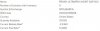
4) For the cost to borrow, I am using the IB "fee rate" of 5.426%. They also specify a "rebate rate" of -3.236% (see attached screenshot) which I guess is the actual amount charged to a borrower after the 2.19% interest received on short proceeds. But I am thinking the option model will already account for that 2.19%, so I should plug in the 5.426%. Am I way off here?
5) I am plugging in the 5.426% by simply adding it to the annual dividend rate.
I fear I may be messing up something basic, so I'd really appreciate if you could chime in on these. I can also post a pic of the spreadsheet, but should probably get these out of the way first.
Thank you!
Attachments
My suggestions (the following might contain some random letters as I am significantly high at the moment):
(a) instead of using spot + div/borrow, use the implied forward for both SPX and SPXU. For each strike find (call-put) and then find the two strikes straddling the zero value of that. Use the distance from each strike to find the exact forward.
(b) SPXU does not drop with divs - it's forward is pure excess return (do you want a proof for that?) since it's a rebalancing index and all of it's forward drop is due to implied borrow. But it does not matter since you are using an implied forward as per my suggestion in (a)
(c) Now you can find the implied vol for SPX using Black76 formula (as opposed to a regular BS), use opposite delta correction in case your quotes are snapped at different forward. Multiply that vol by 3X et voilà, you have a very reasonable approximation of the leveraged ETF skew.
(d) Once you're done, you can go home and light a spliff (that's what I did).
(a) instead of using spot + div/borrow, use the implied forward for both SPX and SPXU. For each strike find (call-put) and then find the two strikes straddling the zero value of that. Use the distance from each strike to find the exact forward.
(b) SPXU does not drop with divs - it's forward is pure excess return (do you want a proof for that?) since it's a rebalancing index and all of it's forward drop is due to implied borrow. But it does not matter since you are using an implied forward as per my suggestion in (a)
(c) Now you can find the implied vol for SPX using Black76 formula (as opposed to a regular BS), use opposite delta correction in case your quotes are snapped at different forward. Multiply that vol by 3X et voilà, you have a very reasonable approximation of the leveraged ETF skew.
(d) Once you're done, you can go home and light a spliff (that's what I did).