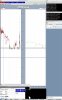
Did you need only matplotlib library or something else like Pandas? How did you handle the data?
The purpose of this question to understand how many libraries I need to master.
I may be a bit unorthodox and though I'm very familiar with it, I've never felt the need to use Pandas. The work flow is pretty straightforward so here's an example:
The feeds I'm familiar with use either FIX or web sockets and I'll assume the latter since it's more common. Check the data provider's documentation for the api endpoint you need for ticker data or whatever then use something like the lomond web socket library to connect to it and start pulling the data.
Then whether you're storing tick by tick or generating candle stick charts from the feed, you need to store it somewhere. My suggestion is either redis using the rejson library (in memory database so very fast and supports concurrent reads and writes), sqlite if you need the speed, want to save memory and don't mind having to fiddle to get concurrent reads and writes working, or something more traditional and heavy weight like mysql or postgresql. But put it somewhere. Personally while I store my data in a database, my scripts that actually perform the trading also keep all charts in memory to avoid the latency of hitting the database. The database is just there so the data is persistent.
So now you have data continuously being put in a database. Now you need to apply your edge to the data. My edge is statistical and doesn't make use of any traditional indicators so I don't use any libraries like ta-lib though if you are looking for that, ta-lib is quite good. For my edge, the scipy and built-in python statistics library are quite sufficient. So with those two, I have my algorithm do its thing and if it finds what I'm looking for, it sets an order.
After setting an order, I use the information generated with scipy and statistics to decide where to sell. This is all automated.
To actually see the charts is where matplotlib comes in and for candlesticks, you will specifically need the mpl_finance library. Matplotlib is very complex and has a steep learning curve but the upshot is it's extremely powerful and feature rich so you can use it to visually interact with the data however you want. You can set buys, sells, cancels, or whatever else you need by clicking directly on the chart, it updates in real time, etc. That's the most basic of what it does but when you learn it, you will be able to program it to do anything you can imagine a chart could do which in itself can give an edge since you will be able to see the data in ways maybe other people haven't thought of.
Lastly, if you're interested in crypto, check out the excellent ccxt library that abstracts the api for over a hundred exchanges and lets you interact with all of them the same way and makes things like cross exchange arbitrage easier. For a free stock feed that gives somewhat useful data, check out iexcloud (just google it). The free data is limited to orders ran through the IEX exchange which is a smaller one so it's not perfect but I've found it useful and it's free so there's that.
So a beginner's library list based on my experience:
lomond
rejson
scipy
statistics
ta-lib
matplotlib
mpl_finance
ccxt