
You are using an out of date browser. It may not display this or other websites correctly.
You should upgrade or use an alternative browser.
You should upgrade or use an alternative browser.
Price Action - NQ III
- Thread starter lajax
- Start date

About that "premature exit"; not necessarily. Rules are ruies, and if price moving against you rather than sideways -- particularly if that movement comes all the way back to your entry after having confirmed the retracement -- prompts you to be concerned about the integrity of your trade, then just get out of it as long as you are prepared to re-enter under the right conditions. Notice here, for example, that the bar that intrudes so rudely on your trade closes at the bottom of the bar. If you're prepared and reasonably emotionless, there's nothing to prevent you from re-entering at that point. If you're rattled, then wait for the next retracement, as you did. But it's not necessary.
This is one of my favorite signals, Trendline Retrace, let many do the breakout of trendline then enter if it retraces back to trend line and many getting out with small losses or breakeven, I am taking other side of their trades in direction of trend, often times it is start of wave 3 of Elliott and largest of waves.
Attachments
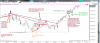
Hi Handle,This is one of my favorite signals, Trendline Retrace, let many do the breakout of trendline then enter if it retraces back to trend line and many getting out with small losses or breakeven, I am taking other side of their trades in direction of trend, often times it is start of wave 3 of Elliott and largest of waves.
Just to make sure that I understand the trendline retracement setup:
You probably shorted CL around 59.17 between 7:57 and 7:58 AM Eastern Time today. Right ?
Correct, slope has turnedHi Handle,
Just to make sure that I understand the trendline retracement setup:
You probably shorted CL around 59.17 between 7:57 and 7:58 AM Eastern Time today. Right ?
I have been a Little busy with my commitments in the University because I’m in final exams in any case here is the last day of trading where 97 trades are completed, therefore at least for me this is a good number in order to calculate some statistics, that will come later.
BTW: I’m glad to be here again
April 16th
Prep - Context

Plan the trades.

Trades

BTW: I’m glad to be here again
April 16th
Prep - Context
Plan the trades.
Trades
STATISTICS
Days tested: 22
Trades: 97
The starting balance was 5k, however this is of no importance because what I wanted to point out is the P/L in ticks.

P/L Daily

Conclusions
1. One of the main questions when I entered a trade was: how much is advisable to risk, in terms of points?, this because sometimes during the forward testing and following the rules, the risk was variable and in some cases although the distance was small in other occasions this was as big as 6pts. In this order of ideas and following the advice of Db here is the Analysis of the MAE.
The table shows the MAE in relation to the P&L and the number of trades, I hope is self-explanatory

What I can interpret from this data (If I am wrong correct me please), is that the trades that have an adverse execution higher of 2,25 pts are most likely to end in a loser trade, therefore the initial Stop Loss should be located at a distance of 2,25 or 2,5 points.
In addition is important to highlight that the 87% of the all profit was done in trades that had a MAE below of 2,25 pts, moreover the 70% of the losers trades have had a MAE above the 2 pts.
2. In the same line of thought making an analysis of the Maximum favorable execution (MFE), allows me to understand after how much distance traveled in my favor is most likely that the price lift off, therefore taking into account the next table when the price surpass the 4 or 5 points there is a higher probability that the trade ends in positive territory; hence the danger zone in terms of price after the trade is entered is the first 4 or 5 points, after this distance is traveled in my favor is most likely that the trade ends in profit. Accordingly this conclusion allows me to know at which point in terms of price I should put the trade in Break Even


Here is the link of the excel file
http://www.traderslaboratory.com/forums/wyckoff-forum/18335-off-topic-posts-7.html#post198010
Days tested: 22
Trades: 97
The starting balance was 5k, however this is of no importance because what I wanted to point out is the P/L in ticks.
P/L Daily
1. One of the main questions when I entered a trade was: how much is advisable to risk, in terms of points?, this because sometimes during the forward testing and following the rules, the risk was variable and in some cases although the distance was small in other occasions this was as big as 6pts. In this order of ideas and following the advice of Db here is the Analysis of the MAE.
The table shows the MAE in relation to the P&L and the number of trades, I hope is self-explanatory
In addition is important to highlight that the 87% of the all profit was done in trades that had a MAE below of 2,25 pts, moreover the 70% of the losers trades have had a MAE above the 2 pts.
2. In the same line of thought making an analysis of the Maximum favorable execution (MFE), allows me to understand after how much distance traveled in my favor is most likely that the price lift off, therefore taking into account the next table when the price surpass the 4 or 5 points there is a higher probability that the trade ends in positive territory; hence the danger zone in terms of price after the trade is entered is the first 4 or 5 points, after this distance is traveled in my favor is most likely that the trade ends in profit. Accordingly this conclusion allows me to know at which point in terms of price I should put the trade in Break Even
Here is the link of the excel file
http://www.traderslaboratory.com/forums/wyckoff-forum/18335-off-topic-posts-7.html#post198010
What I can interpret from this data (If I am wrong correct me please), is that the trades that have an adverse execution higher of 2,25 pts are most likely to end in a loser trade, therefore the initial Stop Loss should be located at a distance of 2,25 or 2,5 points.
In addition is important to highlight that the 87% of the all profit was done in trades that had a MAE below of 2,25 pts, moreover the 70% of the losers trades have had a MAE above the 2 pts.
You're not wrong, but it is necessary to control the "trade" variable. IOW, your conclusions are based on the way in which the data is presented. The data is as presented based on a particular entry. If the entry is altered, that changes the data.
For example, if one is focusing on retracements, he must define a retracement.
1. What bar interval is being used?
2. From the point at which price turns back on itself (we'll use a long here to save time), i.e., fails to make a higher high, how far can it go before signalling a reversal?
3. Is there any significance to the number of bars in the retracement?
4. Is there any significance to the lengths of the bars?
5. When deciding where to enter the ret, does one measure from the bottom of the bar? the right tick? the top of the bar?
6. If, for example, one is using the top of the bar, at how many ticks above that bar does one enter?
7. Will the MAE be measured from the point at which price begins to turn back, or will it be measured from the entry point? If the latter, there are advantages to measuring it from the former, particularly with regard to trailing stops -- mental or hard -- and with reversal signals. This saves having to do all of this all over again for each task.
8. How will this change, if it does, according to whether the market is ranging or trending? For example, after all of the above is defined, was the MAE different during that six-week ranging period from the beginning of March this year to the middle of April than it was during the trending periods? Has it been different during the change in stride from June '13 than it was beforehand, when the pace was more leisurely? This may be of more interest to someone who's trying to code this than the discretionary trader as he will more likely understand the need for and be able to make slight adjustments from month to month and even week to week. This is part of the self-correcting and self-adjusting aspect of PA trading. Nonetheless, it should be considered if for no other reason than to avoid the puzzlement when one finds himself being regularly "stopped out" of trades that had been perfectly safe for weeks, or months.
This sounds like much more work than it really is. If one were a data geek, he could also look at how the MAEs vary according to whether the entry is made off an extreme, a DT or DB, a HL or LH, a median, a line break, etc. But if one has rid himself of fear, making these decisions based on price behavior rather than a complex decision-making matrix should not present a problem.

Great stuff again @lajax
I've just finished my 100 trades last week. I am not testing SLA, more reversals off extremes...
The funny thing is though, that I have the pretty much the same stats i.e. My (avg / median) MAE numbers are similar. Also, the number of trades and duration of testing window (100 Trades, 24 trading days).
My MFE is capped though as I have simplified the trade plan to only take profit at 5pts. 1 less variable to juggle with!
Have you found greater confidence in your judgement now that you've finished 2 passes at this exercise?
I only ask because after the first 30 trades or so during my testing - I felt a major shift in my psychology....
Anyway as always good luck! Your journal is truly inspiring.
I've just finished my 100 trades last week. I am not testing SLA, more reversals off extremes...
The funny thing is though, that I have the pretty much the same stats i.e. My (avg / median) MAE numbers are similar. Also, the number of trades and duration of testing window (100 Trades, 24 trading days).
My MFE is capped though as I have simplified the trade plan to only take profit at 5pts. 1 less variable to juggle with!
Have you found greater confidence in your judgement now that you've finished 2 passes at this exercise?
I only ask because after the first 30 trades or so during my testing - I felt a major shift in my psychology....
Anyway as always good luck! Your journal is truly inspiring.