
You are using an out of date browser. It may not display this or other websites correctly.
You should upgrade or use an alternative browser.
You should upgrade or use an alternative browser.
Popular Technical Indicators for Day Trading
- Thread starter ppy93
- Start date

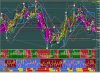
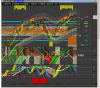
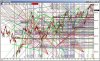

IMHO, one advantage of trading stocks instead of popular ETFs or futures is that it is less competitive, especially for the stocks that are not very liquid because the big funds do not care about these opportunities. For example, it can be very hard to find some consistent edge for pair trading of SPY and IWM. But pair trading based on stocks should be easier to find, especially the ones whose volumes are not very high but high enough to provide enough liquidity for smaller AUMs.
Numerous time frames here (done in InvestorRt.)Using ROCs on different time frames is an interesting idea. Thanks, I'm a TA nerd and will enjoy looking into this.
Attachments
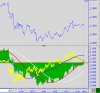
But can you really call that “pairs trading?” I would imagine that it’s difficult to find two cointegrated small cap stocks. This would force one to trade many pairs in small sizes to reduce company specific risks. That becomes very difficult and costly to execute. Just thinking out loud, haven’t tried.But pair trading based on stocks should be easier to find, especially the ones whose volumes are not very high

If you look for price action then you need to trade discretionary, because systematically you will not find any edge. Also with indicators you cannot find very good trading systems systematically. But markets are interconnected to each other so look for intermarket correlations, if you want to have some "indis".
Last edited:
You are perfectly right with your assumption that the more liquid instruments you trade the less stable cointegrations you will find, meaning that any cointegration is more shortlived. The less liquid and less competitive you trade the more stable cointegration relationships you can find. I just double checked it and can confirm this.IMHO, one advantage of trading stocks instead of popular ETFs or futures is that it is less competitive, especially for the stocks that are not very liquid because the big funds do not care about these opportunities. For example, it can be very hard to find some consistent edge for pair trading of SPY and IWM. But pair trading based on stocks should be easier to find, especially the ones whose volumes are not very high but high enough to provide enough liquidity for smaller AUMs.
I am calculating the correlation using the 1minute data for the past 10 days. Should I use 5min or 10min data instead because I typically hold the positions for tens of minutes or hours?But can you really call that “pairs trading?” I would imagine that it’s difficult to find two cointegrated small cap stocks. This would force one to trade many pairs in small sizes to reduce company specific risks. That becomes very difficult and costly to execute. Just thinking out loud, haven’t tried.
And you are right, I need at least a few hundred trades/day to reduce the fluctuation and the stocks need to be diversified.
As for execution, because the $ amount of each trade is around $100-200, can I use the opening price of the next one-minute bar as the entry price in backtest for stocks whose turnover/minute in the past 10 minutes is greater than $20K, for example TX?
There is no easy answer and one stop solution to be found here. You need to figure out for yourself as it can get complex. But for example if you can automate all then you go better with 1 min, if you trade manually then 5 min is better. 10 min seems to large for you 10 days backtest period. My two cents.I am calculating the correlation using the 1minute data for the past 10 days. Should I use 5min or 10min data instead because I typically hold the positions for tens of minutes or hours?
And you are right, I need at least a few hundred trades/day to reduce the fluctuation and the stocks need to be diversified.
As for execution, because the $ amount of each trade is around $100-200, can I use the opening price of the next one-minute bar as the entry price in backtest for stocks whose turnover/minute in the past 10 minutes is greater than $20K, for example TX?
Last edited:
You are perfectly right with your assumption that the more liquid instruments you trade the less stable cointegrations you will find, meaning that any cointegration is more shortlived. The less liquid and less competitive you trade the more stable cointegration relationships you can find. I just double checked it and can confirm this.
Less liquid stocks sometimes have liquidity/ slippage problems.